Science
Scientists Detect Rare Deformation Deep in Earth's Mantle
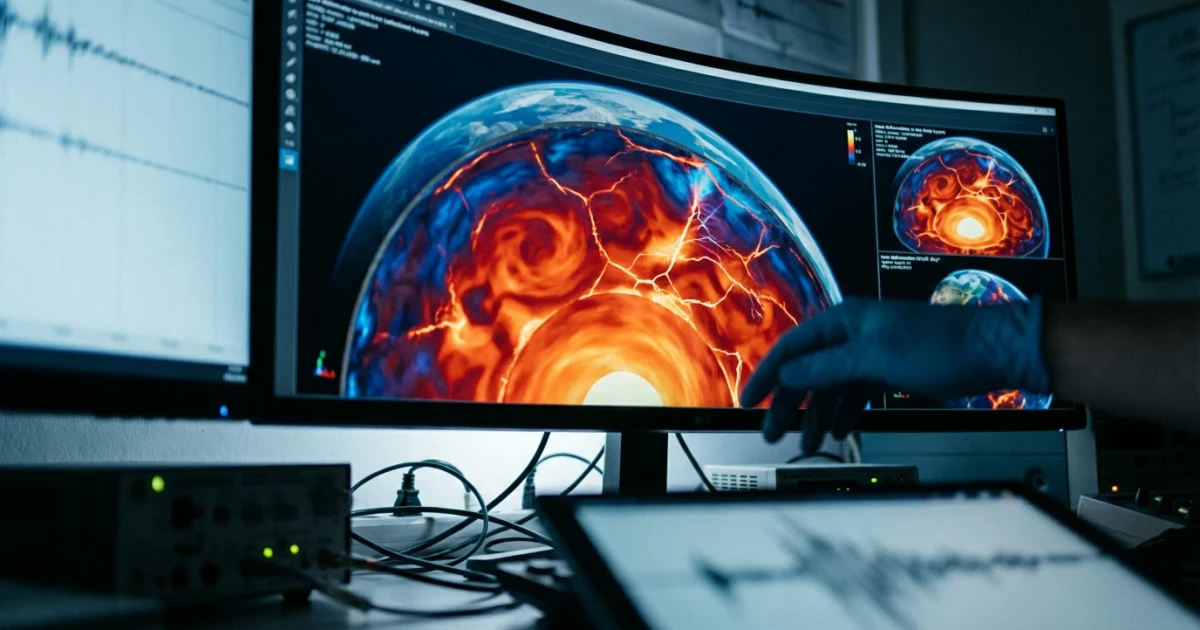
Scientists have detected an unexpected deformation event deep within the Earth's mantle, a finding that questions long-held assumptions about the rarity and behavior of such geological processes. This recent observation, first reported by The Daily Galaxy, highlights the evolving understanding of our planet’s internal dynamics and the complex forces shaping its structure.
Understanding the Earth's Mantle
The Earth’s mantle is the thick layer of rock between the crust and the core, comprising about 84% of the planet’s volume. It is characterized by slow-moving convection currents that drive plate tectonics and contribute to earthquakes and volcanic activity. Traditionally, scientists believed that significant mantle deformation events were extremely rare, occurring over millions of years and often remaining undetectable without advanced instrumentation.
Unexpected Mantle Deformation Detected
According to The Daily Galaxy, researchers recently identified a deformation event in the mantle that was previously considered highly unusual. This event was detected using advanced seismic monitoring systems, which recorded subtle but distinct changes in the mantle’s structure. The precise location and magnitude of the deformation have not yet been disclosed, but experts suggest it involved a large-scale shift in the solid yet deformable rock layers deep beneath the Earth's surface.
- Conventional models described such mantle deformations as occurring over geological timescales, often invisible to human observation.
- New seismic data captured a much faster and more pronounced event than previously documented.
- This detection was possible due to improvements in seismic data collection and global geophysical monitoring networks.
Scientific Implications and Analysis
The discovery has prompted scientists to revisit established theories about the mantle’s behavior. According to recent geophysical research, rare mantle deformation events can have significant impacts on surface geology, including the triggering of earthquakes and changes in volcanic activity. The new findings suggest that such deformations might be more common than previously believed, but have escaped detection due to their deep origin and subtle signals.
Recent studies published in Nature Geoscience and presented at international geoscience conferences support the growing consensus that the mantle is more dynamic and responsive to internal and external forces than earlier models predicted. These studies utilize high-resolution seismic tomography and computational modeling, offering new insights into the mechanisms driving mantle deformation.
Looking Forward: New Questions and Technologies
This detection opens the door to further research into the frequency and triggers of mantle deformation. With ongoing advances in geophysical data collection and seismic monitoring, scientists hope to build a more detailed picture of these deep Earth processes. Understanding the mantle’s behavior is crucial not only for basic science but also for predicting and mitigating natural disasters related to tectonic activity.
As researchers analyze more seismic records and refine their models, they anticipate uncovering additional events that could reshape our understanding of the Earth’s interior. The detection of this unexpected mantle deformation serves as a reminder of the planet’s ongoing evolution—and of the importance of continued investment in Earth science research.