World
Scientists directly observe seafloor spreading in the Indian Ocean
Scientists have directly observed seafloor spreading in the Indian Ocean, capturing a rifting event as it unfolded along the Southeast Indian Ridge. The measurements showed oceanic crust being created between two tectonic plates, turning a process long inferred from indirect evidence into one documented in place.
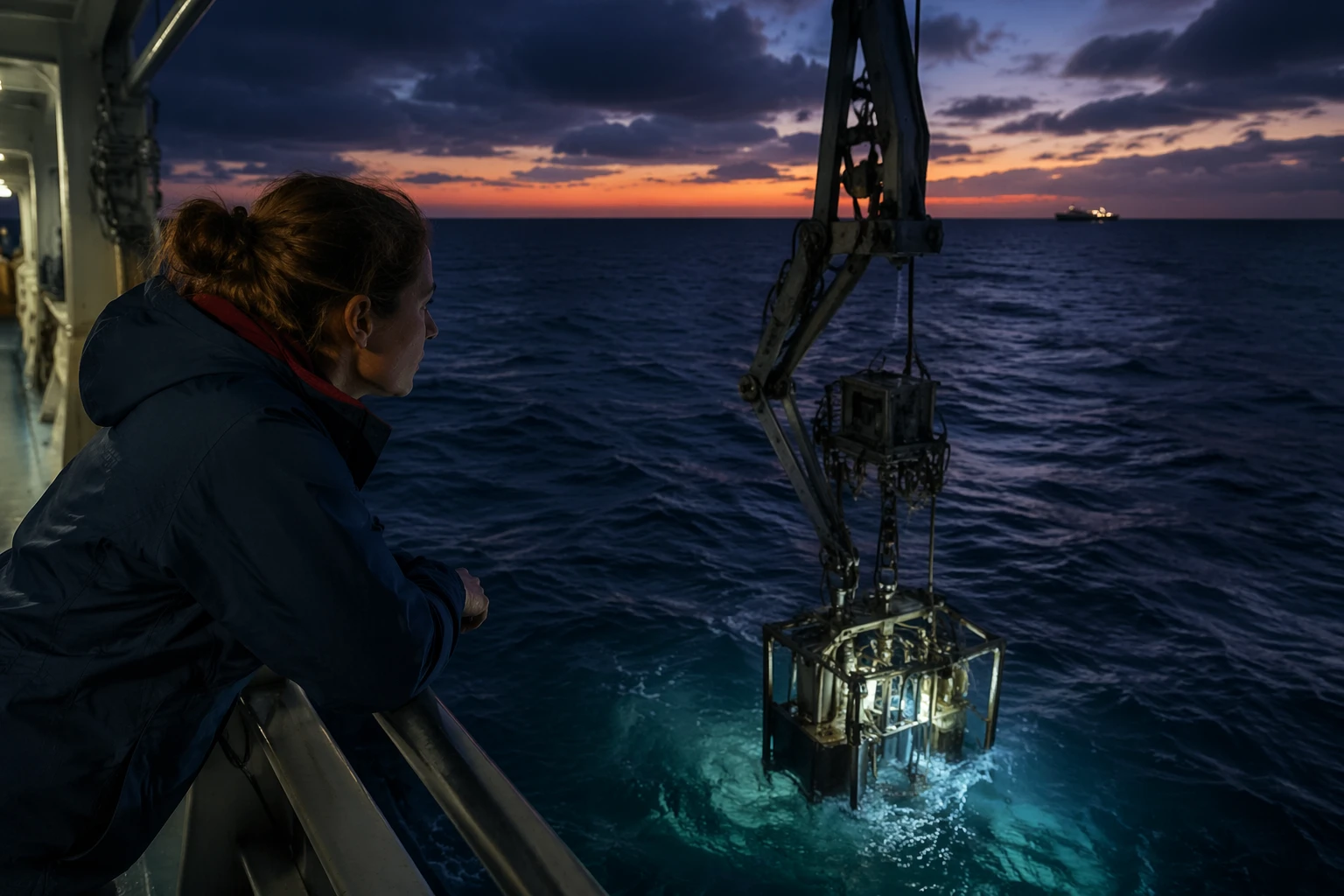
The event began on 26 April 2024, when earthquakes shook the seafloor deep beneath the Indian Ocean and a spreading episode started at a segment of the ridge. Researchers tracked it with hydroacoustic, direct-path ranging and bottom-pressure instruments, using an array of more than 20 measuring stations stretched across about 100 kilometres. That reach mattered because mid-ocean ridges run through an environment that is permanently dark, cold and difficult to observe, and only slightly more than 23% of the seafloor has been mapped in great detail, according to NOAA.
Seafloor spreading is the normal process at divergent plate boundaries, where tectonic plates pull apart and molten material rises from the mantle to build new ocean floor. Until now, scientists had generally had to reconstruct such events from seismic, hydroacoustic and geological evidence after the fact. The direct observation gives researchers a sharper look at how magma intrudes as ridge segments open, how new crust is assembled, and how those ridge systems evolve over time.
The finding also gives a rare point of comparison with earlier work. A 2006 Science paper described a seafloor-spreading event at the East Pacific Rise near 9°50’N, where the ridge spreads at about 110 millimetres a year full rate, but that episode was pieced together from seismometers rather than watched as it happened. The Indian Ocean measurements go further by documenting the process in situ at a mid-ocean ridge segment.
The broader stakes extend well beyond one ridge. NOAA says the ocean covers more than 70% of Earth’s surface, yet much of that basin remains only coarsely charted. Woods Hole Oceanographic Institution says Alvin can dive to 6,500 metres and reach about 99% of the seafloor, underscoring how undersea vehicles and observatories have made this kind of work possible. With a direct view of crust formation now in hand, scientists have a better basis for linking ridge opening to earthquakes, volcanism and the long-term mechanics of plate tectonics.
Sources
- [1]nytimes.com
- [2]nature.com
- [3]pmel.noaa.gov
- [4]oceanexplorer.noaa.gov
- [5]science.org
- [6]www2.whoi.edu