Science
Scientists Discover Molten Super-Earth L 98-59 d
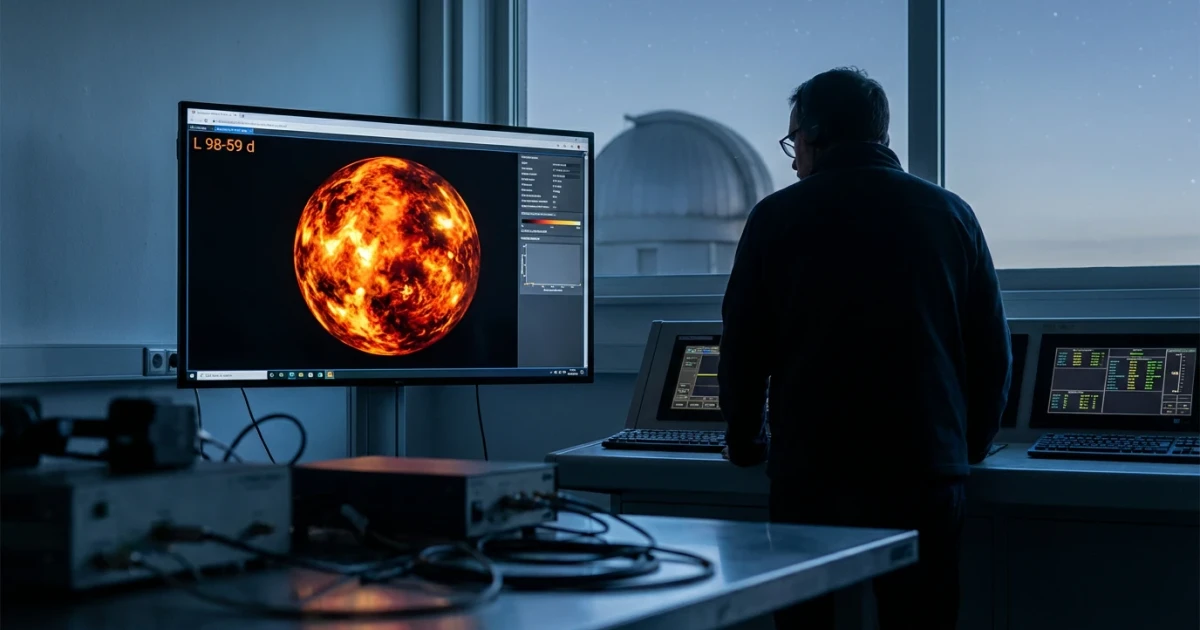
Astronomers have identified a rare type of exoplanet, L 98-59 d, which appears to exist in a molten, volatile-rich state, marking a new chapter in the study of planetary types beyond our solar system. The findings, first reported by The Guardian and supported by research published in Nature, suggest the planet’s surface may be neither solid nor fully gaseous, but instead dominated by a mushy, molten state possibly unique among known worlds.
The Discovery of L 98-59 d
L 98-59 d, located about 35 light-years from Earth, was initially detected as part of the multi-planet L 98-59 system. Researchers used data from both ground-based observatories and space missions to characterize the planet’s mass, size, and composition. The Guardian notes that this planet stands out for its suspected surface conditions, which are unlike those found on Earth or the gas giants of our solar system.
A Planet in a Molten, Mushy State
According to the Nature study highlighted by The Guardian, L 98-59 d is classified as a super-Earth—a type of exoplanet with a mass higher than Earth’s but significantly less than Neptune’s. What sets L 98-59 d apart is its possible ‘volatile-rich’ composition, indicating a high abundance of substances like water and other ices, which, under intense heat, may exist in a supercritical or molten state.
- The surface temperature is likely high enough to keep much of the planet’s water and volatile components in a molten or mixed liquid state.
- Scientists theorize that the planet’s surface is not solid rock but a ‘mushy’ ocean of melted materials, possibly with a thin or absent atmosphere due to intense stellar radiation.
This mixture of molten and volatile components distinguishes L 98-59 d from terrestrial planets like Earth, as well as from gas giants, highlighting the diversity of planetary evolution in the galaxy.
Significance for Exoplanet Research
The identification of a possible ‘liquid planet’ challenges previous assumptions about planetary types. Most exoplanet discoveries have been categorized as either rocky, like Earth and Mars, or gaseous, like Jupiter and Saturn. However, L 98-59 d seems to occupy an intermediate state, with characteristics hinting at a new class of exoplanet.
The Guardian reports that these findings could help refine models of how planets form and evolve, especially in systems with high radiation and volatile elements. By observing L 98-59 d, astronomers gain insight into the effects of intense stellar heat on planetary composition, structure, and potential habitability.
Looking Ahead: Expanding the Planetary Census
The discovery of L 98-59 d adds to a growing list of over 5,000 confirmed exoplanets—including numerous super-Earths—each offering new clues about the universe’s diversity. As astronomers continue to refine their detection methods and expand their surveys, more unusual and transitional worlds like L 98-59 d are likely to be revealed.
This breakthrough underscores the importance of combining data from multiple observatories and missions. Future research will aim to analyze L 98-59 d’s atmosphere and surface composition in greater detail, perhaps using next-generation telescopes or spectroscopic techniques to confirm its unique ‘molten, mushy’ state.
L 98-59 d’s discovery opens the door for further exploration into the volatile-rich evolution of super-Earths and the potential for new planetary categories in the cosmos.