Science
Scientists Explore Fast Track to Alpha Centauri With Light-Propelled Metajets
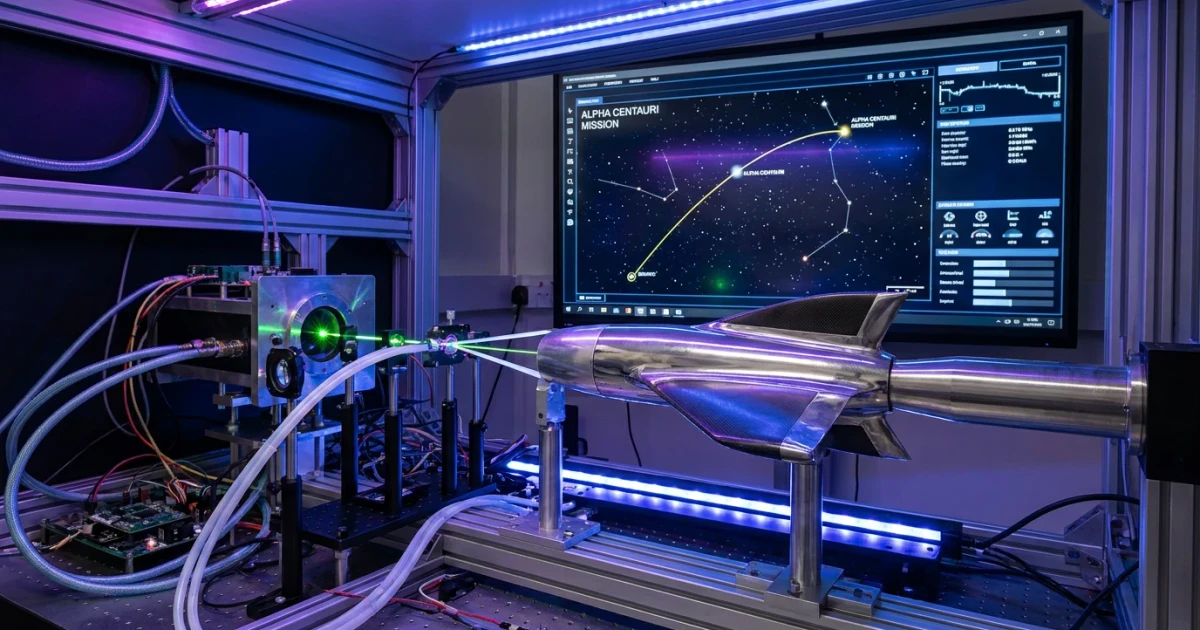
Researchers are proposing a bold new approach to interstellar travel: light-propelled 'metajets' they say could reach the Alpha Centauri star system in just two decades. The concept, highlighted in Gizmodo and supported by recent theoretical analysis, suggests that the dream of journeying beyond our Solar System may be closer than previously thought.
Breaking the Interstellar Barrier
The Alpha Centauri system, located just over 4.37 light-years from Earth, has long been a tantalizing target for astronomers and space enthusiasts. Traditional chemical rockets would require tens of thousands of years to cover that distance. The newly proposed metajet design, however, leverages the power of light to achieve unprecedented speeds, potentially making the trip in about 20 years.
How Metajets Work
According to the study discussed by Gizmodo, these metajets are small spacecraft equipped with metamaterial sails—ultra-thin, engineered surfaces designed to interact efficiently with high-energy laser beams projected from Earth or an orbital platform. When the concentrated light hits the sails, it imparts momentum, gradually accelerating the tiny probes to a significant fraction of light speed. This approach builds on previous work, including the Breakthrough Starshot Initiative, but pushes the concept forward with new materials and designs.
- Distance to Alpha Centauri: ~25.7 trillion miles (4.37 light-years)
- Proposed travel time: 20 years
- Propulsion method: Light-driven metamaterial sails ('metajets')
Advantages Over Conventional Propulsion
Unlike chemical rockets, which are limited by the amount of fuel they can carry, light-propelled metajets rely on external energy sources. This allows for much higher final speeds. According to analysis published on arXiv, the unique properties of metamaterials could minimize energy losses and withstand the intense radiation needed for acceleration. The theoretical framework suggests that, with sufficient engineering advances, these metajets might be capable of reaching up to 20% the speed of light.
Technical Challenges Ahead
Despite the promise, significant hurdles remain. Gizmodo notes that constructing gigawatt-class lasers, perfecting the metamaterial sails, and navigating the rigors of deep space are formidable engineering challenges. Communication over such distances is another obstacle—NASA's Deep Space Optical Communications program is already exploring how high-bandwidth links can be maintained over interstellar distances, but real-world application at these speeds remains untested.
Broader Implications and Future Outlook
Success with light-propelled metajets would represent a major leap in humanity's ability to explore beyond the Solar System. The Annual Review of Astronomy and Astrophysics points out that interstellar travel could open new avenues for exoplanet research, including direct observation of potentially habitable worlds around Alpha Centauri. The prospect of sending robotic emissaries within a single human lifetime would transform our understanding of the galaxy and our place in it.
While practical interstellar travel is not yet a reality, the continuing refinement of concepts like metajets brings the scientific community closer to solving the immense challenges of such missions. For now, the metajet study adds momentum to the growing field of advanced propulsion research, inspiring hope—and healthy skepticism—about the future of humanity’s reach into the cosmos.