Science
Scientists Find All Five Genetic Bases in Ryugu Asteroid Sample
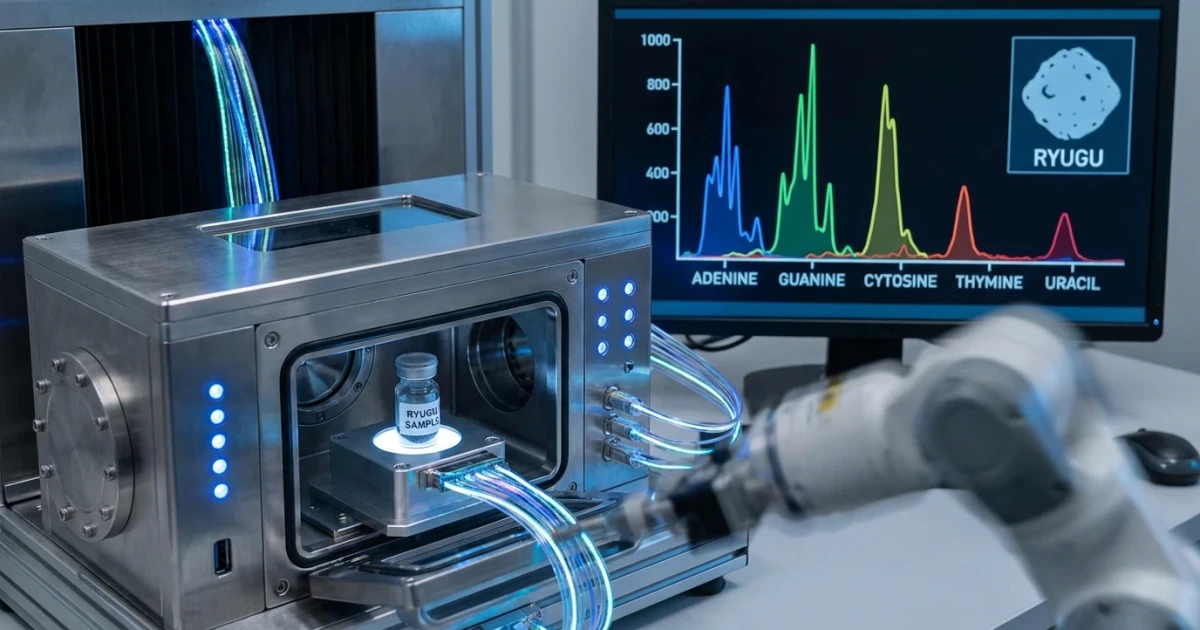
Scientists have discovered all five canonical nucleobases—key building blocks of DNA and RNA—in samples returned from the carbon-rich asteroid Ryugu, marking a significant milestone in our understanding of how life's ingredients may have originated beyond Earth.
Uncovering Life’s Building Blocks in Space
The groundbreaking discovery, first reported by Phys.org, confirms that the complete set of nucleobases—adenine, guanine, cytosine, thymine, and uracil—were present in material collected from asteroid (162173) Ryugu. These nucleobases form the genetic code that underpins all known life on Earth, acting as the molecular alphabet that encodes genetic information within DNA and RNA.
How the Ryugu Samples Were Collected
The samples were obtained during the Hayabusa2 mission, led by the Japan Aerospace Exploration Agency (JAXA). Launched in 2014, Hayabusa2 journeyed to Ryugu—an ancient, carbon-rich asteroid located roughly 300 million kilometers from Earth—and collected pristine material from its surface and subsurface. The samples returned to Earth in December 2020, providing researchers with some of the most uncontaminated extraterrestrial material ever analyzed.
Significance of the Discovery
While previous studies had detected some nucleobases, such as adenine and guanine, in meteorites, this is the first time the full suite—including cytosine and thymine—has been found in an asteroid sample. According to the peer-reviewed research published in Nature, advanced chemical analysis confirmed the presence of all five bases, suggesting that the essential components of genetic material can form in space and may have been delivered to the early Earth via asteroids or comets.
- Adenine and guanine (purines) and cytosine, thymine, and uracil (pyrimidines) are required for the structure and function of nucleic acids.
- This discovery supports theories that key prebiotic molecules were delivered to Earth from space, possibly seeding the planet with the raw ingredients for life.
Implications for the Origin of Life
The finding lends weight to the idea that the building blocks of life are not unique to Earth, but could be widespread throughout the solar system and beyond. If nucleobases can be synthesized in space and incorporated into asteroids, the chances that life’s chemistry could emerge elsewhere are increased. The discovery also provides insight into the chemistry of the early solar system and the potential pathways that led to the emergence of genetic material on our planet.
What’s Next?
Researchers plan to continue analyzing the Ryugu samples and compare them with future returns from other missions, such as NASA’s OSIRIS-REx, which will bring back material from asteroid Bennu. These ongoing studies will help clarify whether nucleobases and other prebiotic molecules are common in asteroids and how they might have contributed to life’s origins.
Explore the Data Further
- See the full research article for methodology and chemical analysis.
- Access the Hayabusa2 mission record and JAXA’s official project page for mission details and sample handling.
- Learn more about nucleobase structure and function in the genome.
The discovery of all five canonical nucleobases in an asteroid offers a vital clue in unraveling the cosmic origins of genetic material—and with it, life itself.