Health
Scientists find cell death residue that may help influenza spread
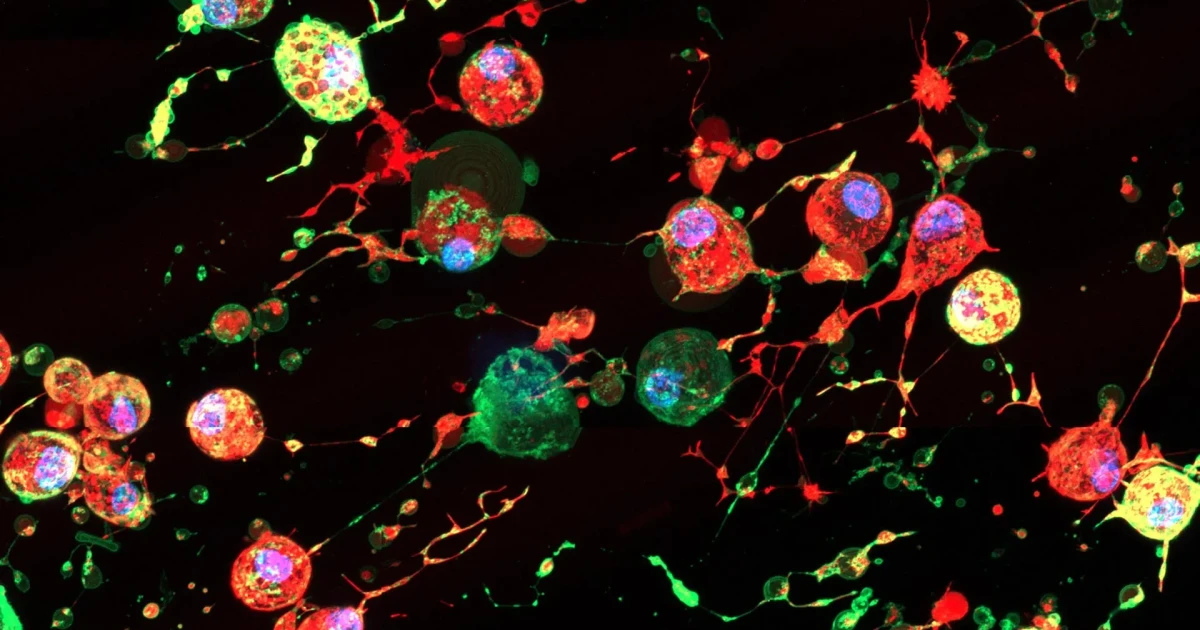
Cells dying from influenza infection leave behind a residue that may help the virus move into neighboring tissue, a La Trobe University team found. The work identified a previously unrecognized step in cell death: instead of disappearing, dying cells leave a membrane-encased structure the researchers call the footprint of death.
Led by PhD candidate Stephanie Rutter in Professor Ivan Poon’s laboratory at the La Trobe Institute for Molecular Science in Bundoora, Victoria, the study was published in Nature Communications on 15 October 2025. The paper describes the footprint as an F-actin-rich structure tightly anchored to the substrate at the site of cell death, and says the phenomenon showed up across many cell types, apoptotic stimuli and surface compositions.

La Trobe’s researcher profile said the newly described vesicles were also called F-ApoEVs. Under viral infection, those vesicles can harbor viral proteins and virions and propagate infection to healthy cells, turning a normal cleanup pathway into a possible route for spread. In healthy tissue, the same particles appear to help alert immune cells so they can remove cell debris efficiently, linking the finding directly to efferocytosis, the clearance process that keeps dead-cell material from building up.
The paper listed 19 authors, with affiliations spanning La Trobe University, the University of Melbourne, Walter and Eliza Hall Institute of Medical Research and Toronto Metropolitan University, according to Nature Index. That breadth reflects how the finding sits at the intersection of cell biology, immunology and infectious disease research, where the details of how apoptotic cells are packaged and cleared still shape what scientists can learn about inflammation and infection.

A recent Nature Reviews article has noted that large extracellular vesicle biogenesis remains an active area of study, and that the physiological relevance of different EV subtypes is still being clarified. The La Trobe study adds a new piece to that puzzle by showing that dying cells do not simply fragment and vanish; they can leave behind a structured, substrate-bound signal that may help the body clean itself up, while also giving influenza a place to hide.