Science
Scientists Identify 27 Possible Planets Orbiting Two Suns
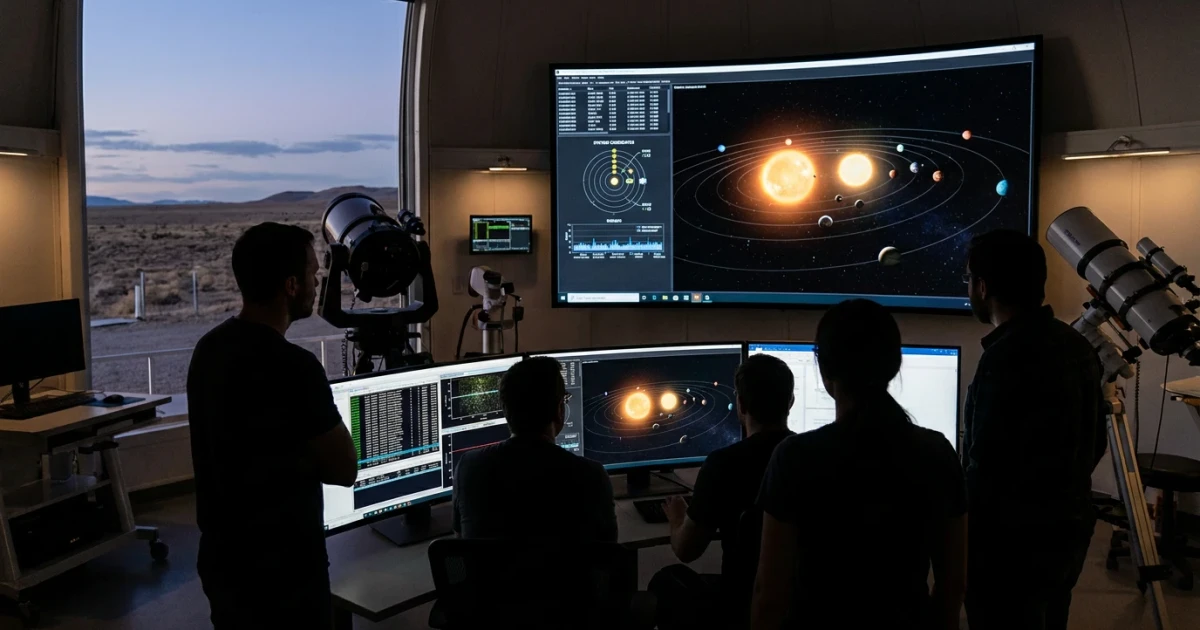
Scientists have identified 27 potential planets orbiting two stars, marking a significant advance in the study of circumbinary planets and raising new questions about how common such worlds may be across the galaxy. The discovery, reported by The Guardian, comes amid a surge of interest in planets with dual suns—evoking the fictional Tatooine from Star Wars—and is reshaping scientists’ understanding of planetary formation and diversity.
The Search for Circumbinary Planets
Planets orbiting two stars, known as circumbinary planets, pose unique challenges for detection and analysis. Unlike planets orbiting a single star, the gravitational dynamics in binary systems can complicate both the formation and stability of planetary orbits. Scientists use specialized techniques such as transit observations and precise radial velocity measurements to identify these worlds.
The NASA Exoplanet Archive maintains a comprehensive table of confirmed circumbinary planets, helping researchers track new discoveries and compare their properties. The addition of 27 new candidates promises to broaden this database substantially.
Implications for Planetary Formation
According to NASA’s analysis, planets circling two stars may be more common than previously believed. The discovery of these 27 candidates supports the idea that binary star systems are fertile ground for planet formation, challenging earlier assumptions that such environments were too chaotic.
- Binary star systems account for a significant portion of stellar populations in our galaxy.
- With each new circumbinary planet found, astronomers gain insight into how planets can survive and thrive despite complex gravitational forces.
- The newly identified candidates will undergo further analysis to confirm their planetary status and determine their characteristics, such as size, orbital period, and potential habitability.
Comparing Single-Star and Two-Star Worlds
While most known exoplanets orbit single stars, the growing list of circumbinary planets is making scientists reconsider what is "normal" in planet formation. As The Guardian suggested, planets may prefer living with two suns instead of one, opening up possibilities for unique climates and day-night cycles. NASA’s explainer on dual-star planets describes how such worlds experience dramatic changes in light and temperature throughout their orbits.
What’s Next for Circumbinary Planet Research?
The confirmation process for these 27 candidate planets will involve additional observations and peer review. If verified, they will join the ranks of known circumbinary planets cataloged in the NASA Exoplanet Archive and European Space Agency’s CHEOPS mission records. Their discovery underscores the importance of missions dedicated to exoplanet detection and characterization.
- Future telescopes and space missions will expand the search for circumbinary planets, following up on current candidates with more sensitive instruments.
- Researchers aim to understand the conditions that allow planets to form and remain stable in binary systems, which could inform the search for life elsewhere in the universe.
As astronomers continue to uncover planets orbiting two stars, the idea of worlds with dual sunsets may become less science fiction and more scientific reality. The discovery of these 27 new candidates points to a galaxy rich in diversity, with planetary systems that defy traditional expectations.