Science
Scientists Identify Mysterious ‘Golden Orb’ on Alaskan Seafloor
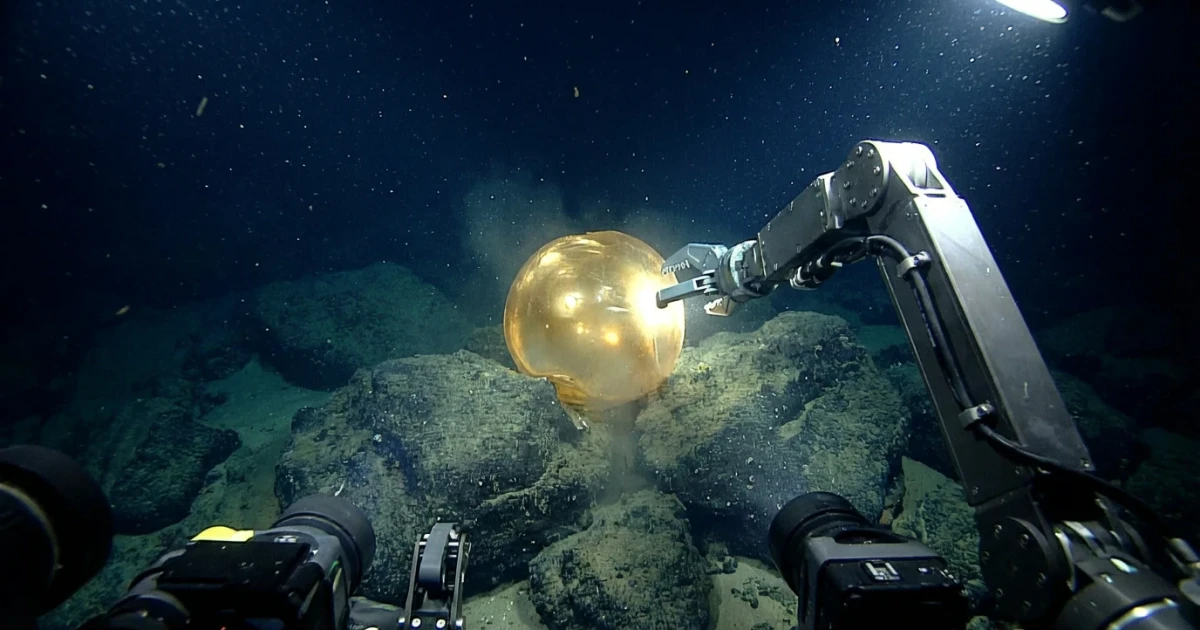
Scientists have finally identified the so-called ‘golden orb’ discovered on the Alaskan seafloor in 2023, bringing closure to one of the most intriguing recent mysteries in deep-sea exploration. The enigmatic object, unearthed during a remote expedition hundreds of meters below the surface, puzzled researchers for months and sparked a wave of public curiosity. Gizmodo and other outlets report that the golden-hued sphere has now been classified, shedding new light on deep-sea biology and the diversity of life in the unexplored depths.
The Discovery and Initial Mystery
The discovery occurred on August 30, 2023, during a NOAA Okeanos Explorer mission surveying the seafloor off Alaska. Researchers operating a remotely operated vehicle (ROV) came across a shiny, smooth, golden orb attached to a rock approximately two miles below the surface. Measuring about 10 centimeters in diameter, the object’s unusual color and texture immediately drew attention. The orb was carefully collected for analysis, but its origin remained a mystery for months as scientists debated whether it was a new species, an egg casing, or something entirely unknown.
- The orb was found at a depth of approximately 3,300 meters (over 10,800 feet).
- The region is known for its rich deep-sea coral and sponge habitats, harboring many undiscovered species.
- The object’s golden sheen and lack of visible openings made its identification particularly challenging.
Scientific Investigation and Techniques
To determine the orb’s identity, scientists employed a combination of visual analysis, DNA sequencing, and comparison with deep-sea species databases. According to reports, initial visual inspections suggested it might be a biological structure, such as an egg casing or a sponge. However, it lacked certain features typical of known species.
DNA analysis, a key tool in modern deep-sea research, eventually provided the breakthrough. By extracting and sequencing genetic material from the orb, scientists matched it to a group of deep-sea egg casings, most likely from a previously undocumented species of sea sponge or coral. This finding aligns with the region’s high biodiversity, where new invertebrate species are routinely discovered.
What the Identification Means for Deep-Sea Science
The confirmation of the orb as a biological egg casing highlights the vast unknowns of the deep ocean. The Alaskan seafloor, in particular, is a hotspot for undiscovered life forms and unique adaptations. As the NOAA expedition log notes, the region’s deep-sea coral and sponge ecosystems are among the least studied in the world, with new discoveries regularly expanding scientific understanding.
- Deep-sea expeditions rely heavily on ROVs for sampling and observation, given the extreme depths and pressures involved.
- Egg casings in the deep sea often serve as protective environments for embryos and can take on unusual forms, colors, and textures.
- Discoveries like the ‘golden orb’ provide valuable data for cataloging deep-sea biodiversity and understanding evolutionary adaptations.
Ongoing Exploration and Future Implications
The identification of the golden orb is a testament to the power of collaborative science and the importance of continued exploration. With only a fraction of the deep ocean mapped and sampled, researchers anticipate many more surprises in the years ahead. The use of advanced genetic tools and international data sharing will further accelerate the pace of discovery.
For the public, the story of the golden orb serves as a reminder of the ocean’s enduring mysteries—and the potential for new knowledge just below the surface. As deep-sea research continues, scientists hope that each new discovery will contribute to a deeper understanding of Earth’s most remote ecosystems and the need to protect them.