Science
Scientists identify new quantum boundary linking space and time

Researchers at the University of Regensburg’s Center for Ultrafast Nanoscopy said they had reached a quantum-mechanical limit that ties space and time together in ultrafast real-space microscopy, a result they said they achieved for the first time. The team reported the finding on July 3 from work carried out with the Max Planck Institute in Hamburg, and the result came with a concrete measurement: a response delay of about 500 attoseconds in electron motion.
The new boundary does not duplicate Heisenberg’s uncertainty principle. Heisenberg showed that position and momentum cannot both be known with unlimited precision; this study points to a different constraint, one that appears when scientists try to track an electron across space and time at once. The more precisely researchers determine when an electron moves, the less tightly its quantum wave packet can remain confined in space. That matters because at attosecond scales, one attosecond is 10^-18 seconds, short enough for electrons to cross atomic distances before atoms themselves move.
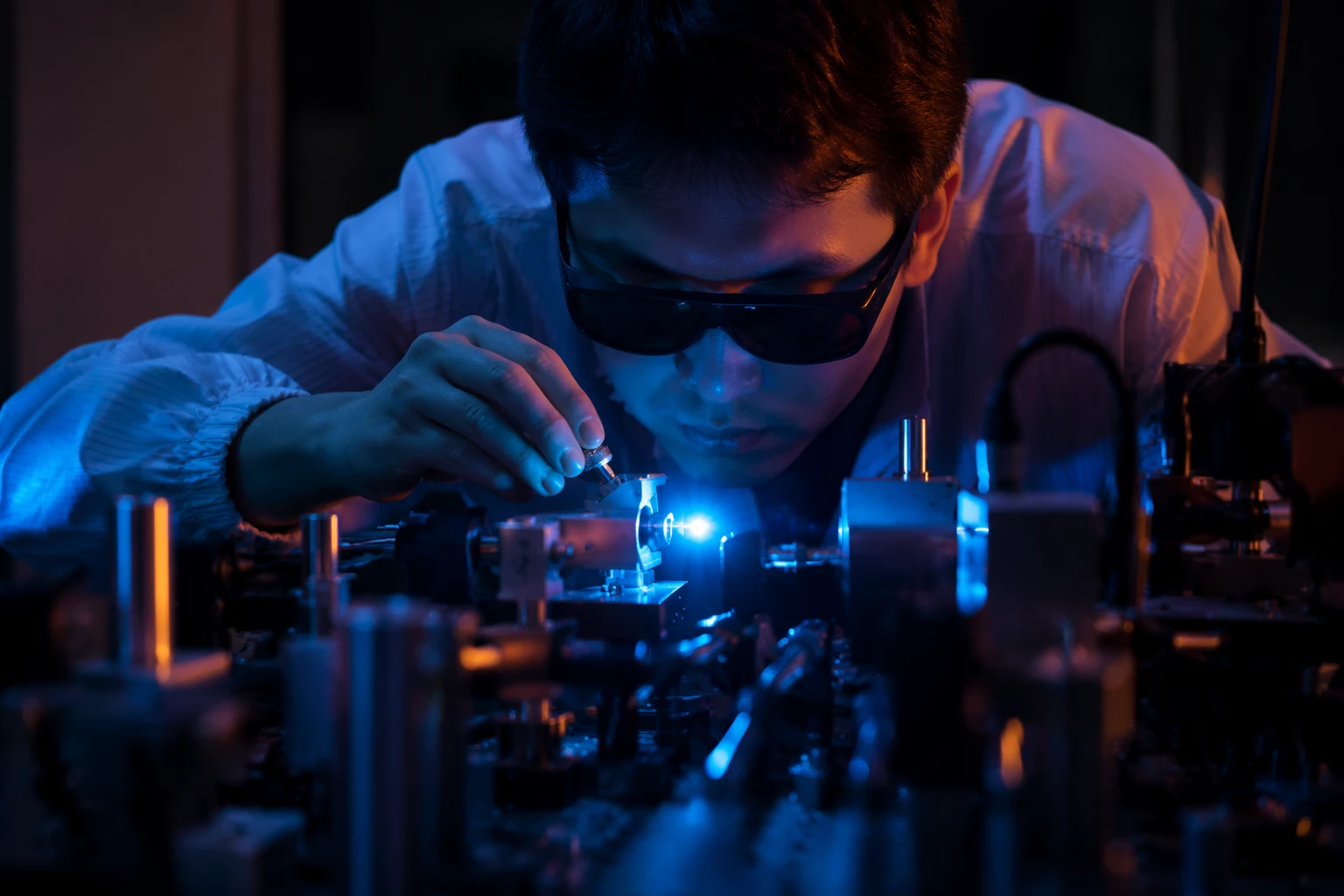
The experiment used an ultrafast scanning tunneling microscope and single-cycle near-infrared waveforms, pushing electron tunneling into a regime that can be probed only with the fastest imaging methods available. Nature Photonics said the researchers experimentally identified conditions for maximally compact electron wave packets, allowing attosecond and atomic-scale resolution in real-space microscopy for the first time. In plain terms, the work turns microscopy into something closer to a movie than a still image, with a time scale so short that the motion itself becomes part of the boundary.

The result also fits into a long run of attosecond science. In 2017, the Max Planck Institute of Quantum Optics described an attosecond electron microscope that could visualize light dispersion in time and space and observe electron motion in atoms. Nature reported direct mapping of attosecond electron dynamics in 2020, then attosecond electron microscopy of sub-cycle optical dynamics in 2023. Physical Review Letters published a 2024 theory paper on strong-field attosecond tunneling microscopy, underscoring how the field has been closing in on atomic-scale control for years.
Physicists care because electron motion underlies faster chips, quantum information systems, advanced energy materials and precisely directed chemical reactions. The University of Regensburg linked the space-time limit to green tech, quantum technologies and high-performance electronics for artificial intelligence. If the limit holds across other ultrafast systems, it will shape what scientists can measure, what they can control and how far electron-based technology can be pushed at petahertz-like time scales.
Sources
- [1]scitechdaily.com
- [2]run-regensburg.de
- [3]nature.com
- [4]uni-regensburg.de
- [5]mpq.mpg.de
- [6]science.org