Science
Scientists Investigate Claims of Mysterious Structures on the Moon
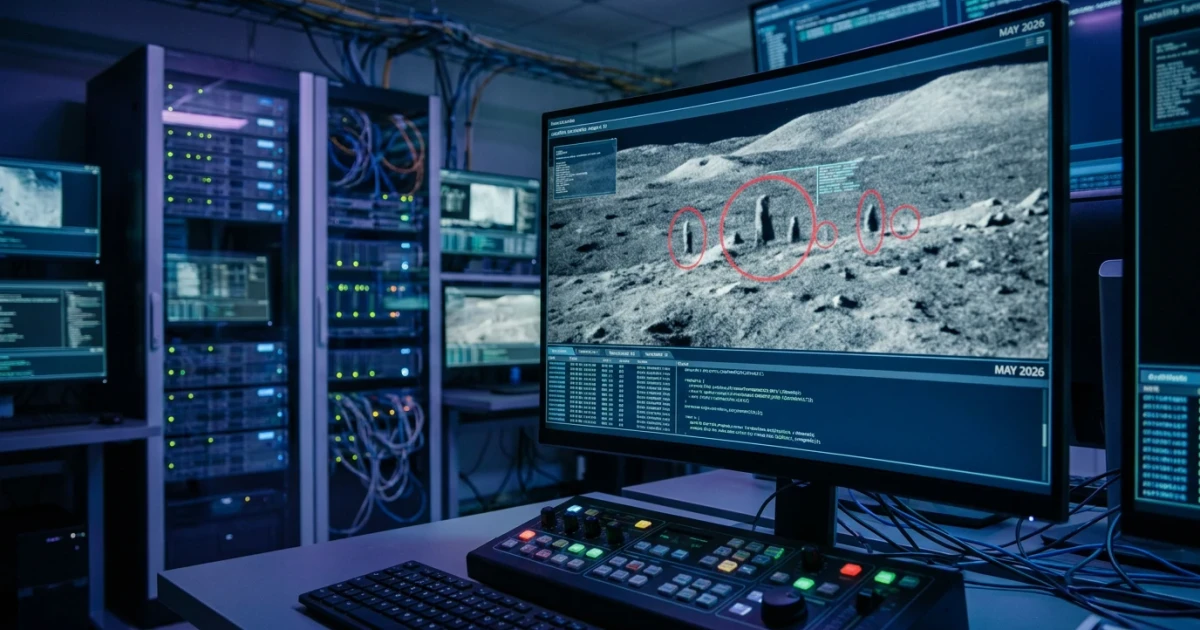
Claims of mysterious 'moon towers' on the lunar surface have ignited fresh debate among astronomers, researchers, and the public. While photos and videos circulating online have fueled speculation about the existence of artificial bases on the Moon, experts urge caution and point to decades of scientific observation and data analysis.
Origins of the 'Moon Towers' Debate
The story gained traction after NewsNation reported on alleged sightings of unusual, tower-like formations captured in images from various lunar missions. Some enthusiasts have suggested these structures could be evidence of artificial bases built by unknown parties, while others argue they are natural surface features misidentified due to image artifacts or low resolution.
What Lunar Data and Imagery Show
Decades of high-resolution mapping and imaging by NASA and international agencies have produced comprehensive records of the Moon’s surface. The Lunar and Planetary Institute’s database catalogs all major lunar missions, many of which have returned detailed photographs and measurements. In particular, the Lunar Reconnaissance Orbiter Camera (LROC) has provided surface images with a resolution as fine as 0.5 meters per pixel, allowing scientists to identify features as small as boulders or rover tracks.
- The USGS Gazetteer of Planetary Nomenclature lists thousands of named craters, domes, and rilles, but no confirmed artificial structures.
- The NASA Lunar Surface Feature Table provides locations and descriptions of all known features, regularly updated with new observations.
- Many so-called anomalies, when viewed in higher resolution, are revealed as geological formations such as volcanic domes or elongated shadows cast by crater rims.
Expert Perspectives and Scientific Consensus
NASA and independent planetary scientists emphasize that, to date, there is no verified evidence of artificial structures—such as buildings or bases—on the Moon. According to a NASA explainer on the Moon’s far side, all known features have natural origins, shaped by volcanic activity, meteorite impacts, and tectonic forces over billions of years.
A peer-reviewed study in Nature Astronomy analyzed the composition and morphology of lunar surface features, concluding that the appearance of "towers" is often caused by lighting effects, viewing angles, or pixelation in lower-quality images. Scientists also point out that the Moon’s lack of atmosphere creates sharp shadows, which can exaggerate the verticality of natural features.
Why the Moon Fascinates Conspiracy Theorists
Despite the scientific consensus, the Moon remains a hotspot for speculation. The vast, uninhabited terrain and the limits of some publicly available images leave room for misinterpretation. Social media amplifies these claims, often without the context provided by mission data or geological expertise. This echoes past controversies around Mars and other celestial bodies, where unusual formations have been attributed to everything from ancient civilizations to secret government projects—none of which have been substantiated by direct evidence.
Looking Ahead: Continued Exploration and Transparency
As new missions target the lunar surface, data transparency and accessibility remain crucial. Resources such as the NASA Moon Data and Imagery page allow the public to examine original mission photographs and maps. Ongoing analysis by international teams will continue to refine our understanding of the Moon’s geology—and, so far, all findings support a natural origin for its most mysterious features.
While claims of 'moon towers' make for compelling headlines, the weight of scientific evidence points to geological, not artificial, explanations. The continued scrutiny of the Moon’s surface ensures that any genuine discovery will be rigorously tested, peer-reviewed, and made accessible to anyone interested in exploring our nearest celestial neighbor.