Health
Scientists map 110 quadrillion kilometers of underground fungal networks
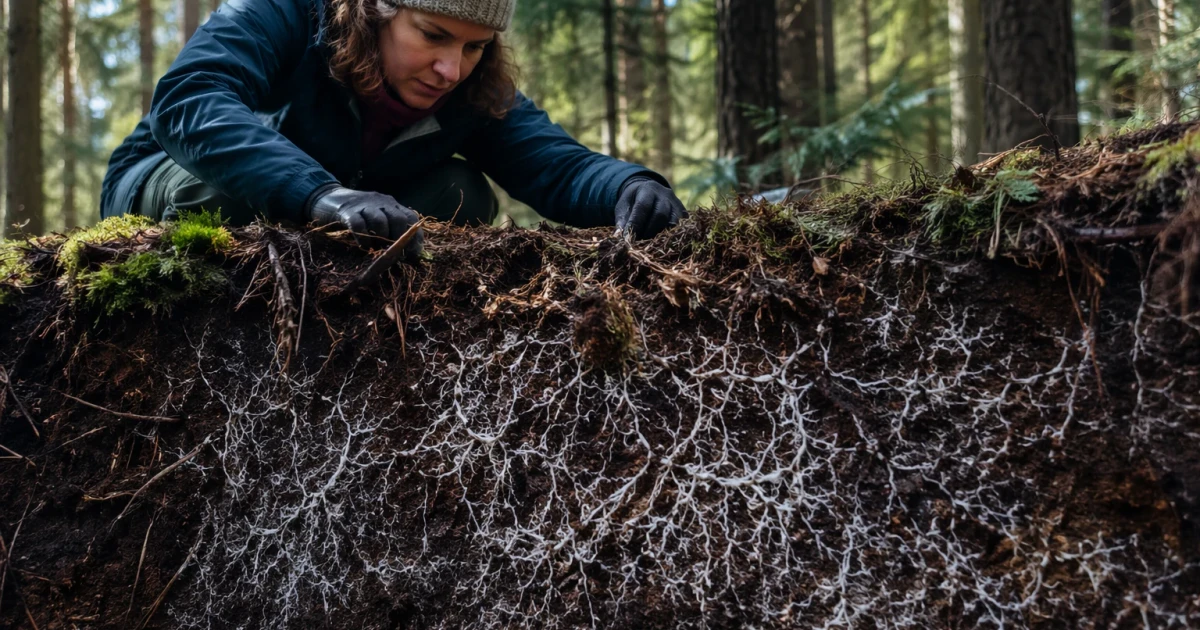
Hidden in the topsoil, arbuscular mycorrhizal fungi form one of Earth’s largest living networks, stretching an estimated 110 quadrillion kilometers across the planet. That is nearly a billion times the distance between Earth and the Sun, and the new global map shows that this unseen infrastructure is not just vast, but economically and ecologically consequential.
The study, published June 11 in Science, used more than 16,000 soil samples from around the world, along with machine learning and laboratory testing, to estimate the global distribution and mass of these fungal filaments, or hyphae. The researchers say the networks collectively weigh about 300 megatons of carbon, roughly four to six times the mass of all humans combined.
These fungi matter because they work as subterranean trading partners for plants. Arbuscular mycorrhizal fungi form symbiotic relationships with around 70% of plant species on Earth, delivering nutrients and water in exchange for carbon from their hosts. That exchange helps crops and wild plants access resources in poor soils, while the fungi themselves help store carbon underground and support soil structure over time.
The carbon implications are sizable. The team estimates that the networks transport about four billion tons of CO2 equivalent into soil each year, roughly 11% of global human-caused CO2 emissions. That makes the fungi more than a biological curiosity: they are part of the planet’s climate accounting, with consequences for how governments think about land use, degraded soils and carbon storage.
The maps show the fungi are especially abundant in undisturbed grasslands, with dense concentrations reported in places such as the Florida Everglades, the Tibetan Plateau and parts of South Sudan. The pattern suggests that intact ecosystems are not just reservoirs of biodiversity, but major stores of belowground biological capacity that can help soils retain water, nutrients and resilience under stress.
Alongside the study, the researchers released an interactive visualization so scientists, policymakers and land managers can see where these networks are thriving and where they are under pressure. That follows last year’s global analysis of underground mycorrhizal diversity and the release of the Underground Atlas, but those efforts focused on biodiversity patterns rather than the physical scale of the living network itself. Measuring the filaments now gives land planners a new way to see a hidden layer of planetary infrastructure that links crops, carbon and climate adaptation.
Sources
- [1]arstechnica.com
- [2]eurekalert.org
- [3]myscience.org
- [4]nationalgeographic.com
- [5]phys.org
- [6]amolf.nl