Science
Scientists Observe Unusual Behaviors in Migrating Humpback Whales
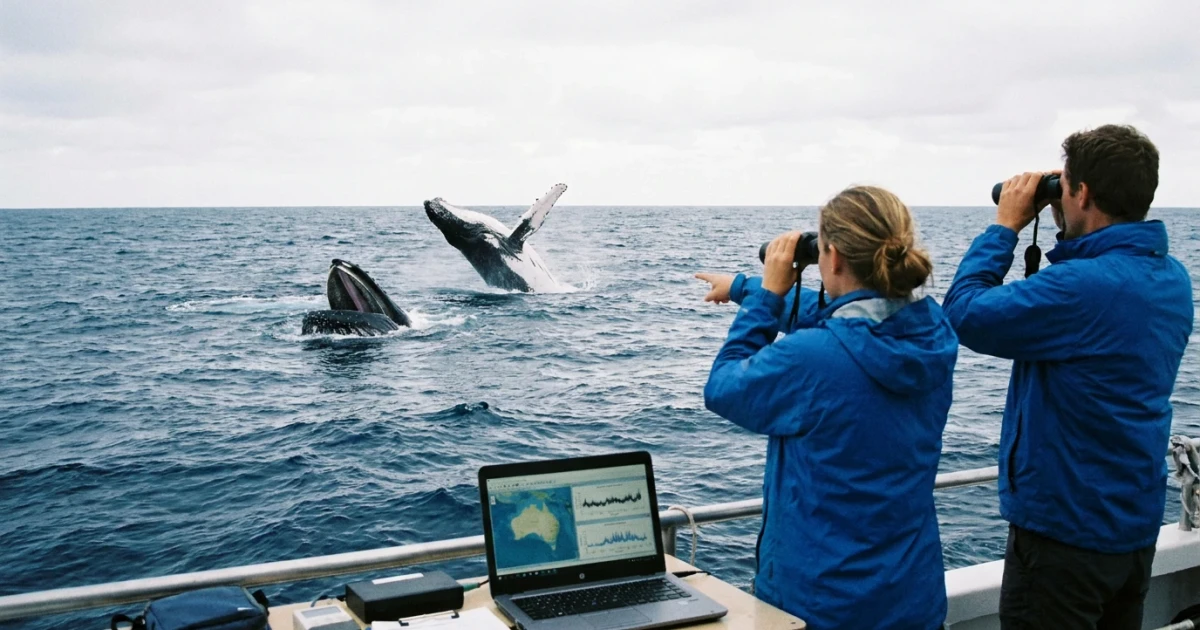
Humpback whales embarking on their annual migration across Australian waters are displaying rare and puzzling behaviors, according to recent observations by marine scientists. The Guardian reported that experts have been witnessing humpbacks pirouetting and gaping—actions that are not yet fully understood—at the start of this year’s migration.
Mysterious Actions: Pirouetting and Gaping
Marine biologists monitoring the migration described seeing whales perform pirouettes, spinning gracefully on the surface, and gaping, where whales open their jaws wide for extended periods. While humpbacks are known for dramatic breaches and tail slaps, these behaviors are far less common and have sparked scientific curiosity.
- Pirouetting involves rotational movements rarely documented in wild humpbacks.
- Gaping refers to whales holding their mouths open, sometimes for several minutes, with unclear purpose.
These actions have been observed as the whales begin their journey north toward breeding grounds, a migration that involves thousands of individuals annually. The Guardian noted that researchers are unsure whether these behaviors are related to feeding, communication, or social interaction.
Migration Patterns and Population Trends
According to official government data in the Conservation Management Plan for the Humpback Whale, Australian humpbacks undertake one of the longest migrations of any mammal, traveling up to 10,000 kilometers between Antarctic feeding grounds and tropical breeding sites. International Whaling Commission population estimates suggest a strong recovery in numbers after decades of hunting, with tens of thousands now making the journey each year.
What Do Scientists Know About These Behaviors?
Despite extensive research, the causes and meanings behind pirouetting and gaping remain unclear. Previous studies, including a review of mysterious humpback whale behaviors, have catalogued unusual actions like spinning, jaw gaping, and synchronized group movements, often noting their rarity and lack of obvious function.
Some hypotheses propose that pirouetting could be linked to play, mating displays, or even dislodging parasites, while gaping might serve as a signal to other whales or a way to release excess heat. However, as The Guardian highlighted, no definitive explanations exist, and further study is needed.
Stranding Events and Conservation Concerns
While most humpback whales complete their migration successfully, researchers monitor whale stranding data to track potential health or environmental threats. The recent observations of pirouetting and gaping do not appear to be linked to distress or abnormal strandings, but scientists remain vigilant as climate changes and human activities could impact whale behavior and survival.
Ongoing Research and Next Steps
Marine biologists plan to use video, acoustic monitoring, and tagging to gather more data on these behaviors as the migration continues. Collaborative efforts with international organizations, such as the NOAA Fisheries and the Society for Marine Mammalogy, aim to deepen understanding of humpback whale ecology and behavior.
As the migration unfolds, researchers hope to unlock the secrets behind pirouetting and gaping, offering new insights into the lives of these remarkable marine mammals. The Guardian’s coverage underscores both the wonder and the ongoing mysteries of humpback whale behavior in Australian waters.