Science
Scientists recreate black hole energy extraction in a lab
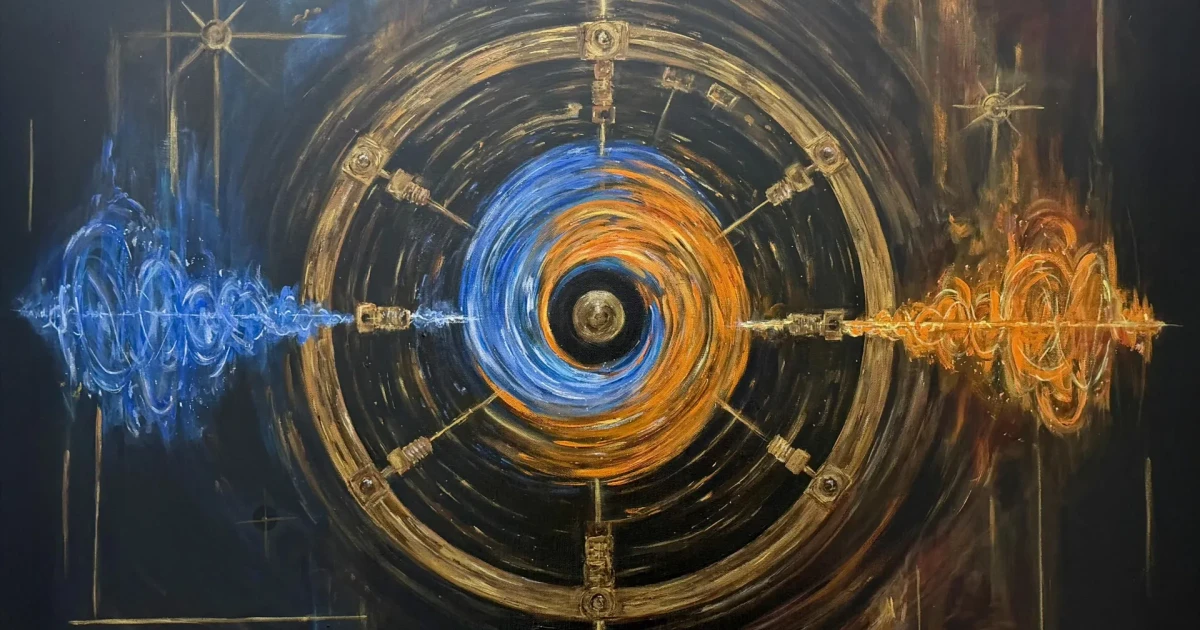
A radio-frequency ring of electronic resonators at the CUNY Graduate Center recreated, in the lab, a black-hole-style energy-extraction effect that had lived in theory for decades. The work was published in Nature on July 8, 2026 under the title Observation of Floquet rotational super-radiance. It came from the Photonics Initiative of the Advanced Science Research Center in New York.
The experiment did not build a real black hole or imitate gravity itself. Instead, the researchers built a stationary, spatiotemporally modulated ring network whose properties were rapidly changed in a carefully timed sequence, creating a traveling pattern that behaved like rotation. The result was a Floquet regime of rotational super-radiance, and waves with selected rotational properties could extract energy from the synthetic rotation, producing broadband selective amplification. The time-varying design reproduced the physics of ultrafast rotating bodies without the mechanical limits that usually block direct tests of such extreme motion.
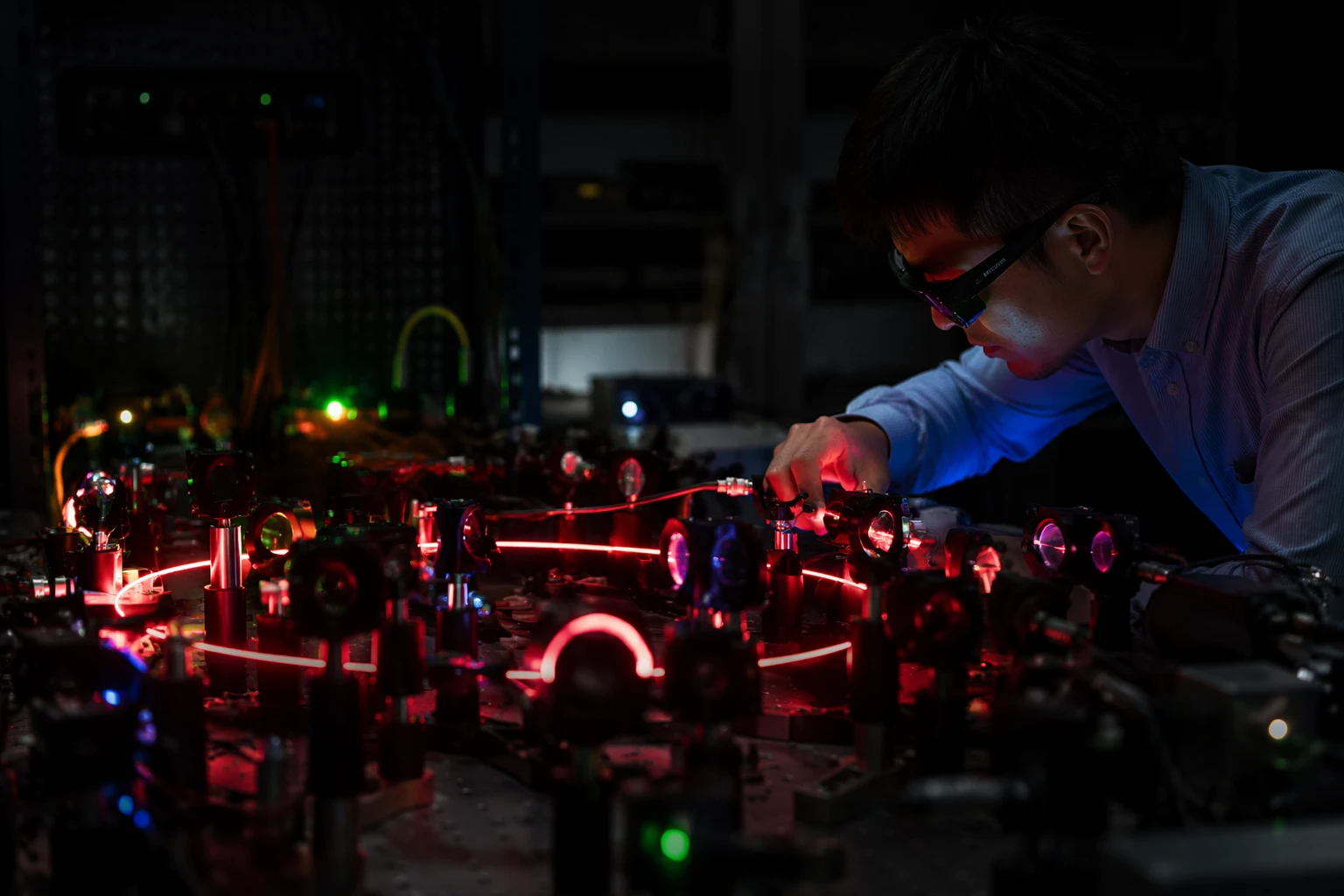
The idea reaches back to Roger Penrose’s black-hole energy-extraction proposal from the late 1960s and Yakov Zel’dovich’s later prediction that waves striking a fast-rotating object could gain energy from that rotation. In the black-hole version, the relevant region is the ergosphere, where spacetime itself is dragged around the spinning object. The laboratory system did not recreate that astrophysical environment, but it did give researchers a controlled analogue of the same energy-transfer logic, one that can be measured directly on a bench rather than inferred from equations or simulations.
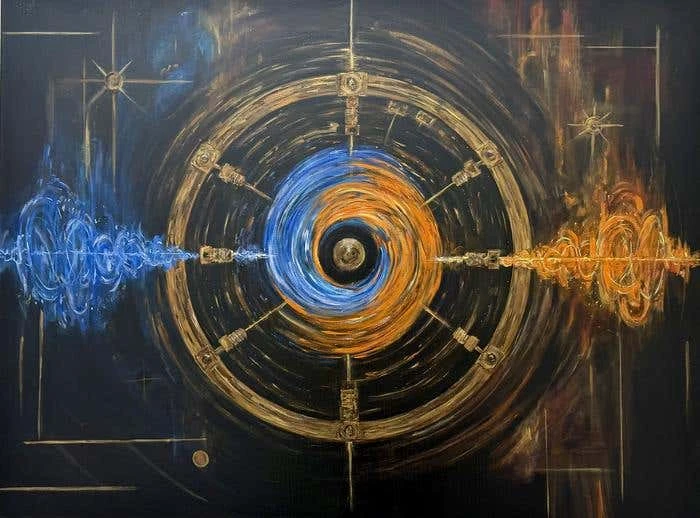
Andrea Alù said the work opens a new method of wave-matter interaction and creates a versatile experimental platform at the intersection of astrophysics, wave physics and quantum science. Hadiseh Nasari said the experiment moved ideas about extreme rotational dynamics from theory to practice.