Health
Scientists rethink the thymus as a key to healthier ageing
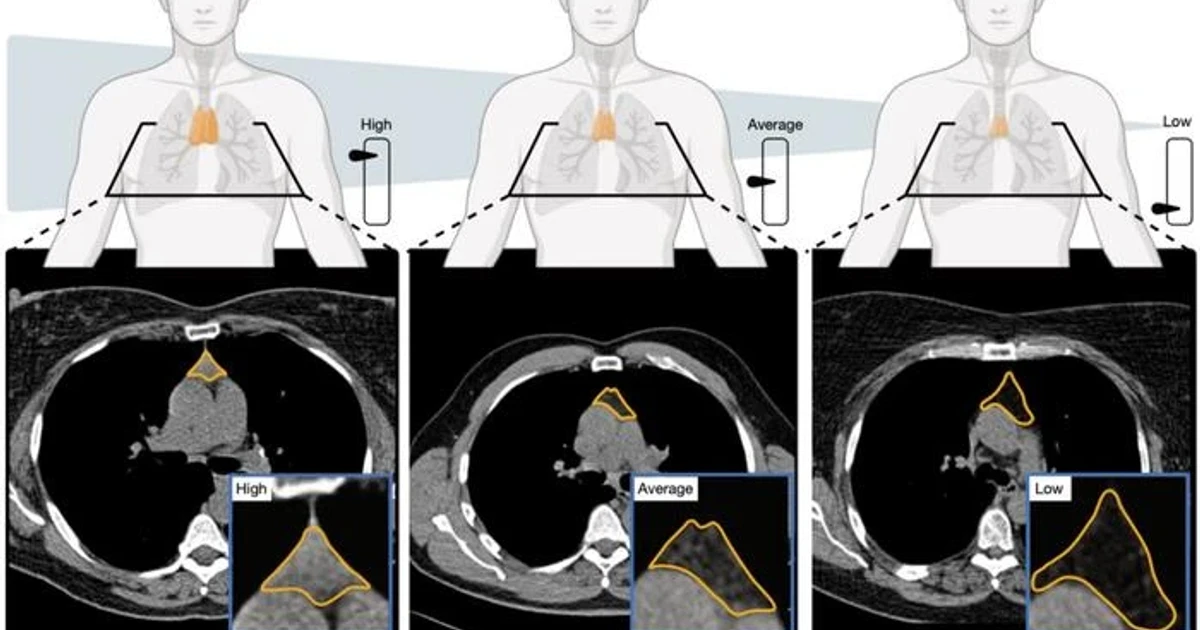
In the National Lung Screening Trial and the Framingham Heart Study, scientists quantified thymic health from routine chest scans in 25,031 and 2,581 participants and linked stronger scores to survival, cancer outcomes and treatment response. Once treated as a childhood organ that fades into obscurity after puberty, it is being reexamined as both a possible intervention target and a window into immune ageing. The sharper question now is not whether the thymus matters, but whether preserving or restoring it can change disease risk in adults.
Why the thymus matters again
The thymus sits in the chest and trains T cells, the immune system’s frontline defenders. It is also one of the body’s most famously shrinking organs: after puberty, it gets smaller and produces fewer new immune cells over time. That decline is the reason many scientists long viewed it as important mainly in childhood, not as a meaningful driver of adult health.
That assumption is being challenged by a new wave of work linking thymic health to how people age. Researchers are testing whether the thymus remains functionally different from person to person in adulthood, and whether those differences help explain uneven immune ageing. Some people may retain a more resilient immune system for longer, while others may lose thymic output earlier and face higher risks of infection, cancer, or other age-associated disease.
What the scan data actually show
The strongest adult-health evidence so far comes from a deep-learning study led by Mass General Brigham and Harvard Medical School investigators, including Hugo Aerts and Edward Chen, who quantified thymic health from routine chest scans in the National Lung Screening Trial and the Framingham Heart Study.
In those datasets, higher thymic health scores were associated with about a 50% lower risk of death, a 63% lower risk of cardiovascular death, and a 36% lower risk of developing lung cancer. Those relationships remained significant after adjustment for age and other health factors. The finding does not prove that a healthier thymus caused the better outcomes, but it does show that thymic appearance on scans is tracking with real differences in long-term risk.
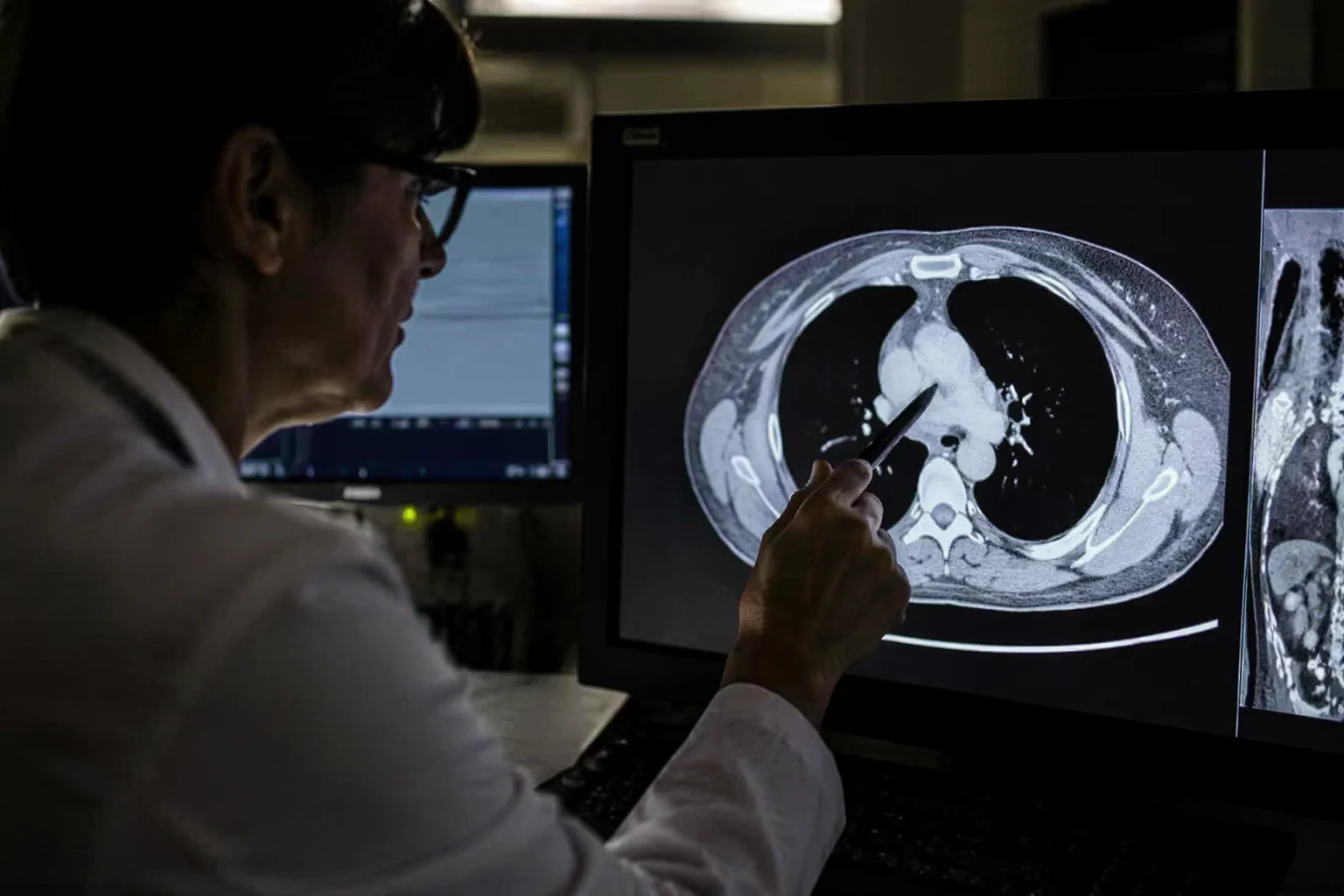
The scans could become a way to assess disease risk and, eventually, help guide treatment decisions. The organ may therefore be useful in two different ways: as a biomarker of biological ageing and, potentially, as a target for intervention if the causal links hold up.
Why cancer immunotherapy has entered the picture
The thymus has become especially relevant in oncology because T cells are central to immunotherapy. In a separate cohort of about 1,200 cancer patients treated with immunotherapy, stronger thymic health was associated with a 37% lower risk of cancer progression and a 44% lower risk of death, again after accounting for age and other health factors.
That does not mean thymus repair will automatically make cancer treatment work better. It does mean the organ may help explain why some patients respond more robustly than others, and why two people of similar age can have very different immune reserve. For cancer specialists, that makes thymic health a candidate predictor, not a proven therapy target yet.
What is already real in the clinic
Thymus replacement therapy already exists for congenital athymia, a rare disorder in which babies are born without a functioning thymus and face life-threatening immune deficiency. The treatment uses cultured thymus tissue implantation sold as RETHYMIC, which received U.S. Food and Drug Administration approval in October 2021.
Duke University pioneered the approach and is the only U.S. medical center offering it. Published clinical experience has involved more than 100 patients. The thymus can be replaced in a clinical setting, and the immune system can respond.
A crowded field is trying to rebuild it
The surge of interest has produced a thymus renaissance. Biotech groups are trying either to regenerate the thymus directly or to recapitulate its function with engineered tissue. Thymus regeneration has reached a pivotal moment and includes work on thymic epithelial stem and progenitor cells, iPSC-derived thymic epithelial engineering and organ replacement approaches.
Another line of work points to a practical obstacle: allogeneic thymus transplantation remains constrained by donor availability and HLA mismatch. That is one reason the field is moving toward cell engineering rather than donor-dependent tissue transfer. Recent lab studies have also generated adult thymic epithelial organoids that can support T cell development in vitro and after transplantation in mice, suggesting the adult thymus may retain more regenerative capacity than scientists once assumed.
What is known, and what is still unproven
First, the thymus is not just a childhood organ; it can be measured in adults and those measurements correlate with major health outcomes. Second, the strongest data so far are associative, not causal, so thymic health may be a marker of broader biological resilience rather than the master switch itself. Third, there is already a clinical model for thymus replacement in rare disease.
What remains unproven is whether restoring thymic function in otherwise healthy adults will slow ageing, prevent disease, or improve cancer outcomes in a durable way.
Sources
- [1]nature.com
- [2]news.harvard.edu
- [3]hms.harvard.edu
- [4]massgeneralbrigham.org
- [5]dukehealth.org
- [6]cell.com
- [7]eurekalert.org