Science
Scientists Set New Record for Ambient-Pressure Superconductors
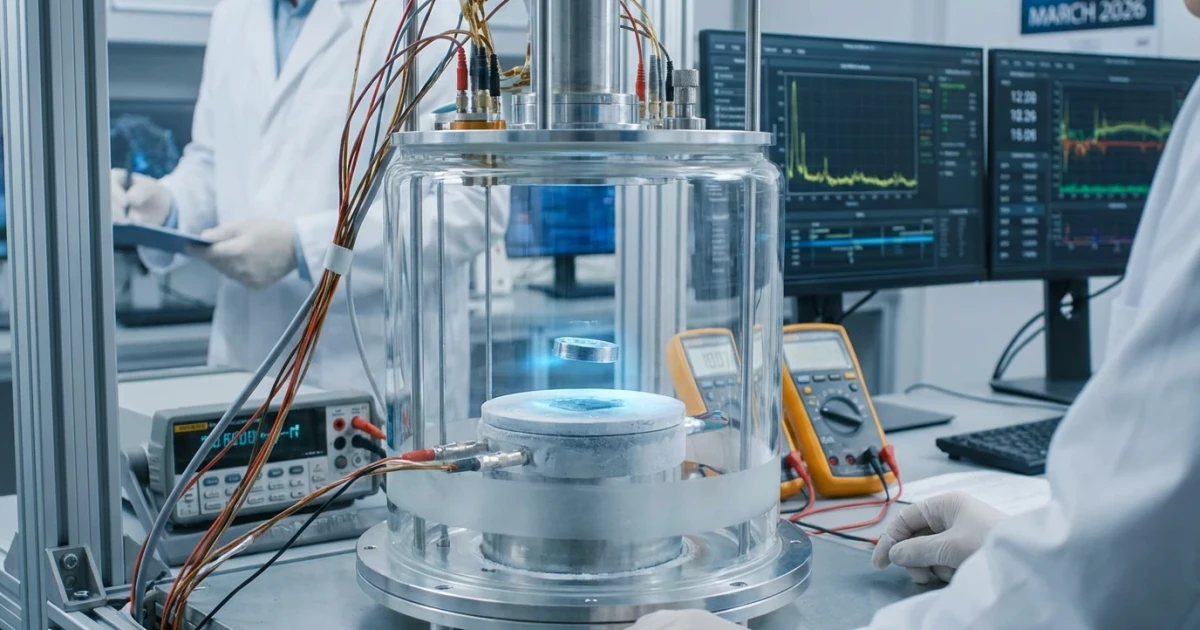
Researchers have achieved a milestone in the quest for practical superconductivity by breaking the long-standing record for high-temperature superconductivity at ambient pressure, according to a recent report from Phys.org. The discovery, hailed as a major advance, opens the door to new possibilities for energy transmission, magnetic technologies, and advanced electronics.
Breaking the Ambient-Pressure Barrier
Superconductors are materials that conduct electricity with zero resistance below a critical temperature (Tc). For decades, the pursuit has been to find materials that can superconduct at higher temperatures and, crucially, at ambient (normal) pressure. Most high-temperature superconductors discovered so far have required extreme pressures, limiting their practical applications.
The recent breakthrough, reported on March 15, 2026, marks a significant shift. A team of physicists has demonstrated superconductivity at a record high temperature under ambient pressure conditions, surpassing previous benchmarks set under similar conditions. While the exact temperature and material details are pending peer-reviewed publication, the achievement sets a new standard in the field.
Context: The Superconductivity Race
The search for high-temperature superconductors has a storied history. According to the APS News timeline, the initial breakthroughs in cuprates in the 1980s and hydrides in the 2010s pushed Tc limits, but almost all required high pressure. Recent years have seen rapid progress, notably with hydride-based materials, but ambient-pressure operation remained elusive.
For reference, the SuperCon Database tracks critical temperature records and conditions for known superconductors. Until this announcement, the highest Tc at ambient pressure remained well below the values achieved under high-pressure conditions, creating a significant gap between laboratory achievements and real-world utility.
Why Ambient Pressure Matters
Superconductivity at ambient pressure is vital for practical adoption. High-pressure cells are costly and complex, making it unfeasible for large-scale applications like power grids, maglev trains, or medical imaging devices. The new record demonstrates that high-Tc superconductivity can potentially be achieved in everyday environments, dramatically improving the prospects for commercial technology.
The NIST Superconductivity Program highlights the importance of these breakthroughs for standardization, industrial adoption, and measurement reliability.
Implications and Next Steps
- Energy Efficiency: Zero-resistance power lines could reduce energy loss across transmission networks.
- Magnetic Technologies: Advances in MRI and maglev transit could become more accessible and affordable.
- Future Research: The discovery will spur further exploration into similar materials and potential ambient-pressure superconductor candidates, as reviewed in the Nature high-temperature superconductors collection.
While the field awaits full peer-reviewed publication with all data, the 2026 record signals a major advance in the decades-long quest for practical superconductivity. As researchers build on this result, the dream of widespread, energy-efficient superconducting technology draws closer to reality.