World
Scientists uncover intact Maya city deep in Mexico's Yucatán forest
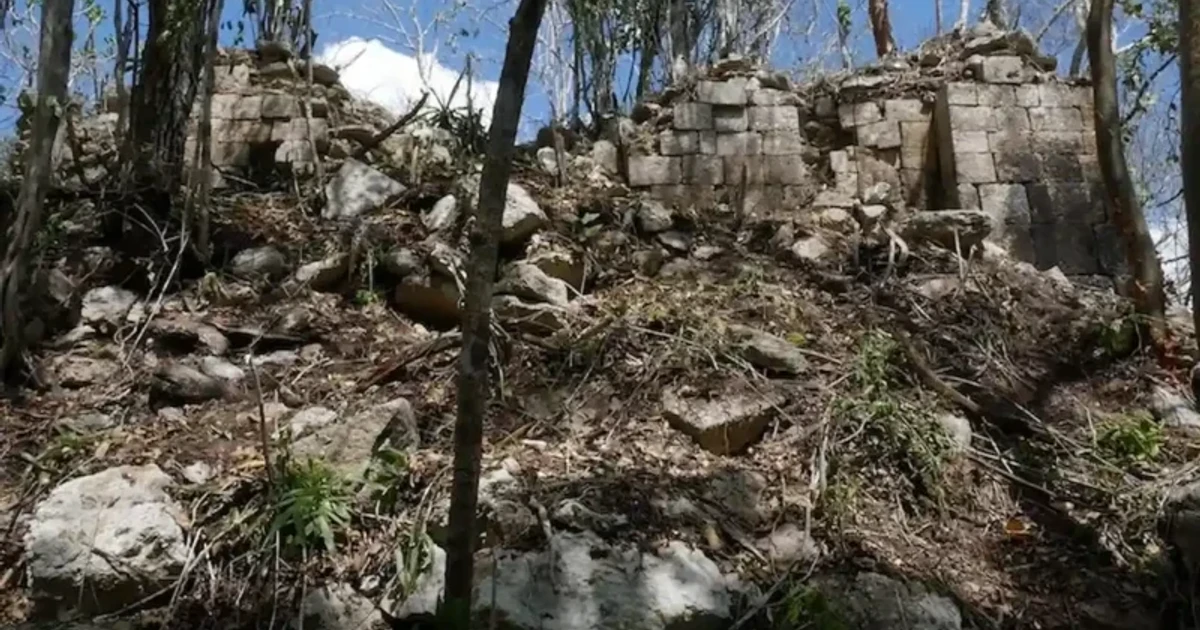
Mexico’s National Institute of Anthropology and History announced on June 22, 2026, that a Mexican-Slovenian team had documented Minanbé, an intact Maya city deep in the Calakmul Biosphere Reserve in Campeche. The find shows that, even in 2026, a major site can survive where remoteness kept looters out and new survey tools pointed archaeologists toward what the forest still concealed.
The team led by archaeologist Ivan Šprajc reached the site only after opening a five-kilometer path with machetes, then continuing by ATV and on foot for roughly another five kilometers under the sun with workers from the nearby community of Constitución. INAH said airborne LiDAR data guided the search before the expedition went into the field, a method that is changing what can be found before dense forest, roads or extraction damage a site.
Minanbé’s monumental core covers about 15 hectares, INAH said. Archaeologists recorded plazas, palatial and religious buildings, terraces, wetlands with hydraulic canals and a pyramidal temple more than 13 meters tall built in the Río Bec style. They also documented 14 stelae and altars, several with hieroglyphs, including one stela showing a decapitation scene dated to 849 CE.
Šprajc said the absence of dirt roads or old logging tracks was a promising sign, because access routes often lead to looting and earlier disturbance. At Minanbé, the ground showed no looting trenches, making it the first intact site his team had found in the previous three years. INAH said the name comes from Yucatec Maya mina’an, meaning there is no, and be, meaning path.
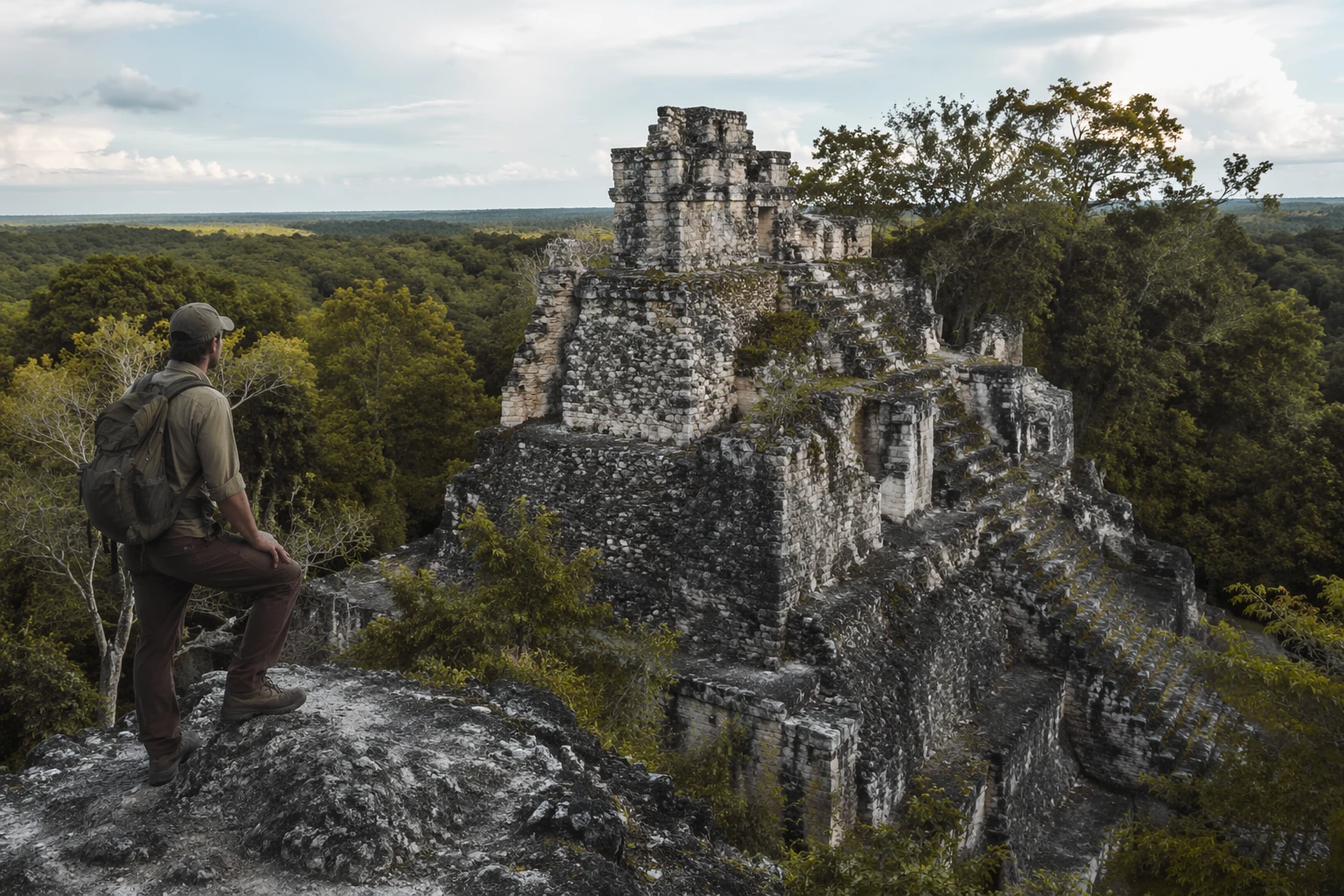
The discovery also closes a 30-year chapter in Šprajc’s work across the Central Maya Lowlands, a region he has described as having supported between 9 million and 11 million people during the Late Classic period, roughly 600 to 900 CE. Minanbé lies near the northern edge of the reserve and west of Chactún, another major Maya center first reported 13 years ago.
The Calakmul Biosphere Reserve is Mexico’s largest forest reserve, with 723,185 hectares and about 52 ejidos in its buffer zone. UNESCO describes it as a protected landscape that is not untouched forest, but one that also contains the remains of abandoned Maya cities, a reminder that the region’s canopy still shelters some of the last unexcavated traces of a vast civilization.
Sources
- [1]nytimes.com
- [2]inah.gob.mx
- [3]whc.unesco.org
- [4]unesco.org
- [5]iaps.zrc-sazu.si
- [6]academia.edu