Science
Scientists Uncover Key to Mammalian Limb Regeneration
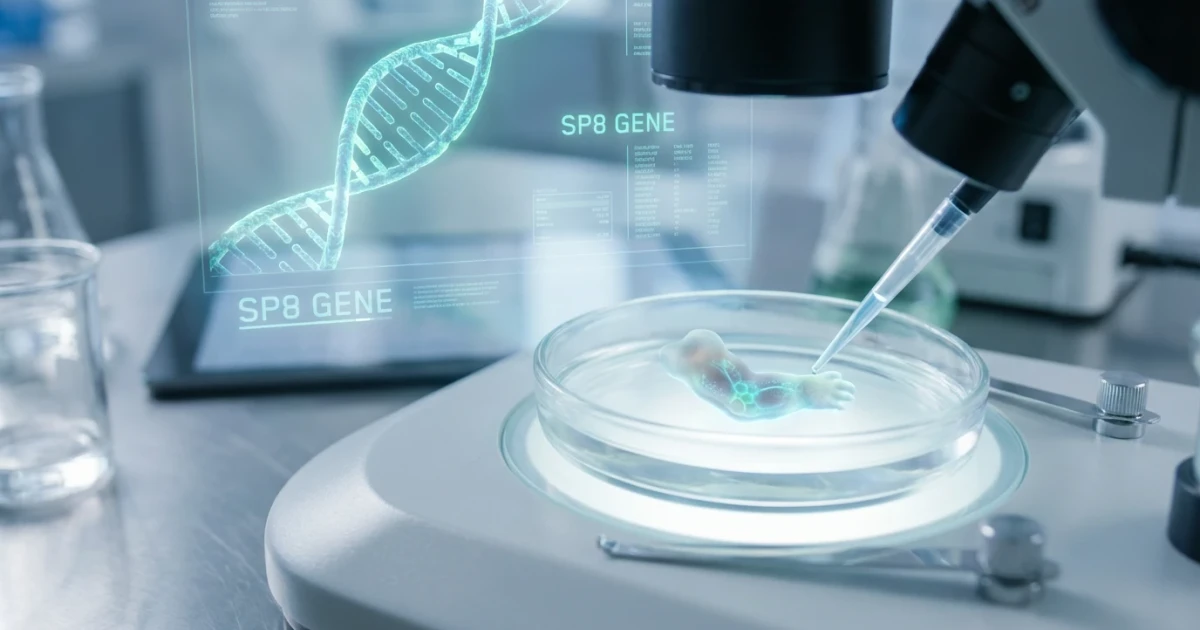
Researchers have identified a crucial genetic factor that enables limb regeneration in mammals, marking a significant advance toward the possibility of human limb regrowth. The findings, centered on the role of SP8-positive progenitor cells, have been described as a foundational step by scientists working in the field of regeneration research.
Understanding the SP8 Gene's Role
The breakthrough, highlighted by Neuroscience News, addresses one of biology's longstanding mysteries: why most mammals, including humans, are unable to regenerate lost limbs, unlike some amphibians. The research identifies SP8, a gene responsible for producing a transcription factor essential during early limb development. In experiments, scientists found that a specific population of SP8-positive progenitor cells can reinitiate growth and patterning processes similar to those seen in developing embryos, allowing for limb tissue regeneration in mammals under certain conditions.
- SP8 expression was shown to be necessary for the formation of new limb structures after injury.
- Without SP8, the regenerative response is severely limited or absent.
- These findings bridge a critical gap in our understanding of why regenerative potential is high in some animals but restricted in mammals.
Experimental Evidence and Data
Experimental models, primarily using mice, provided the foundation for these discoveries. By tracking SP8 gene expression across different tissues and developmental stages, researchers were able to pinpoint when and where regeneration could be activated. Data demonstrated that when SP8-positive cells were present and triggered, mammals could regenerate complex limb structures, not just simple tissues.
This work opens the door to more sophisticated studies in larger mammals and, eventually, the translation of these findings to potential human therapies. As highlighted by the published research, the ability to manipulate SP8 expression is now a focus for future regenerative medicine experiments.
Implications for Human Limb Regeneration
While the leap from mouse models to human applications remains a major challenge, the identification of a single gene and cell population as a regenerative switch is a milestone. According to Neuroscience News, this work "solves" a key mystery in limb regeneration biology, providing a clear target for further research and potential therapeutic development.
- This discovery paves the way for strategies to reactivate dormant regenerative pathways in humans.
- It could ultimately inform new treatments for amputees, those with severe limb injuries, or degenerative diseases.
- Further investigation is needed to understand how SP8 interacts with other genetic and environmental factors in human tissues.
Next Steps and Continuing Research
With this foundational insight, scientists are now working to refine their understanding of the SP8 pathway and to explore how it can be safely manipulated in larger mammals and, eventually, in human cells. The National Institute of General Medical Sciences (NIGMS) and other organizations are prioritizing limb regeneration as a critical area of biomedical research.
Although clinical applications are still years away, the SP8 discovery represents a leap forward for regenerative biology, offering a glimpse into a future where lost limbs could one day be restored.