Science
Scientists Uncover New Clues About the Universe
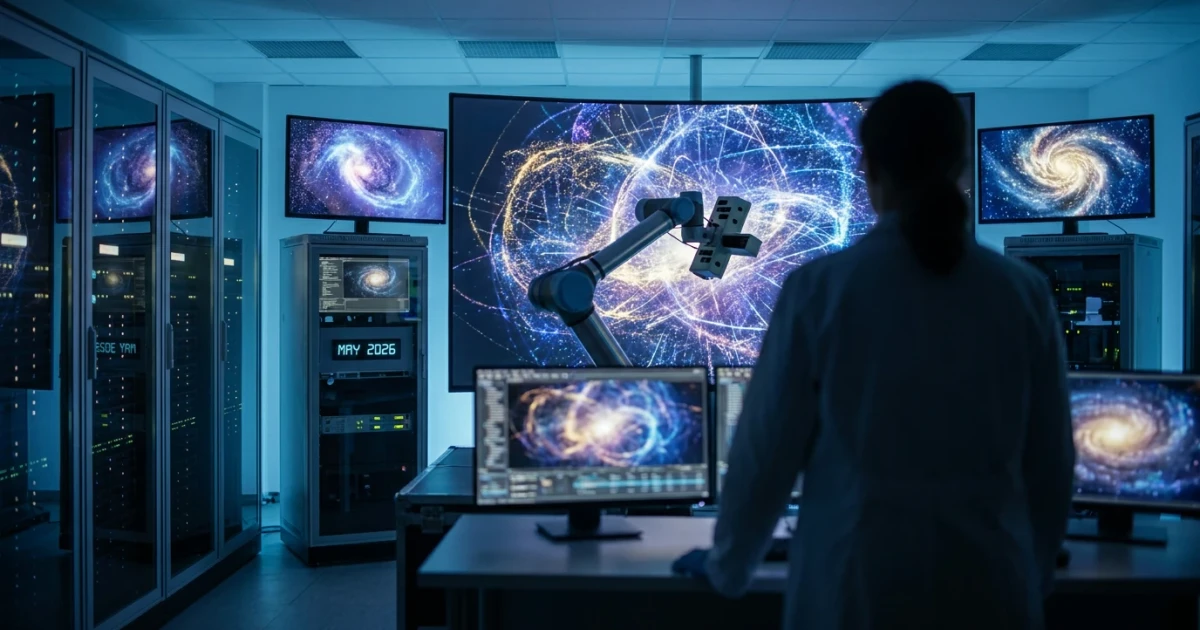
Scientists have announced a significant discovery that could alter our understanding of the universe, prompting excitement in the astrophysics community and raising new questions about the cosmos.
Breakthrough Discovery Raises Fundamental Questions
The revelation, first highlighted by ScienceDaily, has been described by experts as a potential turning point in astrophysics. Although details remain limited, initial reports indicate the findings challenge previously held assumptions about the universe’s structure and the forces that govern it. Such discoveries are rare and often drive a wave of new research and theoretical work.
Potential Impact on Cosmological Theories
While the specifics of the discovery have not yet been fully outlined, breakthroughs of this scale often influence diverse areas of research, from astrophysical theory to the interpretation of large-scale sky survey data. The announcement has prompted the scientific community to revisit existing models and consider new possibilities regarding the universe’s origin, composition, and fate.
- Major discoveries in cosmology can reshape our understanding of phenomena such as dark matter, dark energy, or the behavior of fundamental forces.
- New findings are often cross-checked using observational data from missions like the James Webb Space Telescope and the Hubble Space Telescope.
- Such results sometimes require updates to astronomical catalogs, including those curated by VizieR and global research repositories.
Community Response and Next Steps
The discovery has sparked discussion among astrophysicists, with many eager for more detailed data and peer-reviewed publication. Experts emphasize the importance of independent verification and analysis. Open data from NASA and European Space Agency space science missions will be crucial in confirming and expanding upon the results. Researchers worldwide are expected to explore the implications of this finding in the coming months.
Looking Forward
As additional information becomes available, the scientific community will assess the discovery’s impact on both theoretical and observational astronomy. The potential for new research directions—ranging from particle physics to cosmological datasets—is significant. This moment underscores the dynamic nature of astrophysics, where unexpected findings can lead to profound advances in our understanding of the universe.