Science
Scientists Uncover Origins of Gulf of Alaska ‘Golden Orb’
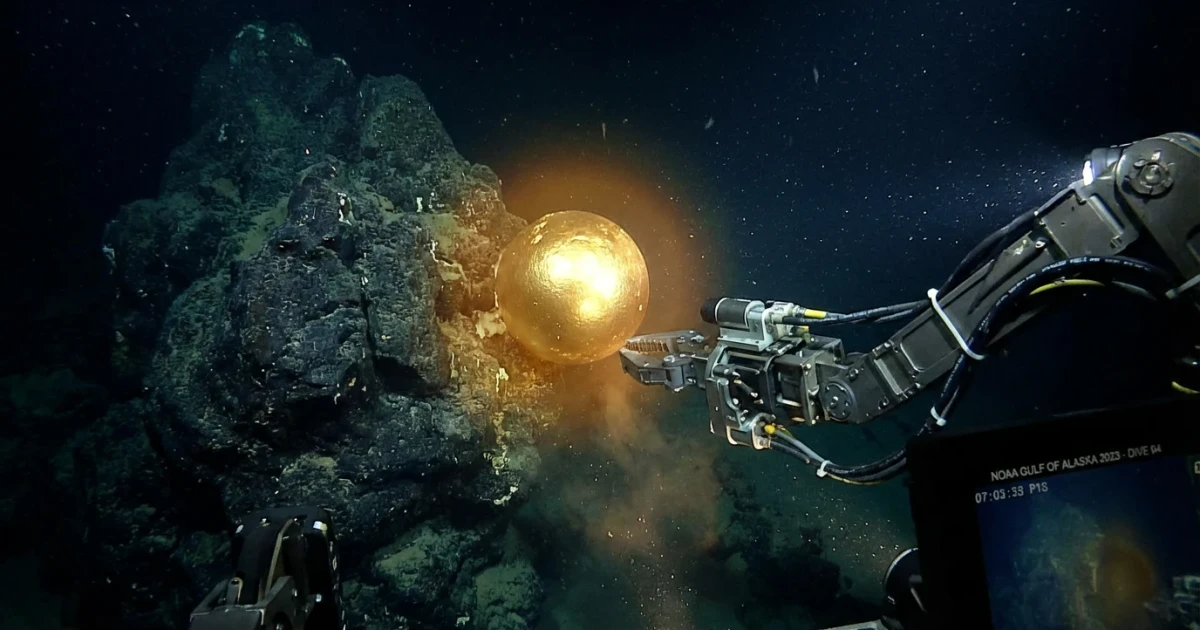
Scientists have revealed the identity of a mysterious 'golden orb' discovered during a 2023 NOAA ocean exploration in the Gulf of Alaska, unlocking new insights into the region's deep-sea biodiversity.
Discovery During Deep-Sea Expedition
Researchers first encountered the enigmatic golden-colored sphere in 2023, during a NOAA-led ocean exploration cruise in the Gulf of Alaska. The team used remotely operated vehicles to collect samples from the ocean floor, where they found the orb attached to a rocky outcrop at a depth of over 3,000 meters. The discovery immediately drew attention due to the specimen's unusual appearance—a smooth, metallic sheen and delicate membrane, unlike any previously cataloged organism found in the region.
Identification Process and Scientific Analysis
Following its retrieval, the orb underwent months of laboratory analysis. Scientists examined its morphology, genetic material, and microstructure, comparing their findings against records in the Alaska Deep-Sea Coral and Sponge Database and global marine species registries like the World Register of Marine Species. According to the Alaska Beacon, the research team has confirmed that the orb is most likely an egg case belonging to a previously unidentified species of deep-sea sponge or coral.
- The orb was found at a depth of over 3,000 meters
- It featured a smooth, golden surface and thin walls
- Genetic sequencing linked the specimen to deep-sea sponges, though its exact classification remains under review
This aligns with ongoing efforts to catalog deep-sea biodiversity in the Gulf of Alaska, as detailed in recent peer-reviewed research. These studies highlight the region's potential for yielding undiscovered species and unique adaptations to extreme environments.
Implications for Deep-Sea Research
The identification of the golden orb underscores the importance of deep-sea exploration in understanding oceanic life forms. The NOAA team’s findings contribute to a growing database of deep-sea biology and offer valuable clues about reproductive strategies and evolutionary pathways among marine invertebrates. The Gulf of Alaska is recognized as a hotspot for biodiversity, with new species regularly documented during scientific cruises.
As the orb’s DNA is cataloged and its taxonomy finalized, the specimen will provide additional data for comparative studies and may help refine identification protocols for other mysterious deep-sea discoveries. Scientists emphasize that continued exploration—and the use of advanced submersibles and genetic sequencing—is key to expanding our knowledge of Earth’s least-understood habitats.
Looking Ahead
While the golden orb’s precise species designation is still being determined, its identification as a likely deep-sea sponge or coral egg case marks a significant step forward. The discovery highlights the ongoing need for scientific investment in ocean exploration, as vast stretches of the world’s seafloor remain uncharted and full of biological surprises.
For those interested in learning more, NOAA’s official expedition logs and interactive cruise data provide detailed accounts and visualizations from the 2023 Gulf of Alaska mission, offering a window into the ongoing scientific quest to uncover the secrets of the deep.