Science
Scientists Uncover Origins of Mysterious Black Holes
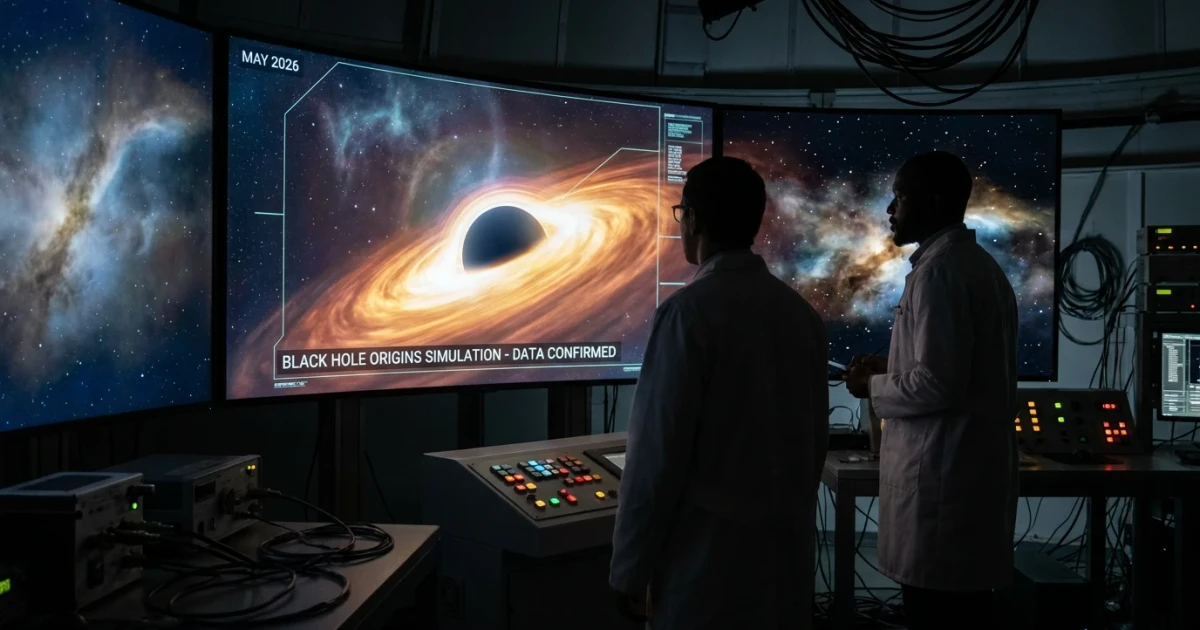
Astronomers have long been baffled by the discovery of black holes whose masses seem to defy the limits of known physics. Recent research is offering new explanations for how these so-called 'impossible' black holes come into existence, transforming our understanding of the universe’s most enigmatic objects.
Challenging Old Assumptions
For decades, astrophysicists believed massive stars could only collapse into black holes within a narrow range of masses due to the physics of stellar evolution. However, gravitational wave observatories like LIGO and Virgo have detected black holes with masses far outside these expected ranges, including some up to 85 solar masses—previously thought impossible to form directly from a single star.
These discoveries, widely reported by collaborations and discussed in NASA’s black hole science overviews, suggest that our models of stellar death and black hole formation may need significant revision. The NASA HEASARC Black Hole Catalog now lists dozens of black holes with masses beyond traditional theoretical limits, highlighting just how widespread these anomalies are.
Piecing Together the Puzzle
According to WIRED, recent theoretical work and improved computer simulations have provided new insights. One leading explanation is that some black holes are the result of hierarchical mergers—a process where two smaller black holes collide and merge, forming a larger one. These newly formed giants can then merge again, building up mass in steps and creating black holes that never could have formed directly from a single star.
This theory aligns with data from the Gravitational Wave Open Science Center, where several detected events feature merging black holes with combined masses exceeding predicted formation limits. Such events have upended previous assumptions about the upper mass gap for stellar black holes.
Cosmic Environments and Exotic Scenarios
Further research, as highlighted in WIRED and corroborated by ongoing projects at the Black Hole Initiative, points to dense star clusters as likely breeding grounds for these mergers. In these environments, black holes can interact closely, increasing the odds of repeat mergers. Some simulations even suggest that triple or quadruple black hole encounters could create even more massive objects, pushing the boundaries of what astronomers previously thought possible.
Other proposed mechanisms involve the collapse of massive stars with unusual compositions, or the direct collapse of primordial gas clouds in the early universe. While these scenarios are more speculative, they remain active areas of black hole research and could help explain cases that don’t fit the merger model.
Implications for the Future
Understanding the origins of these 'impossible' black holes has broad implications for astrophysics. It informs not only how stars live and die, but also how galaxies evolve and how the universe has grown over billions of years. With the upcoming LISA mission planned by the European Space Agency, astronomers expect to detect even more black hole mergers across the cosmos, providing further data to test these new theories.
- Gravitational wave detectors have revealed black holes up to 85 solar masses, outside previous formation models (LIGO detection table).
- Hierarchical mergers are a leading explanation for these giant black holes.
- Dense star clusters are key sites for these complex merger events.
- Ongoing missions and catalogs, such as HEASARC, are tracking the growing population of massive black holes.
Looking Ahead
As observational technology advances and more detections are cataloged, the picture of black hole formation will continue to evolve. What once seemed impossible is now a tantalizing clue to deeper cosmic mysteries still waiting to be solved.