Science
Scientists Uncover Reasons for T. rex’s Tiny Arms
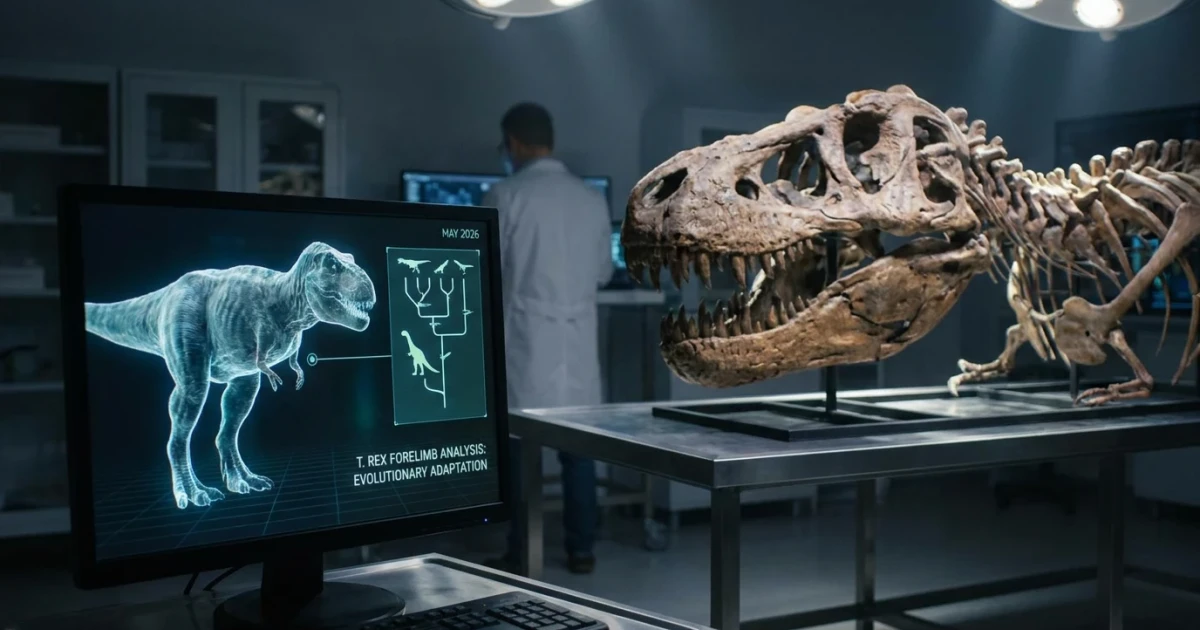
Tyrannosaurus rex, the apex predator of the Late Cretaceous, is famed for its colossal jaws and fearsome reputation. Yet one aspect has long puzzled paleontologists and the public alike: its peculiarly tiny arms. Recent research highlighted by Phys.org and The Conversation brings fresh insight into why these iconic meat-eating dinosaurs evolved such small forelimbs relative to their massive bodies.
The Mystery of T. rex’s Small Arms
While the T. rex fossil record shows adults could reach lengths of up to 12 meters and weigh as much as 8-10 tons, their arms measured barely 1 meter long. This anatomical quirk has led to much speculation over their function and evolutionary purpose.
New Research Sheds Light on Arm Reduction
Phys.org reports that recent studies propose a combination of evolutionary pressures as the drivers behind the reduction in forelimb size among large theropods like T. rex. As these carnivores evolved powerful jaws and skulls adapted for dispatching large prey, their reliance on forelimbs for hunting or feeding decreased significantly. Over successive generations, natural selection favored energy allocation to the head and jaws, resulting in proportionally smaller arms.
Findings also suggest that as T. rex grew larger, its arms may have become less useful for killing or manipulating prey. Instead, the jaws took over these roles. This hypothesis is supported by functional morphology studies, including those published in Scientific Reports (Nature), which demonstrate the formidable bite force and head mechanics of T. rex compared to its limited arm movement and reach.
Comparisons with Other Theropods
Paleontologists note that forelimb reduction is not unique to T. rex. Other large carnivorous dinosaurs, such as Giganotosaurus and Abelisaurus, also evolved shortened arms. As detailed in the Phys.org report, these evolutionary patterns suggest a broader trend among apex predators, where the forelimbs became functionally redundant as the skull and jaws took over primary predatory functions.
Potential Functions for Tiny Arms
- Some researchers, as summarized in The Conversation and further analyzed in forelimb function reviews, speculate the small arms may have retained secondary uses: helping the animal rise from a prone position, grasping during mating, or clutching prey at close quarters.
- However, the consensus emerging from recent studies is that any such functions became less critical as T. rex’s predatory anatomy changed over millions of years.
What This Means for Dinosaur Evolution
The reduction of forelimb size in T. rex offers a window into how selective pressures can dramatically reshape anatomy. The adaptation underscores the importance of functional specialization—in this case, the shift from grasping prey with arms to using a massive skull and jaw for hunting and feeding.
Ongoing Questions and Future Research
Despite advances in understanding, scientists acknowledge that some mysteries remain. Further fossil discoveries and biomechanical modeling may help clarify exactly how T. rex’s arms were used, if at all, in adult life. For now, the evidence points to a fascinating story of evolutionary trade-offs in one of prehistory’s most iconic creatures.
For readers interested in exploring the data and research further, the Paleobiology Database and other linked resources offer detailed records, anatomical diagrams, and current scientific analyses of T. rex and its relatives.