Science
Scientists Unveil 3D Magnetic Structure Induced by Laser Light
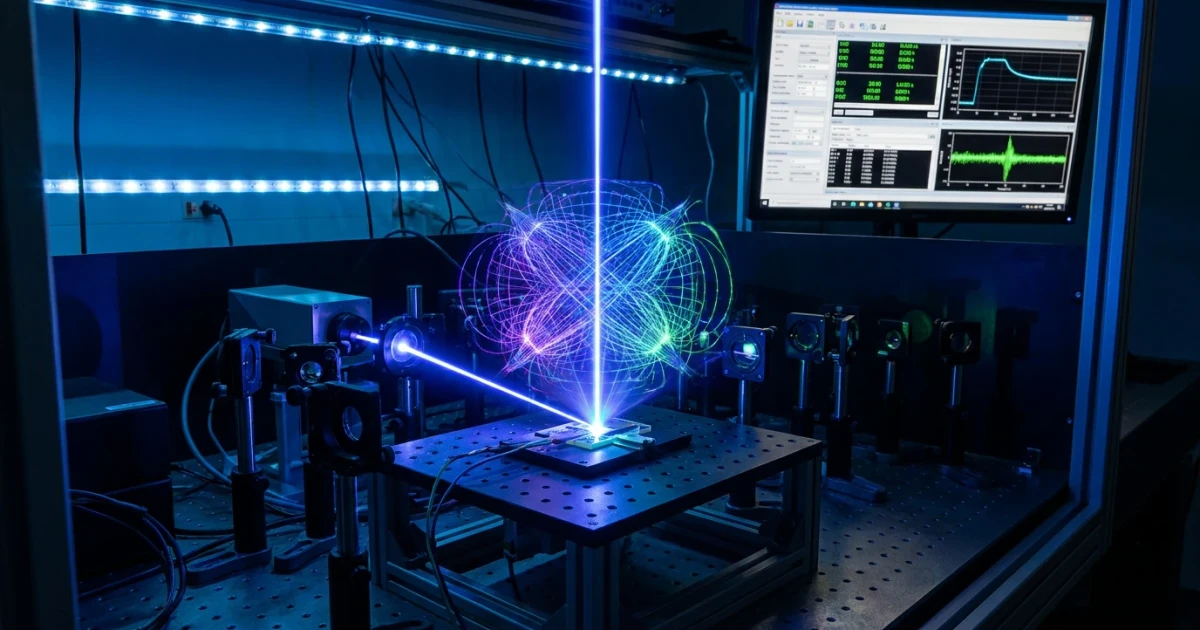
Physicists have made a significant breakthrough by discovering a novel three-dimensional magnetic structure created using ultrafast laser pulses, marking a leap forward in the manipulation of magnetic materials for future technologies.
Breakthrough in Magnetic Structure Manipulation
In a study highlighted by Phys.org, a team of researchers successfully induced a three-dimensional magnetic structure within a material using precisely controlled laser light. This achievement represents a substantial advance in the field of condensed matter physics, where the ability to control magnetic configurations at ultrafast timescales and in three dimensions has long been a sought-after goal.
How the Discovery Was Made
The researchers employed ultrafast laser pulses to manipulate the spin arrangement inside a magnetic material. The laser's energy temporarily altered the atomic structure, creating a three-dimensional pattern of magnetic domains that persisted for a measurable duration before relaxing back to the ground state. According to the data released, this process was observed using advanced time-resolved microscopy, allowing scientists to capture the transient magnetic structure in unprecedented detail.
Significance for Magnetic Materials Research
This discovery opens up new possibilities for designing magnetic devices and storage technologies. Traditional magnetic structures, such as domains and skyrmions, have typically been confined to two dimensions. The creation of a three-dimensional skyrmion-like structure suggests that more complex magnetic configurations are not only theoretically possible but can also be realized and controlled experimentally.
- Three-dimensional control enables higher data storage density for future memory devices.
- Potential for faster, more energy-efficient spintronic components.
- Provides new avenues for fundamental research into quantum magnetism and topological phases.
Comparison with Existing Magnetic Structures
Most previous work in this field focused on two-dimensional arrangements, where spins align in a flat plane. The magnetic properties of iron and similar materials have been studied extensively in this context. This new method demonstrates that laser-induced excitation can create—and potentially stabilize—three-dimensional spin textures, expanding the landscape of possible magnetic phenomena.
As explained by the American Physical Society, magnetic structures are crucial for understanding and developing next-generation electronic and quantum devices. By achieving ultrafast, three-dimensional control, the discovery lays groundwork for future applications in high-speed data processing and advanced quantum information systems.
Measurement and Verification
The study's findings were corroborated using advanced measurement techniques aligned with NIST magnetic materials measurement standards. The researchers provided open access to their experimental parameters and supplementary datasets, ensuring the broader scientific community can validate and build upon these results.
Looking Ahead
While the discovery represents a major step, further research is needed to stabilize and manipulate these three-dimensional magnetic structures for practical applications. The ability to engineer such patterns on demand could revolutionize data storage, processing, and quantum computing.
With continuing advances in laser technology and microscopy, scientists are optimistic that three-dimensional magnetic structures will become an integral part of future magnetic and quantum devices. As experimental methods mature, the potential for breakthroughs in information technology and materials science continues to expand.