Science
Scientists Unveil Record-Breaking 3D Map of 47 Million Galaxies
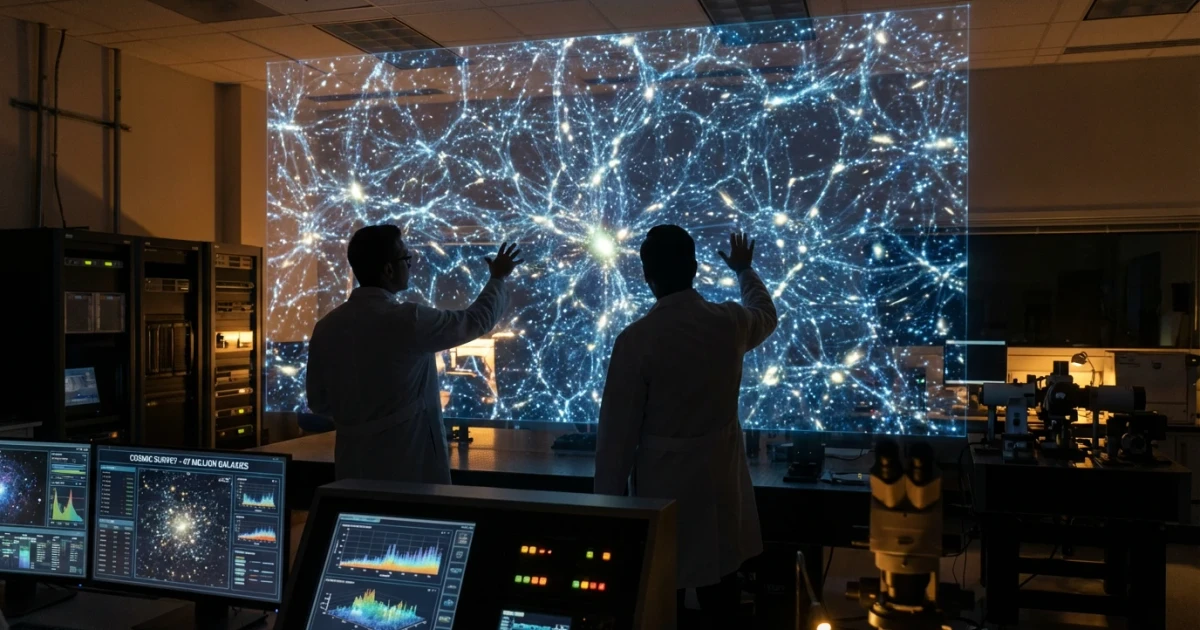
The universe’s structure has come into clearer focus with the unveiling of the largest-ever 3D map of the cosmos, capturing the spatial distribution of 47 million galaxies in unprecedented detail. This monumental achievement, announced by astronomers working with the SPHEREx project, offers an extraordinary look from our own Milky Way out to the era known as cosmic noon, a crucial period in galactic evolution.
Mapping the Universe at Scale
The newly released 3D map is the most expansive of its kind, according to Live Science, surpassing previous efforts in both scope and resolution. The catalog spans vast cosmic distances, allowing scientists to trace how galaxies are distributed and how cosmic structures have grown over billions of years. The SPHEREx mission, led by NASA’s Jet Propulsion Laboratory, used advanced photometric techniques to measure the redshifts and positions of millions of galaxies, generating a comprehensive catalog for cosmological studies.
- 47 million galaxies mapped in three dimensions
- Coverage extends from the Milky Way to galaxies seen as they appeared over 10 billion years ago
- Includes detailed measurements of galaxy positions, distances, and properties
Revealing the Universe from the Milky Way to ‘Cosmic Noon’
This map reaches out to the era known as ‘cosmic noon’, a period roughly 10 billion years ago, when star formation in the universe peaked. Scientists describe this epoch as a turning point in galactic development, where galaxies like the Milky Way underwent rapid transformation. By charting galaxies across such a broad range of cosmic time, the dataset enables researchers to investigate how galaxies formed and evolved—offering clues to the history and fate of our own galaxy.
Comparing to Previous Surveys
Earlier sky surveys, such as the Sloan Digital Sky Survey (SDSS), mapped millions of galaxies, laying the groundwork for modern cosmology. However, the SPHEREx catalog’s 47 million entries dramatically expands the available data, providing higher resolution and covering a larger portion of the sky. This leap in scale allows for better statistical analysis of galaxy clustering and large-scale structures, enhancing our understanding of the cosmic web.
Scientific Impact and Future Research
According to astronomers, this massive 3D map is a critical resource for probing fundamental questions about the universe. It will be used to measure baryon acoustic oscillations (BAO), study dark energy, and refine models of cosmic evolution. By comparing observations across different epochs, scientists gain insights into how gravity, dark matter, and other forces shaped the universe’s structure.
- Supports studies of dark energy and cosmic expansion
- Enables precise measurements of galaxy clustering and distribution
- Offers a foundation for future missions and cosmological analyses
Looking Ahead
With the largest-ever 3D map now available, researchers worldwide can access and analyze the full galaxy catalog to explore the structure and history of the universe in more detail than ever before. As new telescopes and surveys come online, the techniques and data pioneered by the SPHEREx project will remain central to advancing our cosmic understanding. The map stands as a testament to scientific collaboration and the power of data-driven astronomy.