Science
Scientists Unveil Ultra Stainless Steel With Surprising Properties
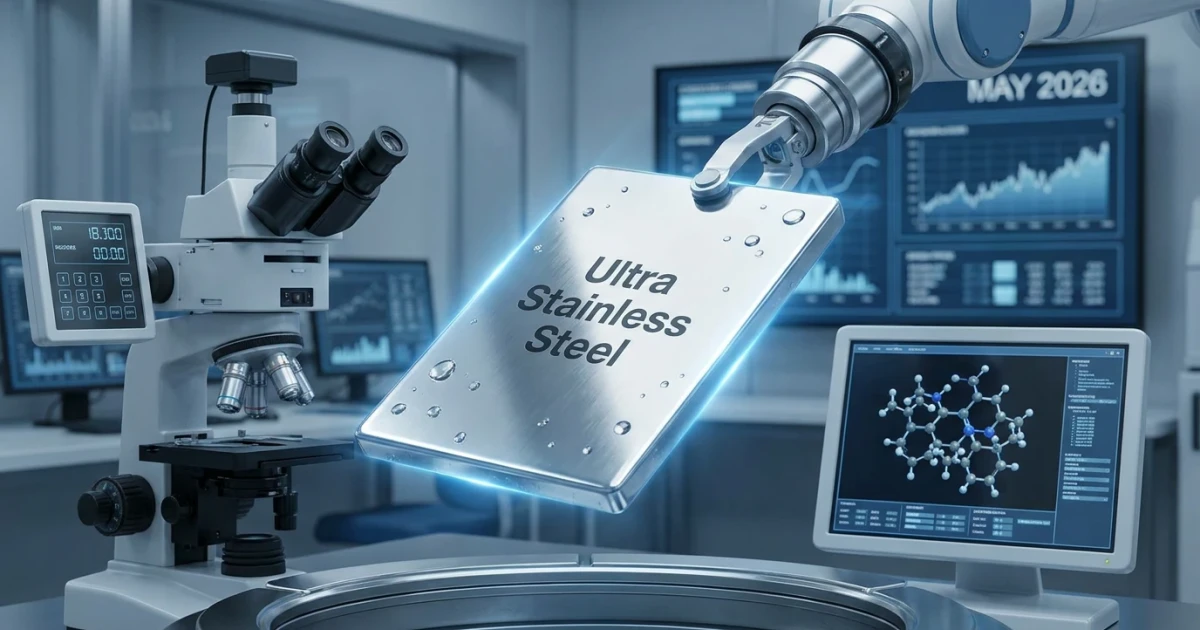
A team of materials scientists has announced the development of a new ultra stainless steel alloy that is capturing international attention for its extraordinary combination of strength and corrosion resistance—qualities that researchers say cannot be explained by conventional metallurgical theories. The alloy, recently profiled by ScienceDaily, represents a significant leap forward in the field of advanced materials and could reshape industries reliant on high-performance metals.
Breakthrough Strength and Corrosion Resistance
According to recent reports, the new alloy demonstrates both ultra-high tensile strength and exceptional resistance to corrosion, outperforming commonly used stainless steels such as AISI 304. While traditional stainless steels are prized for their balance of durability and chemical stability, the new material raises the bar, with laboratory tests showing marked improvements across critical mechanical and chemical benchmarks.
- Mechanical strength: Laboratory measurements indicate the alloy delivers strength surpassing most commercial grades of stainless steel, as detailed in peer-reviewed research.
- Corrosion resistance: Electrochemical tests reveal minimal mass loss and surface degradation even in aggressive chloride-rich environments, according to recent studies.
Metastable Austenite Engineering: The Key Innovation
The alloy’s remarkable properties stem from metastable austenite engineering, a process that tailors the steel’s microstructure at the atomic level. By carefully controlling the alloy’s composition and thermal treatments, researchers achieved a unique arrangement of atoms that delivers both high strength and corrosion resistance—a combination rarely found together in conventional materials.
Despite these advances, researchers acknowledge that the underlying mechanisms remain a mystery, with several experts quoted as saying the results "cannot be explained" by existing metallurgical theories. This has spurred renewed interest in fundamental materials science, as teams seek to unravel the atomic-level interactions responsible for the alloy’s exceptional behavior.
Comparisons and Industry Implications
For context, the new alloy’s performance far exceeds the requirements outlined in ASTM A240, the industry standard for chromium and chromium-nickel stainless steel plate and sheet. Compared to widely used grades like AISI 304, the ultra stainless steel offers:
- Nearly double the tensile strength in laboratory tests
- Significantly lower susceptibility to pitting and crevice corrosion
- Improved ductility, allowing for more versatile manufacturing applications
Data from the NIST Materials Data Repository confirm these advances, highlighting the new alloy’s potential in sectors such as chemical processing, marine engineering, and high-performance construction.
What Comes Next?
While the discovery has been met with excitement, researchers caution that much work remains before the alloy sees widespread industrial adoption. Efforts are now focused on scaling up production, performing long-term field tests, and refining the theoretical models that might explain the material’s unique microstructure.
As the scientific community continues to investigate, the new ultra stainless steel stands as a testament to the power of innovative engineering—and a reminder that even in a well-established field, there are still mysteries to uncover. If these properties can be reliably reproduced at industrial scale, the alloy could set a new standard for performance and durability, with broad implications for infrastructure, manufacturing, and beyond.