Science
Scientists Use Bioluminescent Algae for 3D-Printed Designs
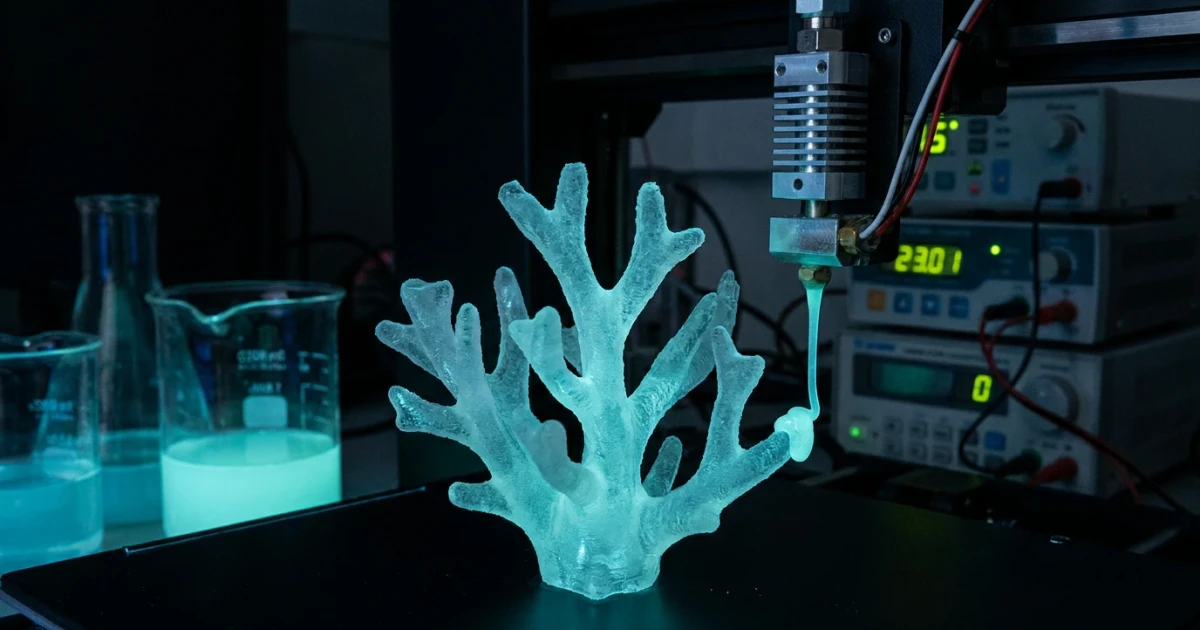
Scientists at the University of Colorado Boulder have successfully harnessed the natural blue glow of bioluminescent algae to create 3D-printed shapes that emit light without electricity, a development that could lead to innovative, sustainable lighting solutions for homes, streets, and public spaces.
Bioluminescent Algae: Lighting Without Wires
The project, highlighted in The Guardian, centers on the use of bioluminescent algae, microscopic organisms that naturally produce light through a chemical reaction. When cultivated in controlled environments, these algae can be embedded within custom 3D-printed structures, allowing them to glow in specific shapes and patterns. The soft blue light produced offers an alternative to traditional electric-powered lighting.
- The blue glow is generated by the algae as part of their metabolism, requiring only minimal nutrients and water.
- Researchers have demonstrated that the bioluminescence can last for hours, depending on environmental conditions and algae health.
- Unlike LEDs or bulbs, this method does not require wiring, batteries, or an external power source.
Techniques and Potential Applications
CU Boulder’s research team used advanced 3D-printing technology to design and fabricate containers optimized for algae growth and light emission. By controlling the thickness, transparency, and shape of the printed material, the scientists can tune the intensity and distribution of the emitted light. The Guardian notes that this approach allows for creative forms, such as glowing tiles, panels, or even decorative objects.
- Potential applications include sustainable architectural features, night-time walkway illumination, and interactive art installations.
- Because the algae are living organisms, the light emission can respond to changes in the environment, such as movement or temperature.
- Researchers are also exploring how to extend the lifespan of the bioluminescent effect by optimizing algae care and container design.
Scientific and Environmental Impact
According to peer-reviewed studies, bioluminescent algae offer a promising alternative for low-impact lighting, particularly in settings where electricity is scarce or sustainability is prioritized. The method avoids carbon emissions associated with traditional lighting and could reduce electronic waste. However, the Guardian article also notes that the brightness of algae-based lights is modest compared to modern LEDs, meaning practical use may be limited to accent or ambient lighting for now.
Challenges and Next Steps
While the breakthrough demonstrates the potential for living, glowing designs, several challenges remain. Maintaining algae health and consistent light output requires careful balance of nutrients, humidity, and temperature. Researchers are working to improve the species selection and container engineering to make the technology more robust and user-friendly.
Despite these hurdles, experts believe that the technology could soon see pilot deployments in public art, educational exhibits, and eco-friendly architecture, paving the way for broader adoption as performance improves. As interest grows in sustainable design and alternative energy, bioluminescent algae may become a visible—and glowing—part of future cityscapes.