Science
Scientists use sharks as living sensors to improve hurricane forecasts
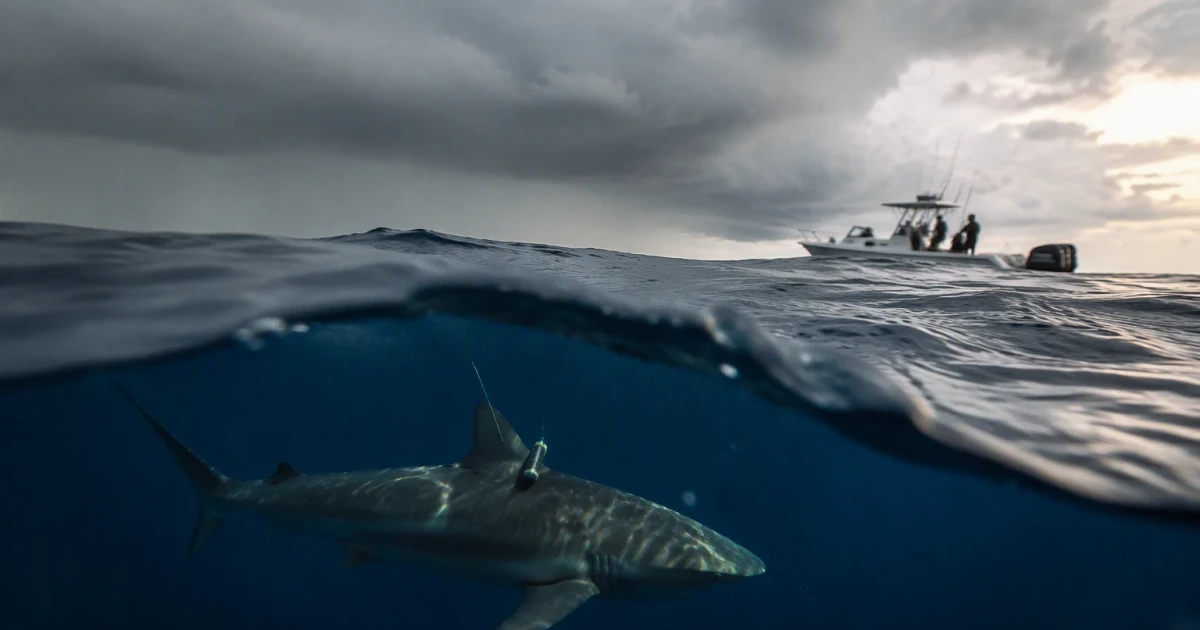
Scientists from the University of Delaware and NOAA tagged sharks off the U.S. East Coast with small electronic devices to sharpen hurricane forecasts by measuring the ocean conditions storms draw energy from. As the animals dive, rise and travel across the Atlantic, their instruments record temperature, pressure, salinity and depth in waters that are difficult and expensive to sample with buoys, ships and satellites alone.
Hurricane intensity depends heavily on ocean heat content. NOAA’s National Centers for Environmental Information says ocean heat content is a critical aid in assessing the ocean’s impact on tropical cyclones, and its satellite ocean heat content suite monitors those conditions. A NOAA-authored paper from 2007 found that adding oceanic heat content estimates to operational forecasting improved intensity forecasts for Atlantic Category 5 hurricanes.
Tagged sharks fit into a broader effort to use wildlife as environmental sensors. In April 2026, scientists at the University of Miami Rosenstiel School of Marine, Atmospheric, and Earth Science and Woods Hole Oceanographic Institution found that data collected by tagged sharks could enhance ocean predictions in regions that are hard to observe with conventional methods. Aaron Carlisle, an associate professor in the University of Delaware’s School of Marine Science and Policy, said in a June 2, 2026 appearance on FOX Weather that sharks can serve as freely roaming ocean monitors, helping scientists improve hurricane forecasting and better understand storm development.
If forecasters can better map where the ocean is storing heat, they can improve calls on whether a storm is likely to strengthen rapidly or weaken before landfall, information that feeds evacuation timing, emergency management and utility planning. The shark sensors are not a replacement for satellites, aircraft or moored instruments; they fill gaps in places and depths those systems do not sample.
Sources
- [1]reuters.com
- [2]france24.com
- [3]youtube.com
- [4]news.miami.edu
- [5]ncei.noaa.gov
- [6]aoml.noaa.gov
- [7]agupubs.onlinelibrary.wiley.com
- [8]geonews.tamu.edu
- [9]maracoos.org