World
Scientists warn changing Atlantic could make UK weather more extreme
The Met Office recorded 2025 as the warmest year on record for the UK, and the last decade as warmer than any previous decade on record. Britain’s climate is already temperate maritime and naturally changeable, and the agency warns that hotter, wetter, drier and stormier extremes are becoming more frequent and more intense.
Coningsby in Lincolnshire recorded the UK’s first temperature above 40C on 19 July 2022, reaching 40.3C. Britain has already seen several record-breaking heatwaves in summer 2026, including a provisional new June maximum of 36.9C in Wattisham, Suffolk. In June 2025, the Met Office said the chance of exceeding 40C in the UK is increasing rapidly, a threshold once treated as near-impossible.
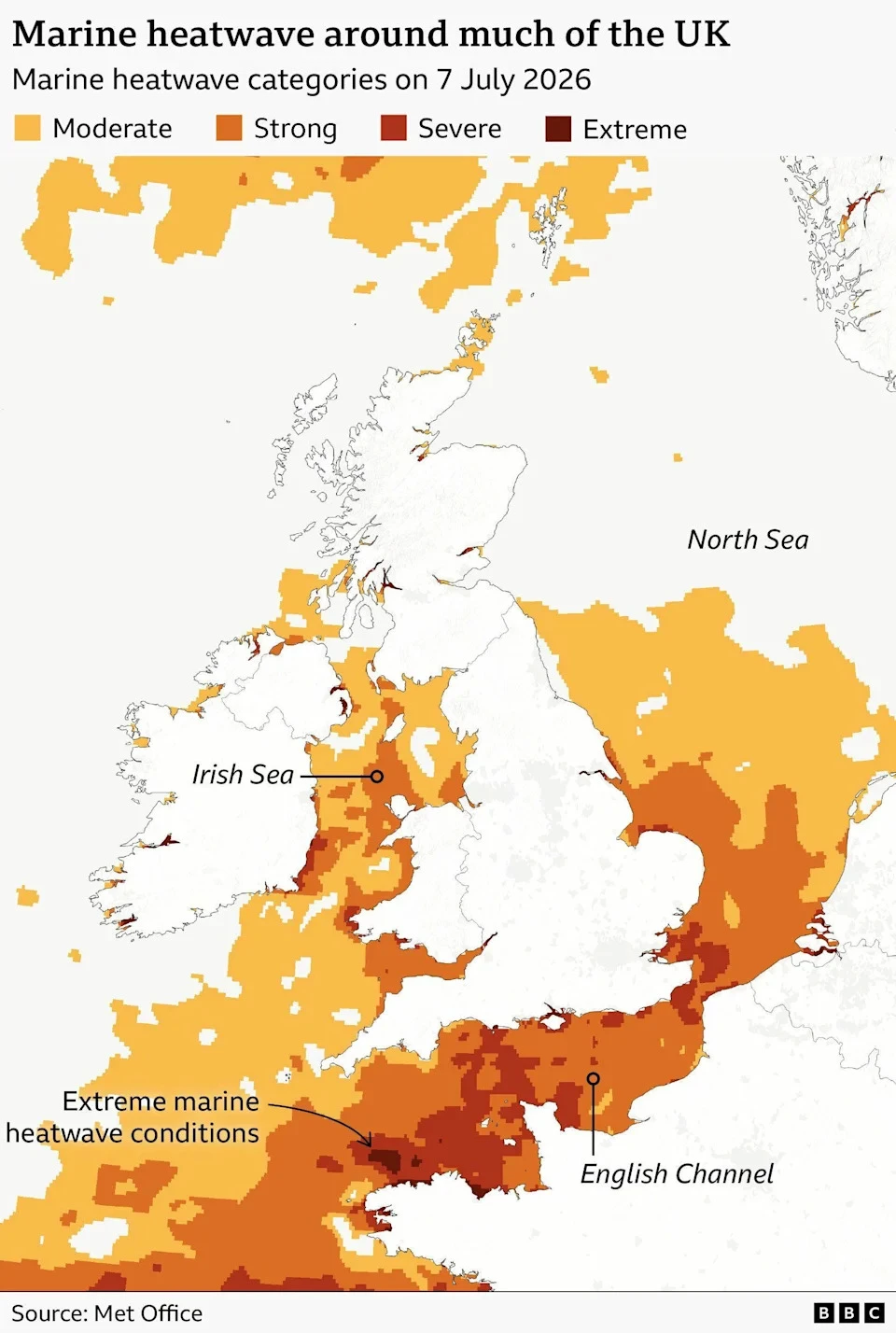
The Gulf Stream is part of the Atlantic Meridional Overturning Circulation, or AMOC, the larger system that helps move warm water north and keeps the UK milder than other places at the same latitude. The Met Office has warned that a weakening AMOC could cool parts of the North Atlantic, alter precipitation and shift regional weather patterns, even as some recent studies judge a full collapse this century unlikely.

The jet stream strongly shapes UK weather, and when it shifts south across the Atlantic it can funnel low-pressure systems directly towards Britain, increasing the frequency and intensity of rain-bearing fronts. In 2026, the Met Office linked some of the country’s very wet spells to a more energized jet stream. Flood planning, heat-health preparedness, road and rail resilience, farm scheduling and insurance pricing all depend on how often Britain is hit by extremes rather than averages. The Met Office, along with health and climate agencies including the UK Health Security Agency, has been pressing for planning built around higher heat and more volatile weather. A recent Met Office blog set out a plausible scenario in which UK temperatures could reach 45C by 2056.