Science
Scientists Warn of Imminent Low Earth Orbit Crisis Threatening Global Safety
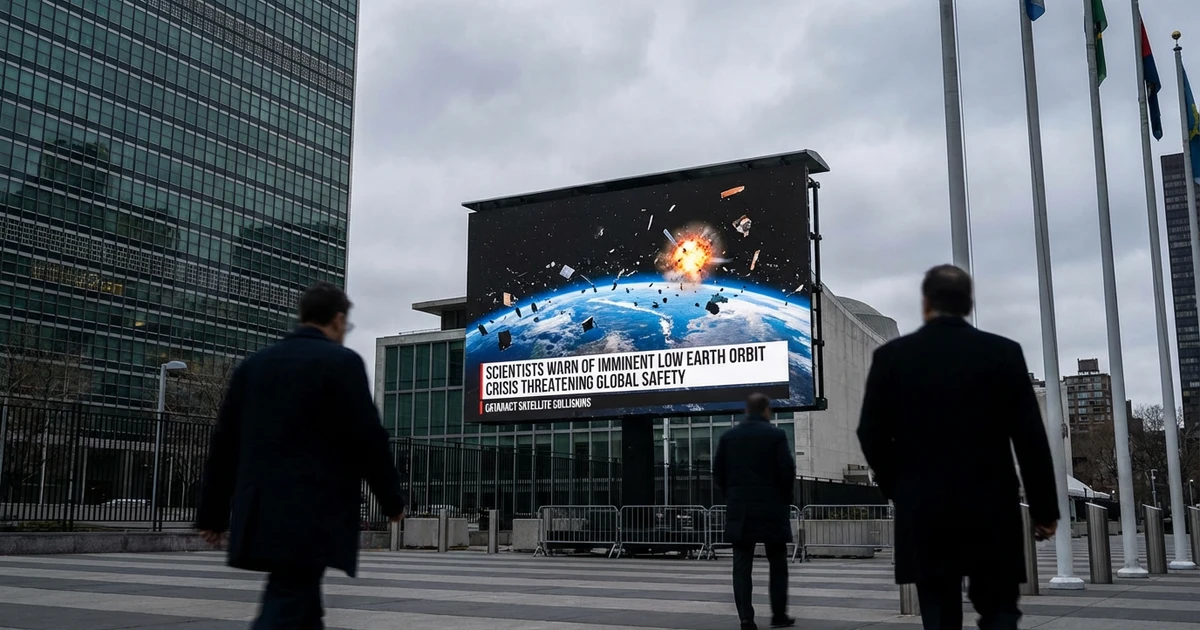
Growing concerns about the safety of low Earth orbit (LEO) have reached a critical point as scientists warn that the region could soon experience a rapid collapse, posing dire risks to both technology and life on the planet below.
Overcrowding in Low Earth Orbit: A Mounting Threat
Experts have sounded the alarm regarding the increasingly crowded conditions in low Earth orbit, a zone extending up to 2,000 kilometers above the Earth's surface. This region is home to thousands of active satellites, defunct spacecraft, and countless fragments of space debris. The exponential increase in satellite launches by commercial, governmental, and scientific entities has pushed LEO to the brink of what some researchers describe as a 'tipping point.'
- LEO currently hosts over 9,000 active satellites and an estimated 130 million pieces of debris larger than a millimeter.
- Projections indicate that satellite launches could double in the next five years, further intensifying congestion.
- The risk of collisions increases exponentially with each additional object, raising the threat of cascading debris events.
The CRASH Clock: Measuring the Countdown to Catastrophe
To track this growing danger, tools like the CRASH Clock, developed by leading space safety organizations, offer real-time assessments of orbital congestion. These metrics indicate that the risk of catastrophic chain-reaction collisions—known as the Kessler Syndrome—is at its highest level since the dawn of the Space Age.
Potential Consequences: Debris Raining Down on Earth
If the worst-case scenario unfolds, scientists warn that collisions could trigger a domino effect, breaking satellites and debris into even smaller, uncontrollable fragments. This swarm of high-velocity debris could render key orbits unusable for decades and result in debris falling through the atmosphere. While most small fragments would burn up, larger pieces could survive re-entry and pose real threats to populated areas below, effectively "raining deadly missiles onto the planet," as experts have cautioned.
Global Impact on Communication, Navigation, and Safety
- Satellites in LEO power global communications, navigation, weather forecasting, and scientific observation.
- Significant damage or loss of these assets could cause widespread disruptions to internet services, GPS navigation, and national security infrastructure.
- Downed debris could also endanger aircraft, ships, and populated regions worldwide.
The Urgent Call for Action
With the CRASH Clock ticking, scientists and safety advocates are urging governments and space agencies to implement stricter regulations on satellite launches, develop new debris removal technologies, and enforce end-of-life deorbit plans for spacecraft. These measures are seen as essential to avert a crisis that could have far-reaching consequences for humanity's presence in space and safety on Earth.
Looking Forward: Navigating the Future of Space
The challenge of managing low Earth orbit is a global one, requiring international cooperation and innovation. As launches continue to rise and the pace of technological development accelerates, the need for sustainable practices in space has never been more pressing. Whether humanity can avert a collapse of LEO—and the potential fallout on Earth—will depend on the collective response of the spacefaring community in the coming years.
Sources
- [1]Futurism