Science
Scorpion Exoskeletons Found Fortified With Metal Elements
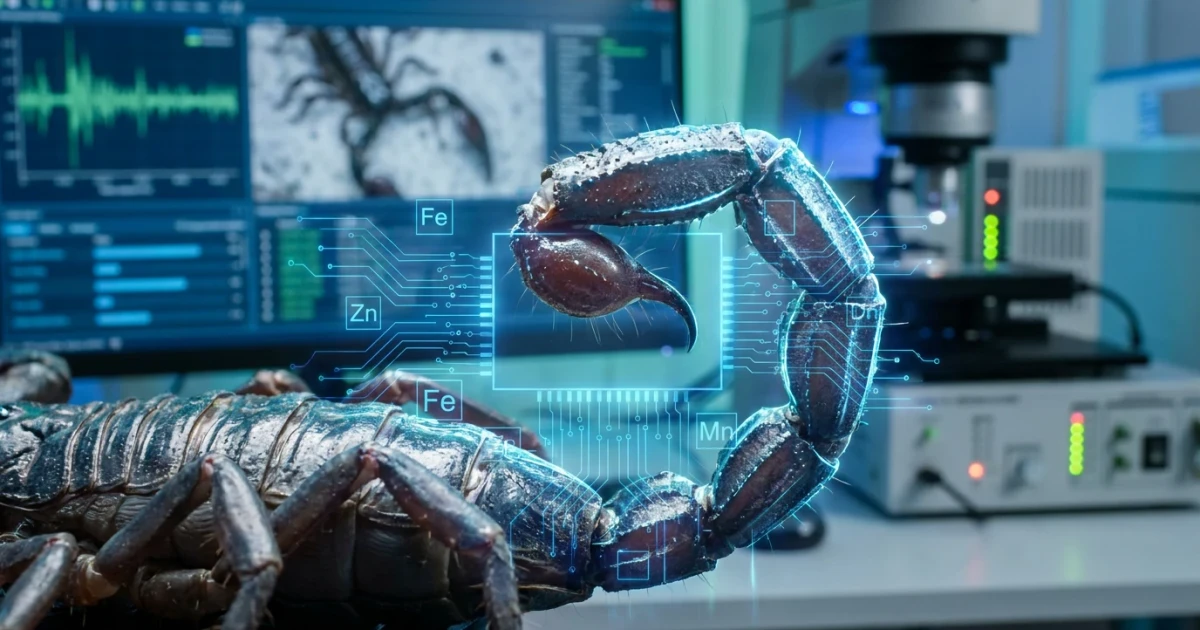
Scorpions, long known for their formidable pincers and venomous stingers, have now been shown to be literally reinforced with metal, according to recent scientific research. The findings, first reported by Gizmodo, highlight how these ancient arachnids incorporate metallic elements into their exoskeletons, significantly improving their mechanical performance and evolutionary fitness.
Metal in Scorpion Exoskeletons
Scientists have discovered that scorpion chelae (pincers) and stingers contain trace amounts of metals, such as zinc and manganese, embedded within the cuticle. This metal incorporation is not merely incidental; it serves to increase the hardness and durability of these crucial body parts, making them more effective for hunting and defense. According to a recent Nature study, the presence of metal elements in the cuticle directly correlates with improved mechanical performance, allowing scorpions to puncture prey and repel threats with greater efficiency.
- Metals like zinc and manganese are concentrated in the pincers and stinger tips.
- These elements enhance the structural strength and wear resistance of scorpion weapons.
- Metal reinforcement is believed to be an evolutionary adaptation for predation and protection.
How Metal Makes a Difference
Metal fortification of scorpion body parts is a fascinating example of biological innovation. The research cited by Gizmodo explains that metals are integrated into the cuticle at microstructural levels, making the exoskeleton tougher and less prone to damage. This adaptation is particularly important for scorpions, whose survival depends on their ability to subdue prey and defend against predators.
According to a full-text open-access study, the mechanical advantages bestowed by metal elements include:
- Increased hardness and abrasion resistance
- Greater puncture force capability
- Enhanced longevity of weapon structures
Evolutionary Implications
The presence of metal in scorpion exoskeletons is not unique to a single species but appears across various members of the Scorpiones order. This suggests a widespread evolutionary strategy among arachnids to optimize their anatomy for survival. The Gizmodo report notes that metal-reinforced scorpions have evolved to meet the demands of their environment, outcompeting rivals with their enhanced weaponry.
For readers interested in the biological significance of these adaptations, a review of metal ions in arthropod exoskeletons offers detailed background on how such strategies are employed by other species as well.
Broader Context and Future Research
This discovery sheds light on the remarkable complexity of scorpion anatomy and the ingenious ways in which nature optimizes organisms for their ecological roles. The integration of metal into the exoskeleton could inspire biomimetic materials research, leading to new advances in robotics, manufacturing, and protective gear.
As scientists delve deeper into the mechanisms of metal incorporation, further studies may reveal how these processes are regulated and whether similar strategies are found in other arthropods. For those seeking more comprehensive species accounts and anatomical data, the Animal Diversity Web offers additional resources.
In conclusion, scorpions’ metal-reinforced pincers and stingers are not only a testament to evolutionary ingenuity but also a source of inspiration for material science. Ongoing research continues to unravel the secrets of these ancient creatures, promising new insights into the intersection of biology and engineering.