Entertainment
Scottish photographer’s redhead project explores what unites America

Kieran Dodds uses red hair as a way to read identity. What began as a Scottish question about national character grew into Gingers of America, a portrait project that treats an inherited physical trait as a clue to ancestry, migration and belonging. Through faces, interviews and essays, Dodds uses a visible feature to look for connections that cut across region, class and background.
How a Scottish identity question became a portrait project
Dodds began the work after Scotland’s 2014 independence referendum, when he was looking for ways to define what gave his home country its identity. One of the ideas he pursued was simple and striking: Scots tend to have red hair. That premise led him to interview and photograph redheads, and the project later expanded beyond Scotland into a wider body of work called Gingers and then Gingers of America.
Panos Pictures lists Dodds as a Scottish photographer born in 1980 who studied zoology before training at The Herald newspaper group in Glasgow. That mix of science and newsroom practice helps explain the method behind the work: he approaches people as subjects with stories to tell, but also as carriers of visible traits shaped by family history, geography and culture. His personal work often examines how environment and culture interact, and the red-hair project fits that pattern closely.
What Gingers of America set out to ask
On his project site, Dodds frames Gingers of America as a search for what unites the United States today. The project looks beyond media headlines about division and uses portraits, interviews and essays to connect people through a shared physical trait. One post says he spent over two years interviewing and making portraits of hundreds of gingers from across the nation.
That framing gives the work a clear civic edge. Instead of treating hair color as a novelty, Dodds uses it as a visual thread linking people who may come from different states, family histories and communities but still share a common inherited marker. The result is less about costume or trend than about the way Americans recognize themselves and each other through family resemblance, ancestry and the small details that travel across generations.
A related post ties the project to America’s 250th anniversary, which places the portraits inside a larger national reckoning. Red hair becomes more than an individual trait in that context. It becomes a way to ask what a country built from migration, settlement and mixture can still claim as common ground.
How the project moved across the United States
The American version of the project did not stay abstract. A November 19, 2024 article said Dodds was coming to Portland on Nov. 29 to photograph redheaded Portlanders for Gingers of America. Coverage in 2025 said he was also seeking Alabama gingers for portraits, showing the project moving from one region to another and gathering local faces into a national frame.
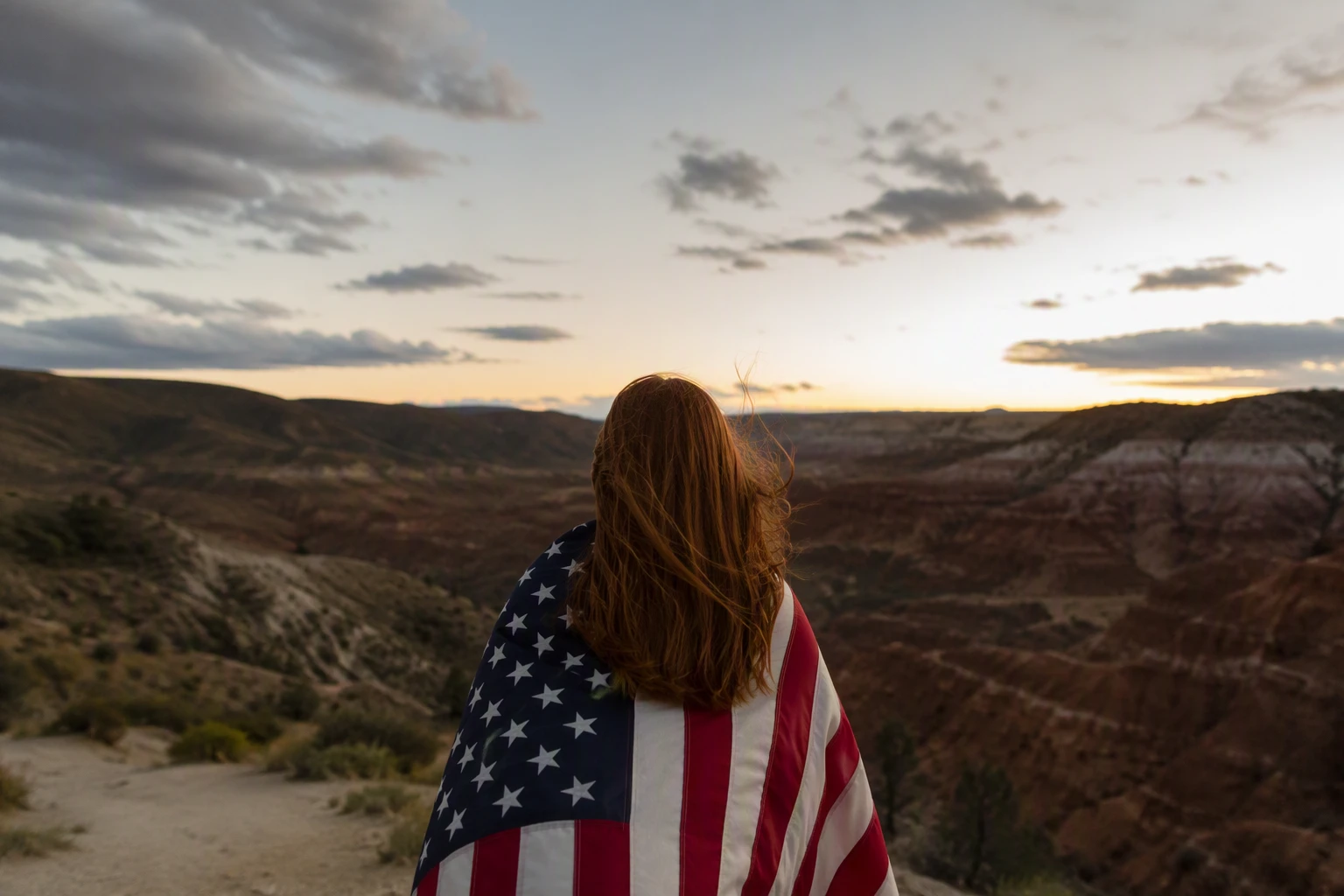
Those stops matter because they show how the work maps identity through place. A redhead in Portland and a redhead in Alabama are not just examples of the same genetic trait. They also point to different family histories, different regional cultures and different ways of belonging in the United States, which is exactly the kind of overlap Dodds’ portraits are built to reveal.
Why the portraits resonated beyond the camera
The project has also traveled into institutions that treat it as more than a novelty exercise. The National Galleries of Scotland featured Gingers in February 2022 and later hosted a talk, published on Nov. 17, 2022, that paired Dodds with a professor to discuss the genetics and aesthetics of red hair. The museum also added photographs from the series to its collection in 2022.
That institutional attention matters because it shifts the project from social curiosity to cultural record. Once the portraits sit inside a national collection, they become part of a wider conversation about portraiture, identity and how images help define who counts as representative. The museum setting also reinforces one of Dodds’ central ideas: that a single trait can carry enough cultural meaning to support serious artistic and genealogical inquiry.
Dodds’ work was also issued as a small-edition art book, Gingers, in 2020. That publication gave the project a durable form outside exhibitions and live events, preserving the portraits as a body of work that can be read together rather than as isolated images. The book, the museum acquisitions and the touring portrait sessions all point to the same ambition: to turn a personal fascination into a long-running visual archive.
What the numbers say about red hair
The broader statistics help explain why the project keeps finding new subjects. National Geographic said on Jan. 20, 2023 that red hair occurs in just one or two out of every 100 people. The same report said tens of millions of redheads exist globally and that red hair is not disappearing.
Those figures give the portraits their scale. Red hair is uncommon enough to stand out in a crowd, but common enough to appear across countries and continents, which makes it ideal for tracing how people move and mix. In Dodds’ hands, that rarity becomes a way to see the ordinary machinery of ancestry: parents passing traits on, communities blending, and inherited features turning into visible proof of hidden connections.
The project’s force lies in that combination of rarity and reach. By photographing hundreds of redheads and placing them in Scotland, Oregon, Alabama and beyond, Dodds turns a single trait into a record of how Americans are linked by family lines as much as by headlines.
Sources
- [1]bbc.co.uk
- [2]wweek.com
- [3]gingers.kierandodds.com
- [4]writing.kierandodds.com
- [5]al.com
- [6]nationalgalleries.org
- [7]panos.co.uk
- [8]nationalgeographic.com