US News
Seahorses and seadragons reveal unusual male pregnancy at California aquarium
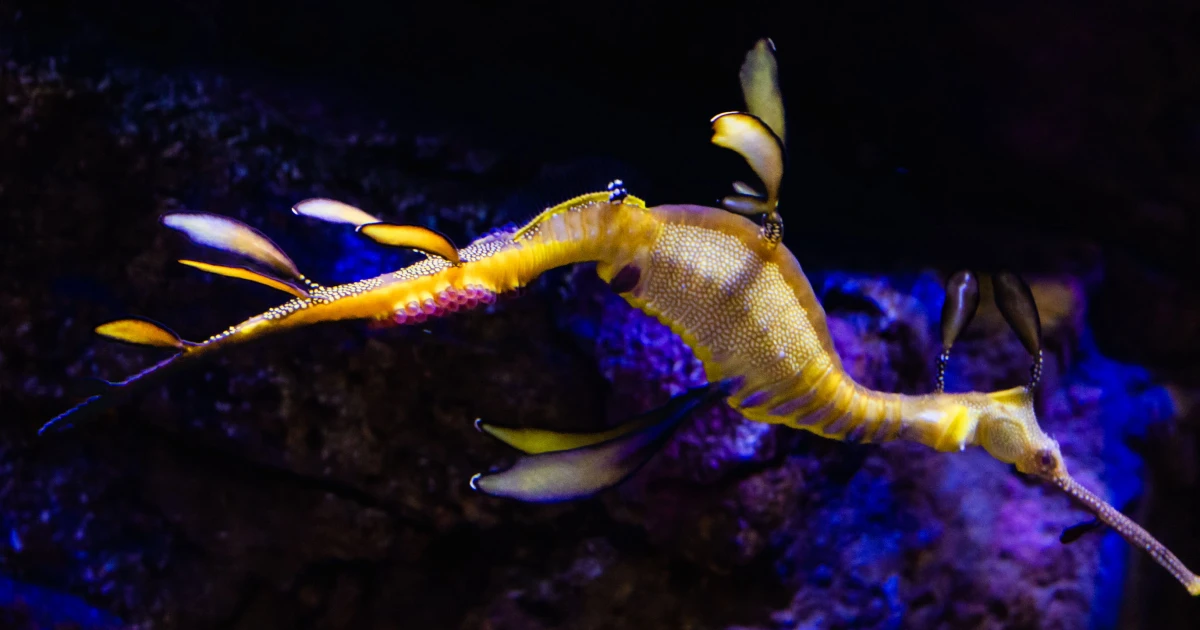
At Birch Aquarium in La Jolla, California, seahorses and seadragons turn biology into a warning label. Their bodies look almost assembled from different animals, yet the real surprise is reproductive: males carry the embryos, then give birth to live, fully formed young. That striking adaptation is more than a curiosity. It is a reminder that highly specialized species can be dazzling and vulnerable at the same time.
A reproductive system that breaks the rulebook
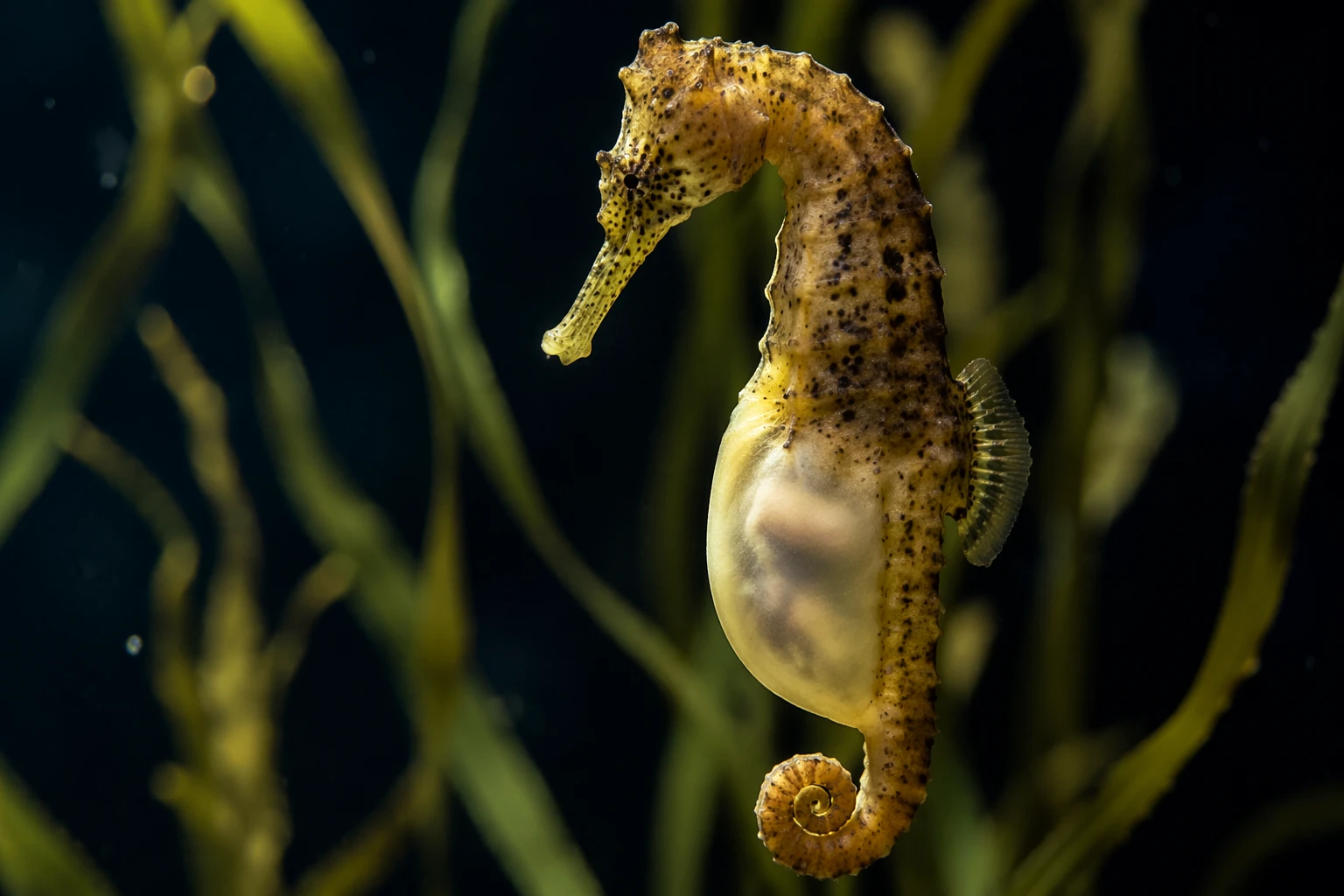
Seahorses belong to the family Syngnathidae, a group NOAA says includes some species found along the coasts of the United States. Their anatomy makes them instantly recognizable, with a head like a horse, a pouch like a kangaroo, a tail like a monkey, and the camouflage ability of a chameleon. But the most unusual feature is the one that reshapes the entire life cycle: the male carries the eggs.
NOAA says the process begins with an elaborate courtship dance that can last hours or days. During that ritual, the female transfers mature eggs into the male’s brood pouch. The male then carries them through a gestation period that usually lasts two to four weeks. When birth comes, a male seahorse can release a few dozen babies or as many as 1,000 fully formed young.
That reproductive strategy is one reason seahorses have long fascinated scientists and the public alike. It is also a reminder that evolution does not move toward one perfect design. It produces trade-offs, and in the case of seahorses, the trade-off is extraordinary specialization. The same traits that make them successful in their niche can leave them tightly bound to conditions that are easy to disrupt.
Why seadragons sharpen the conservation message
The Birch Aquarium exhibit broadens the story beyond seahorses alone. Its Seadragons & Seahorses installation, which opened on May 17, 2019, was described by the aquarium as the largest indoor aquarium addition since the facility opened in 1992. The exhibit features Weedy and Leafy Seadragons alongside several species of seahorses, giving visitors a direct look at a branch of marine life that often hides in plain sight.
Seadragons take camouflage to an even more elaborate level. Their weed-like protrusions help them blend into sea grass and kelp habitats, but those same environmental dependencies make them especially sensitive to change. The aquarium has framed the exhibit as part of its conservation mission, using unusual fish to explain why habitat quality matters just as much as species charisma.
That lesson became even more concrete on January 9, 2023, when Birch Aquarium announced the first successful transfer of eggs from a female seadragon to a male in the habitat. The aquarium described the event as extremely rare. In a single announcement, the institution underscored both the biological complexity of the animals on display and the difficulty of reproducing them in controlled settings.
What the weedy seadragon says about habitat loss
The Weedy Seadragon is the clearest conservation signal in the exhibit. IUCN Red List materials say it has been assessed as Near Threatened because of its limited extent of occurrence and continuing decline of suitable habitat. A later IUCN Red List update listed it as Vulnerable, a reminder that its status is not fixed and that its prospects depend heavily on the health of the environments it occupies.
That shift matters because seadragons are not just unusual fish. They are habitat specialists. When seagrass beds, kelp forests, and other nearshore ecosystems decline, the animals that rely on them lose cover, feeding grounds, and breeding conditions all at once. The problem is larger than one species, but the seadragon makes it visible in a way that is hard to ignore.
Birch Aquarium’s educational materials use the exhibit to show that seahorses and seadragons sit within a much wider family of relatives, including seamoths, cornetfishes, trumpetfishes, pipefishes, shrimpfishes, and snipefishes. That broader family tree reinforces an important point: these fish are not biological oddities isolated from the rest of the ocean. They are part of an interconnected web of species whose survival depends on functioning marine habitat.
Why this display matters beyond the gallery
Correspondent Conor Knighton’s look at the aquarium puts the focus where it belongs, on the tension between wonder and fragility. The male pregnancy of seahorses is remarkable, but it is also a product of a finely tuned reproductive system that leaves little room for environmental decline. Seadragons are just as revealing. Their camouflage, body shape, and habitat dependence make them living evidence that evolution can create extraordinary specialists, and that specialization can be a liability when ecosystems are under pressure.
The Birch Aquarium exhibit succeeds because it does not stop at spectacle. By pairing seahorses with seadragons and their relatives, it shows how much of marine life depends on habitat continuity, water quality, and intact coastal ecosystems. The fish are strange enough to draw a crowd. Their conservation status is what should keep attention there.
In the end, the lesson is not that these animals are bizarre for the sake of being bizarre. It is that ocean ecosystems produce life forms so specialized they seem improbable, then ask those species to survive in habitats that are increasingly fragile. That is the real story the aquarium tells, and it is one that reaches far beyond one gallery in California.