Business
SEC tells activist investors to disclose client identities in filings
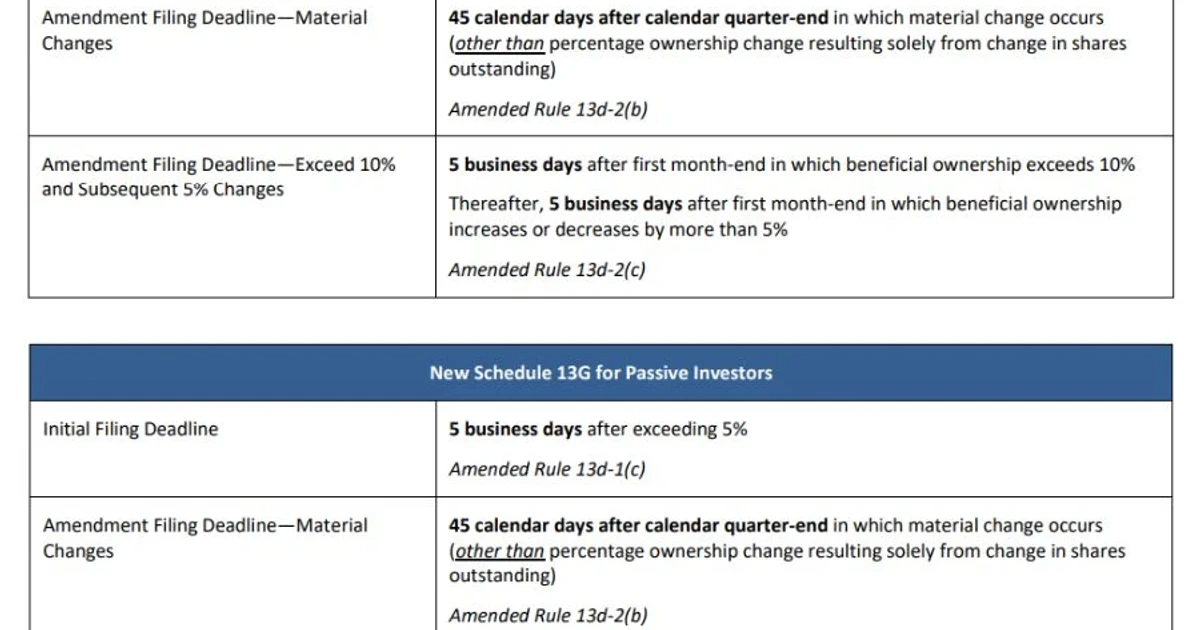
The SEC is telling activist investors to disclose the identities of clients behind campaign vehicles in filings that have long kept those backers hidden. The agency’s Division of Corporation Finance updated its beneficial-ownership interpretations on July 9, 2026, adding new questions for Schedule 13D and the proxy rules at the center of shareholder fights.
The guidance focuses on entities formed to buy stock in a target company and push for change there. In those cases, investors in the vehicle may have to be named in Schedule 13D Item 3 or in proxy participant disclosures, a shift that reaches the financing structures hedge funds and other activists use to assemble positions without exposing every backer. The same update also said that, in some circumstances, clients in a limited partnership used to solicit votes to replace directors can count as participants if their investment exceeds $500.
That matters because participant status can trigger extra disclosure in proxy materials, and disclosure of the people funding a campaign can strip away a layer of tactical advantage. Companies facing dissident slates or boardroom challenges gain a clearer view of who is underwriting the pressure, while activists lose some of the privacy that has let them build campaigns before rivals or targets can react. The SEC’s language also reaches beyond board fights to any structure designed for an activist push at a specific company.
The July 9 package did not stop there. The SEC also added a new interpretation on total return swaps, saying a cash-settled swap with no voting or acquisition rights does not by itself create beneficial ownership, while another new question examines whether a scheme exists to evade reporting through total return swaps. The update also covered tender offers, proxy matters and crowdfunding, underscoring that the agency was tightening disclosure rules across several related channels at once.

The timing was not random. Lazard said the first half of 2026 was the busiest six-month period on record for shareholder activism globally, with 184 new campaigns, activity up 20% from a year earlier and 38% above the five-year first-half average. Activists were pressing companies including Warner Bros Discovery and Devon Energy, and Elliott Investment Management remained the busiest campaigner with 12 launches and about $80 billion in assets.
For ordinary investors, the change could make proxy fights easier to read. A campaign backed by hidden capital is harder to assess than one that shows its funding network in the filing record, and the SEC has now signaled that more of those networks may have to come into the open.
Sources
- [1]money.usnews.com
- [2]sec.gov
- [3]themonitor.gibsondunn.com
- [4]lazard.com
- [5]wiky.com
- [6]oilandgas360.com