US News
Secret Service Shooting at Correspondents’ Dinner Raises Security Questions
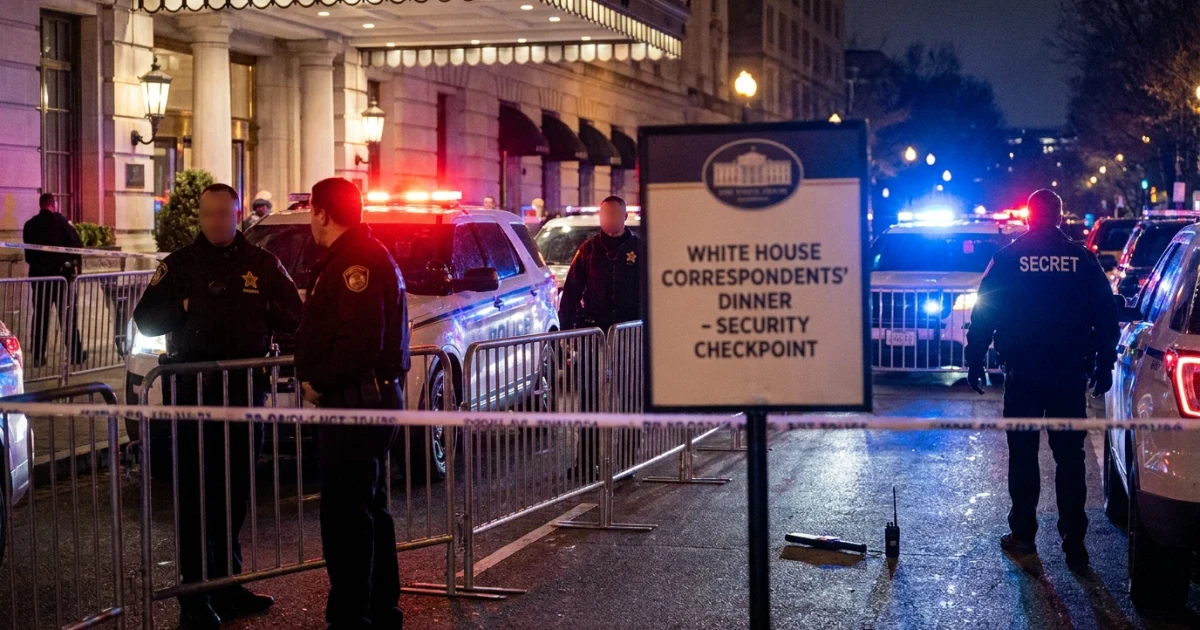
Security at the White House Correspondents’ Dinner came under sharp focus after a Secret Service officer fired at a suspect near the event venue, as captured in video footage published by The Washington Post. The incident, which unfolded outside the high-profile annual gathering, has prompted questions about protective protocols and the evolving challenges of safeguarding nationally significant events.
Incident Captured on Video
According to The Washington Post, video footage revealed the tense moment when a Secret Service officer discharged their weapon at a suspect near the perimeter of the White House Correspondents’ Dinner. The footage, widely circulated online, shows a rapid escalation as officers respond to perceived threats to public safety in an area crowded with journalists, politicians, and invited guests. The suspect’s identity and motive have not yet been fully disclosed by authorities, and updates on their condition are pending further investigation.
Security Protocols Under Review
The Secret Service, responsible for protective missions at major events, has long maintained strict protocols to safeguard high-profile gatherings like the White House Correspondents’ Dinner. Incidents involving use of force by law enforcement prompt immediate internal review, as required by federal policy. The Department of Justice’s updated use-of-force policy outlines when officers may employ lethal force, emphasizing de-escalation and the preservation of life except in cases of imminent danger.
This event is one of several high-profile security incidents at public events in recent years, and it is likely to spark further review of existing procedures. The Secret Service’s official records show a steady increase in the number of protective operations and evolving security threats, especially at events drawing national and international attention.
Law Enforcement Use of Force Context
Incidents like the shooting at the dinner are part of broader trends in law enforcement’s use of force. FBI data on officer-involved shootings provides statistical context, showing that while such incidents are relatively rare in high-security environments, they prompt significant public scrutiny. Ongoing legislative efforts, such as the Law Enforcement Use of Force Transparency Act, seek to increase public reporting and accountability surrounding these incidents.
- FBI statistics record hundreds of officer-involved shootings nationwide each year, but incidents at events with heightened security protocols remain unusual.
- The Department of Justice’s guidelines require prompt reporting, independent review, and public communication following any use-of-force incident.
History and Significance of the Correspondents’ Dinner
The White House Correspondents’ Dinner is a long-standing tradition, bringing together members of the press, politicians, and celebrities in Washington, D.C. for more than a century. As an event of national significance, it is subject to stringent security measures, including perimeter controls, credentialed access, and visible law enforcement presence. The 2026 incident is a rare breach that will likely prompt reassessment of both visible and behind-the-scenes protocols for future dinners.
What Happens Next
As authorities continue to investigate the suspect’s background and intent, attention has turned to how the Secret Service and event organizers will adapt security measures moving forward. The Secret Service’s internal review will examine the officer’s actions, the decision-making process, and any lessons that can be drawn for future protective operations.
While no guests or officers were reported injured in the immediate aftermath, the incident serves as a reminder of the unpredictable risks involved in protecting public figures and national events. With increased scrutiny likely from both lawmakers and the public, future correspondents’ dinners may see even more robust security protocols and transparency around law enforcement preparedness.
As the investigation unfolds, the White House Correspondents’ Association and the Secret Service are expected to release further statements detailing both the circumstances surrounding the shooting and any policy changes under consideration.