Politics
Senate Blocks Iran War Powers Resolution as White House Declares End to Hostilities
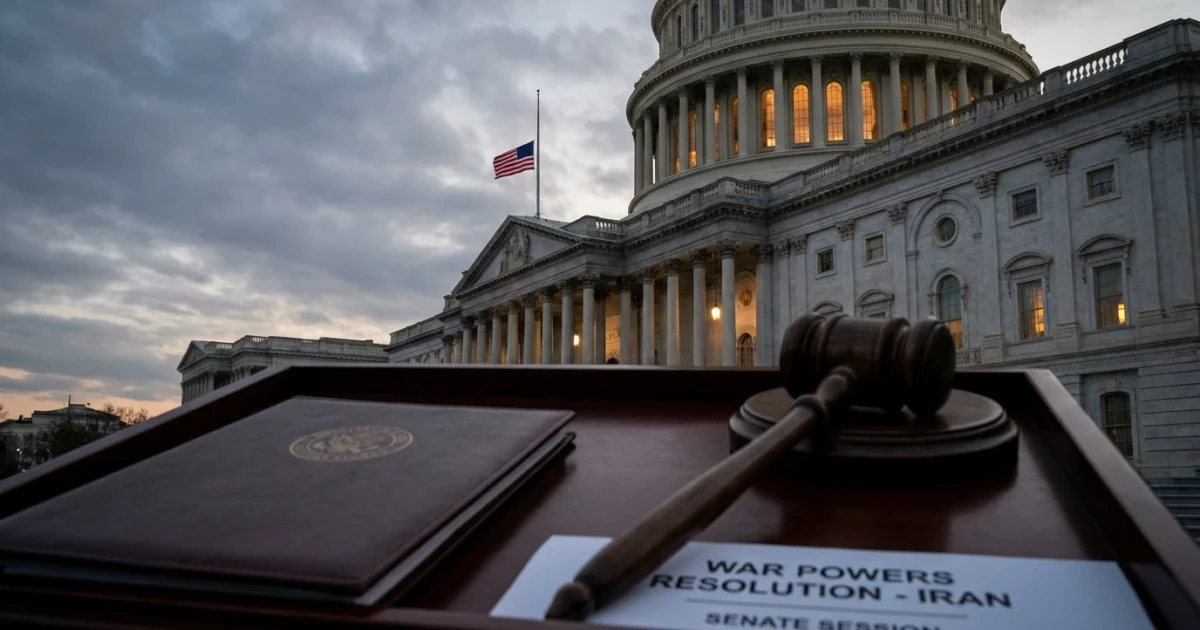
Congressional efforts to curb executive authority on military action in Iran hit a roadblock as the Senate rejected a Democratic-led war powers resolution just before the Trump administration declared the cessation of hostilities in the region. The closely timed developments signal a complex endgame in the ongoing debate over the president’s war powers and U.S. policy toward Iran.
Senate Rejects Sixth Iran War Powers Resolution
On Thursday, the Senate voted down the sixth attempt by Democrats to advance a war powers resolution aimed at restricting President Trump’s ability to conduct military operations against Iran without congressional approval, as reported by CBS News. The measure, which sought to invoke provisions of the War Powers Resolution, was brought to the floor ahead of a significant 60-day deadline that would have required the administration to seek renewed authorization or withdraw U.S. forces from hostilities.
- The Senate has now rejected six separate attempts to pass a war powers resolution concerning Iran since hostilities escalated.
- The 60-day deadline is a key threshold under the War Powers Resolution, mandating the president to seek congressional approval for ongoing military actions abroad.
While previous efforts to limit the president’s military authority in the region have gained some bipartisan support, none have garnered enough votes to pass both chambers. This latest rejection underscores persistent divisions in Congress over checks on executive war powers, especially in the context of ongoing tensions with Iran.
Administration Announces End of Hostilities in Iran
Shortly before the Senate vote, the Trump administration announced that hostilities with Iran had been "terminated", The Guardian reported. Officials stated that the move came ahead of the war powers deadline, signaling a desire to avoid a direct confrontation with Congress over the need for additional authorization.
- The administration’s declaration means U.S. forces are no longer engaged in hostilities as defined under the Iran War Powers Resolution.
- The White House’s statement could preempt the legal requirement to withdraw forces or seek congressional approval, a point likely to be debated among lawmakers and legal experts.
The timing of the administration’s declaration—just ahead of the 60-day window—has raised questions among observers about the executive branch’s interpretation of the War Powers Resolution and the broader implications for U.S. military engagement policy.
Congressional and Legal Implications
The dual developments highlight the ongoing struggle between Congress and the White House over war powers. The repeated failure of resolutions in the Senate reflects the difficulty lawmakers face in asserting their constitutional role over decisions to engage in military conflict. Meanwhile, the administration’s decision to declare an end to hostilities may set a precedent for how future administrations respond to similar deadlines.
Legal analysts note that the definition of "hostilities" under the War Powers Resolution remains subject to interpretation, with past administrations using broad discretion in asserting compliance. The latest episode is likely to prompt further debate over the balance of power between the legislative and executive branches.
Looking Ahead
With the Senate’s rejection of the war powers resolution and the Trump administration’s assertion that hostilities have ended, the immediate legislative standoff appears resolved. However, the core questions about congressional oversight of military action and the executive’s latitude in foreign policy remain unsettled. Lawmakers and policy experts are expected to continue pressing for greater clarity and accountability, especially in volatile regions such as Iran.
For readers who want to explore the legal documents and historical context, the official text of the Iran War Powers Resolution and a Congressional Research Service analysis of U.S.-Iran hostilities offer valuable background.
As debates over war powers and U.S. policy toward Iran continue, the interplay between Congress and the president will remain a defining feature of American foreign policy decision-making.