Politics
Senate Blocks War Powers Resolution Aimed at Limiting Trump on Venezuela
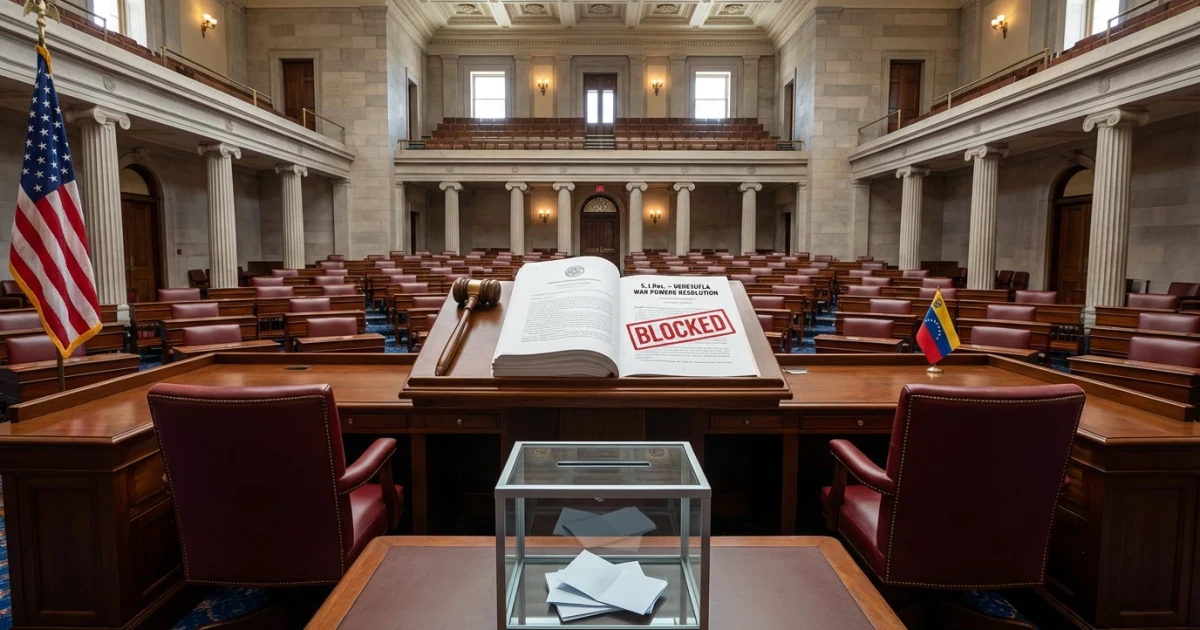
The United States Senate has rejected a war powers resolution designed to constrain President Trump’s ability to unilaterally take military action in Venezuela, marking a significant setback for lawmakers seeking to reassert Congressional authority over matters of war and peace.
Senate Moves to Rein In Executive Power
The resolution, which received attention from both domestic and international media, was introduced amidst growing debate over the scope of presidential authority in foreign military engagements. Advocates of the measure argued that Congressional approval should be required before launching or escalating any military conflict involving Venezuela.
According to multiple reports, Senate Republicans voted as a bloc to prevent the resolution’s passage. This outcome underscores the deep partisan divisions shaping U.S. foreign policy, particularly with regard to the Trump administration’s approach to Latin America.
Background: The Push for Congressional Oversight
The war powers resolution was brought forward in response to concerns about the potential for military escalation with Venezuela, a country that has been at the center of U.S. diplomatic and economic pressure in recent years. Lawmakers backing the resolution pointed to the Constitution’s allocation of war-making powers to Congress, emphasizing the need for legislative oversight amid reports of increasing tensions in the region.
- Al Jazeera reported that the resolution specifically targeted President Trump’s ability to act unilaterally.
- NPR highlighted that the Republican majority in the Senate united to block the measure, effectively maintaining executive flexibility.
Partisan Fault Lines and the Debate in Congress
The defeat of the resolution reflects a persistent struggle between the legislative and executive branches over war powers—a debate that has intensified under recent administrations. While some lawmakers from both parties have raised concerns about unchecked presidential authority, the vote fell largely along party lines.
This legislative outcome signals a continued willingness among Senate Republicans to support President Trump’s foreign policy prerogatives, despite calls from Democrats and some Republicans for increased Congressional input.
Implications for US Policy Toward Venezuela
With the resolution’s defeat, President Trump retains significant latitude to direct military and diplomatic efforts regarding Venezuela. The administration has maintained a policy of pressure on the government in Caracas, with sanctions and public statements keeping the country in the spotlight of U.S. foreign policy concerns.
The Senate’s decision may have far-reaching consequences not only for U.S.-Venezuela relations but also for the broader balance of power between Congress and the White House. As tensions persist in Latin America, the debate over war powers is likely to continue to animate Congressional deliberations in the coming months.
Looking Forward
While the resolution’s failure marks a victory for the Trump administration’s approach to Venezuela, it also highlights unresolved questions about the appropriate limits of presidential power in military affairs. Observers note that similar efforts to restore Congressional authority could emerge in the future, especially as international crises test the boundaries of executive action.
Sources
- [1]Al Jazeera
- [2]NPR