Politics
Senate Blocks War Powers Resolution Limiting Trump’s Military Action in Venezuela
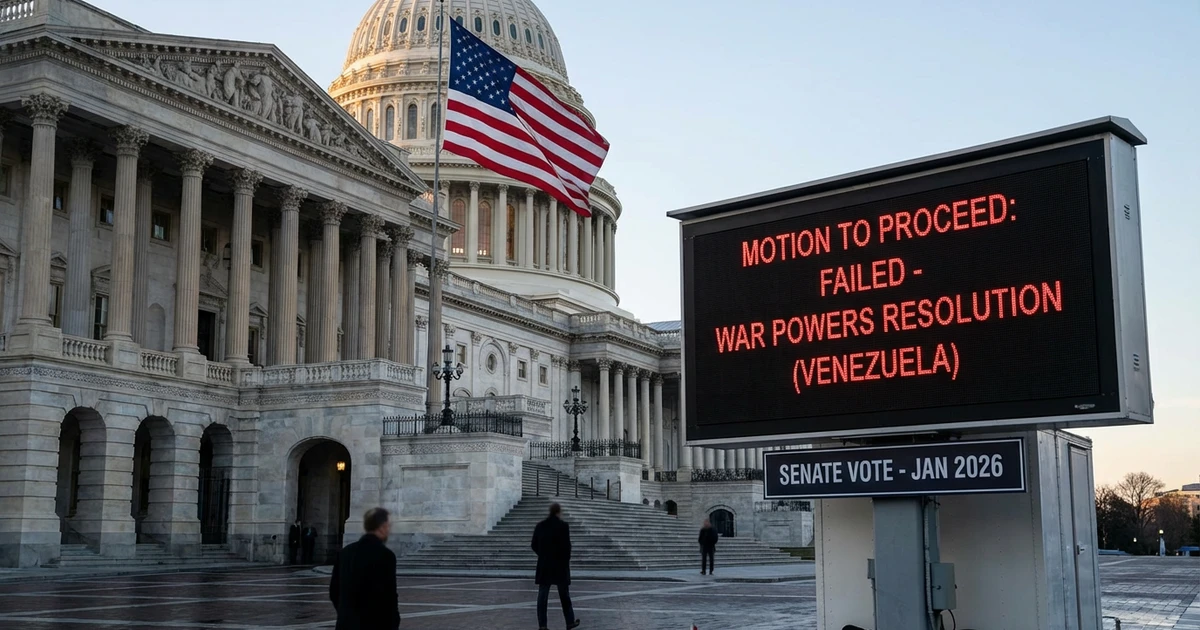
The US Senate has defeated a war powers resolution that sought to limit President Donald Trump's ability to unilaterally use military force against Venezuela, emphasizing a deep partisan divide over congressional oversight of foreign interventions.
Senate Rejects War Powers Resolution
On the heels of escalating tensions between the United States and Venezuela, the Senate voted down a resolution designed to rein in presidential authority to launch military action without explicit congressional approval. The measure, which had garnered significant attention in both chambers, was ultimately blocked by a majority of Senate Republicans, leaving President Trump with broad discretion in the realm of foreign military engagement.
Partisan Divide in the Senate
The defeat of the resolution underscores the ongoing debate in Congress over the balance of powers between the legislative and executive branches, especially regarding decisions of war and peace. While Democrats largely supported the measure as a necessary check on presidential powers, Republicans argued that it would tie the hands of the Commander-in-Chief in a volatile international climate.
- Senate Republicans solidified opposition, ensuring the measure did not reach the necessary threshold for passage.
- The official roll call reflected a largely party-line vote, with only a handful of cross-party defections, if any.
Context: Venezuela and US Policy
The resolution emerged amid heightened speculation about potential US military involvement in Venezuela, where the Trump administration had repeatedly expressed concerns over the political and humanitarian crisis under President Nicolás Maduro. The administration's policy has included sanctions and diplomatic pressure, but some lawmakers feared the possibility of military escalation without congressional consent.
Legislative Intent and Implications
Supporters of the war powers resolution argued that the Constitution grants Congress the sole authority to declare war, and that the executive should not act unilaterally in cases lacking an imminent threat to the United States.
- Previous attempts to pass similar measures have often centered on US engagement in the Middle East, but this resolution marked a shift in focus to the Western Hemisphere.
- The measure's defeat means the administration retains legal flexibility to respond to developments in Venezuela without the need for prior congressional approval.
Broader Debate Over Executive Power
This latest Senate action is part of a broader, long-running debate in Washington over the scope of presidential war powers. Critics of the current system argue that Congress has ceded too much authority to the White House, while supporters say the executive branch needs to act swiftly in times of crisis.
- The issue of war powers is likely to remain central as the US navigates its foreign policy challenges in Latin America and beyond.
Looking Ahead
While the Senate's decision ensures the status quo remains, it has reignited calls for a more robust debate on the role of Congress in authorizing military action. Lawmakers from both parties may revisit the issue as events unfold in Venezuela and as concerns about executive overreach persist.
For ongoing coverage and legislative updates, readers can visit the official US Senate website or follow developments on Al Jazeera and NPR.
Sources
- [1]Al Jazeera
- [2]NPR