Politics
Senate Democrats Clash With White House Over DHS Funding
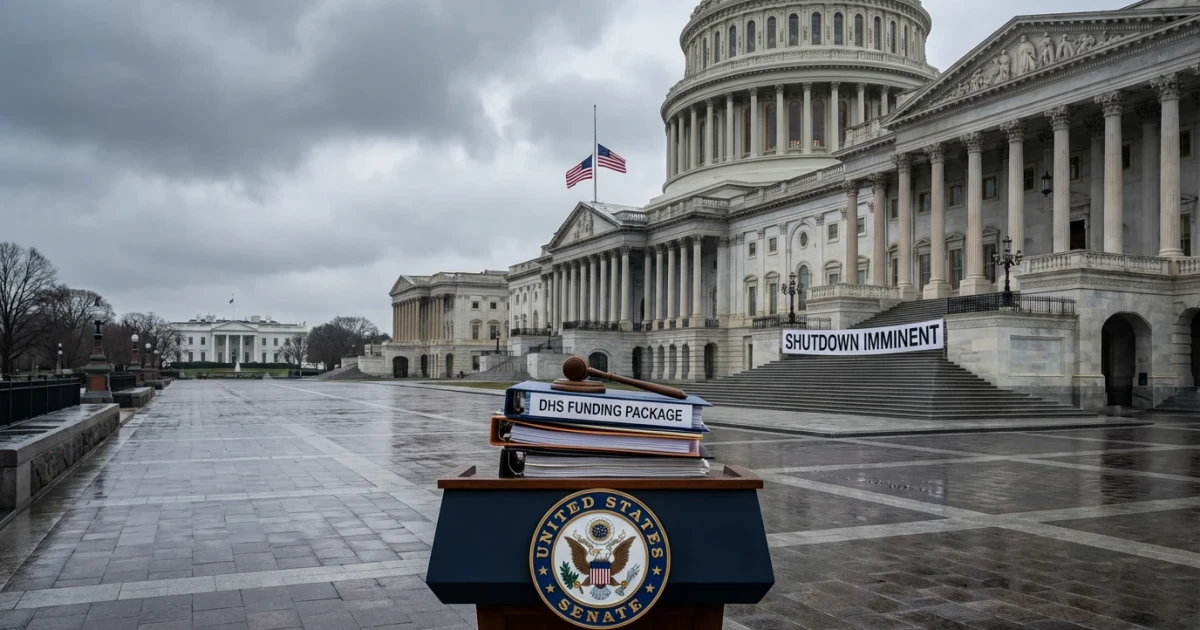
As the deadline to fund the Department of Homeland Security (DHS) approaches, disagreements between Senate Democrats and the White House over U.S. Immigration and Customs Enforcement (ICE) have put the agency on the brink of shutdown, according to multiple news reports. What began as a sign of bipartisan progress has unraveled into a high-stakes standoff, raising questions about the future of immigration enforcement and government operations in 2026.
Early Signs of Progress on Government Funding
On January 29, PBS reported that Senate Democrats reached a preliminary agreement with the White House on a broader government funding package. The deal was seen as a significant step to avert a federal shutdown, with lawmakers working to resolve contentious issues across several agencies. At the time, the negotiations included provisions for DHS, but details regarding specific immigration enforcement measures remained under wraps.
- The proposed package would fund key government agencies, including DHS, through the remainder of the fiscal year.
- Both sides signaled willingness to compromise, aiming to keep essential services operational and avoid disruption for federal employees and the public.
While the government shutdown process is well-documented, the stakes were heightened by ongoing debates over immigration enforcement levels and the scope of ICE's authority within the DHS budget.
Breakdown Over ICE Provisions
However, The New York Times reported on February 10 that negotiations faltered when Senate Democrats rejected a White House proposal concerning ICE operations. The White House deal sought to increase funding and flexibility for ICE, aligning with calls for stricter immigration enforcement. Senate Democrats, citing concerns over detention capacity and enforcement priorities, refused to endorse the plan.
- Senate Democrats objected to expanding ICE’s detention capacity and opposed policies they argued would undermine humanitarian standards.
- The White House maintained that increased funding for ICE was necessary to address border security and manage record numbers of arrivals.
This impasse comes as the latest ICE enforcement data show elevated levels of apprehensions and removals, underscoring the operational pressures facing the agency.
Shutdown Threat Puts DHS Operations at Risk
Without a funding agreement, the DHS faces the prospect of a partial shutdown. This would impact a range of functions, from border security and immigration processing to disaster response and cybersecurity. According to the DHS Annual Performance Report, the agency employs tens of thousands of personnel, many of whom would be required to work without pay if appropriations lapse.
- The DHS Appropriations Act, 2024 outlines critical funding levels and program priorities now under threat.
- Essential services, such as airport security and emergency management, would continue with limited staffing.
Previous shutdowns, as outlined in historical CRS analysis, have created backlogs in immigration courts, slowed asylum processing, and strained law enforcement operations at the border and nationwide.
Political Stakes and Next Steps
The breakdown has far-reaching political implications. For the White House, maintaining tough immigration enforcement is a priority amid ongoing debates over border security. For Senate Democrats, resisting increases in ICE funding reflects broader party divisions over the direction of U.S. immigration policy.
Both sides face public pressure to reach a swift resolution. Failure to do so would not only disrupt DHS operations but could also affect broader government trust and legislative momentum heading into a pivotal election year.
Analysis
The evolving negotiations highlight persistent divides in Congress over immigration policy. While bipartisan agreements on overall government funding remain possible, the specifics of ICE operations continue to be a flashpoint. Lawmakers may need to revisit compromise proposals or consider temporary funding measures to prevent immediate disruption.
As the deadline looms, the focus remains on whether Congress and the White House can bridge their differences, or if the DHS will become the latest casualty of partisan gridlock in Washington.