Politics
Senate passes housing bill to boost affordability, curb investors
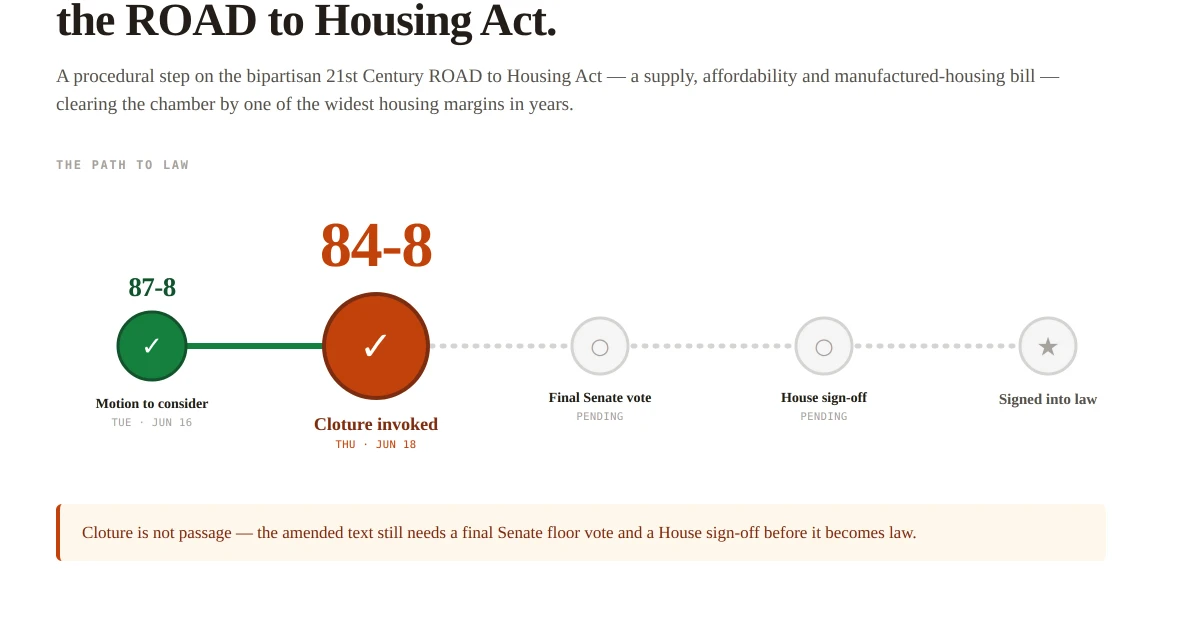
The Senate gave a sweeping housing bill its strongest test yet, voting 85-5 to advance a bipartisan package aimed at affordability, supply and investor limits. The practical question now is whether the measure can ease costs fast enough for buyers and renters, or whether its biggest impact will come only after years of new construction and regulatory changes.
The 21st Century ROAD to Housing Act would bar large institutional investors from buying additional single-family homes once they own 350 or more. Lawmakers also stripped out a more aggressive seven-year forced-sale requirement that had applied to some build-to-rent properties, a change that makes the final version less disruptive for developers that have helped create rental supply.
Supporters cast the bill as a broad response to a housing market in which too many Americans have been priced out of ownership. The Senate Banking Committee said the measure is meant to boost supply, cut red tape and give local communities more room to build homes. It also folds in changes to modernize federal housing programs and speed development, the kind of policy shifts that usually work slowly through zoning, financing and permitting rather than by changing prices overnight.
That slow-burn profile matters. The investor cap may limit future accumulation by the biggest buyers, but the exceptions preserved for build-to-rent and renovate-to-rent projects suggest lawmakers wanted to restrain Wall Street without choking off rental housing supply. In other words, the bill is more likely to affect market behavior at the margin than to trigger a sudden drop in home prices over the next few months.
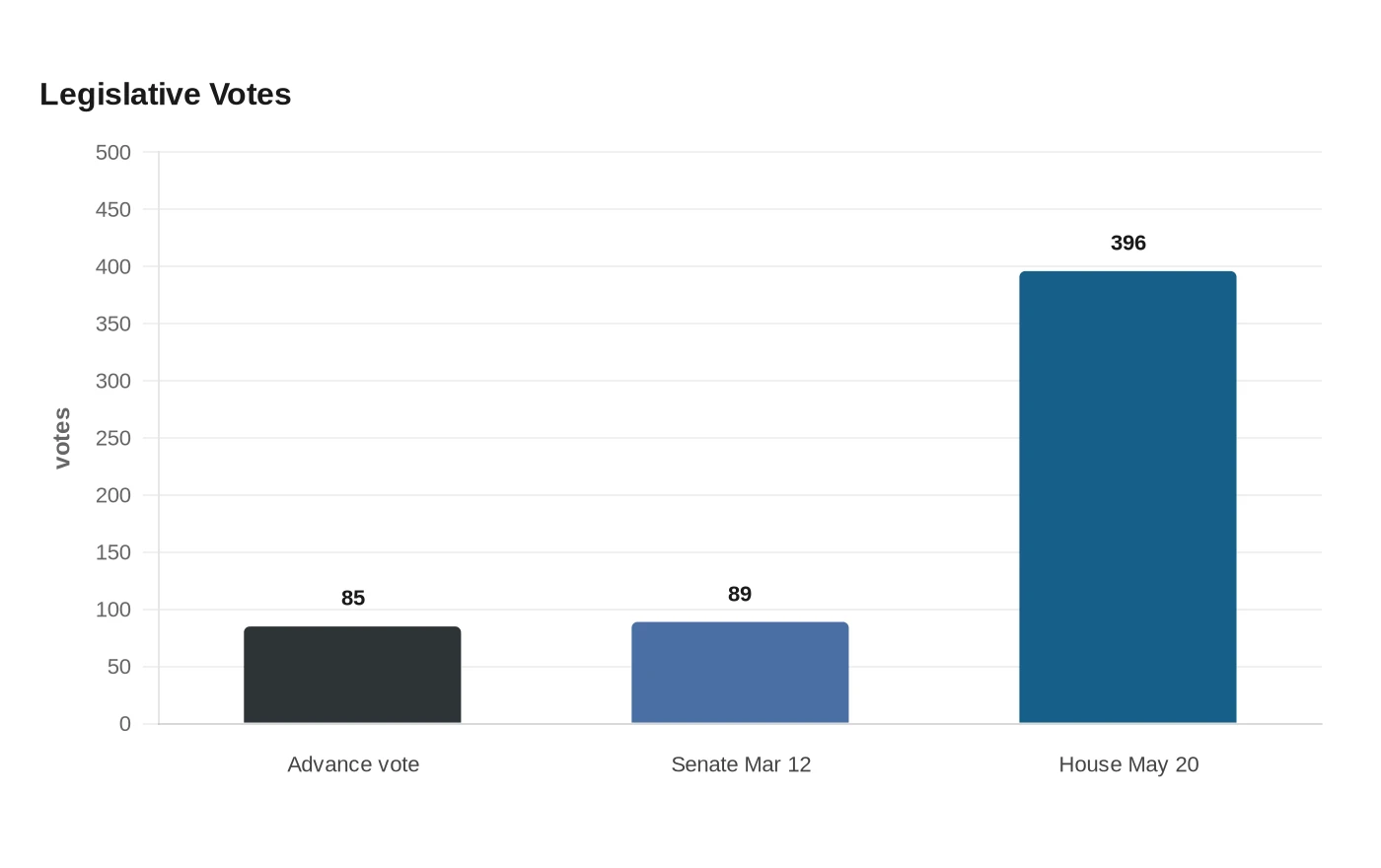
The Senate had already passed the broader 21st Century ROAD to Housing Act by an 89-10 vote on March 12, while the House approved a related version 396-13 on May 20. Supporters have called it the largest legislative housing package in decades, and Senate aides and congressional leaders have described it as deficit-neutral, with no new mandatory federal spending. The bill now heads toward final House action and, if it clears that hurdle, President Donald Trump’s desk.
Its political significance is clear: housing has become one of the few cost-of-living issues where Congress has managed a rare bipartisan breakthrough. Its economic significance will depend on whether the supply provisions can move quickly enough to matter in the next two to five years, when buyers and renters are still waiting for relief.
Sources
- [1]news.google.com
- [2]nbcnews.com
- [3]banking.senate.gov
- [4]financialservices.house.gov
- [5]cnbc.com
- [6]realtor.com
- [7]cbsnews.com
- [8]usnews.com