Politics
Senate Prepares for Showdown on Trump's 'Anti-Weaponization' Fund
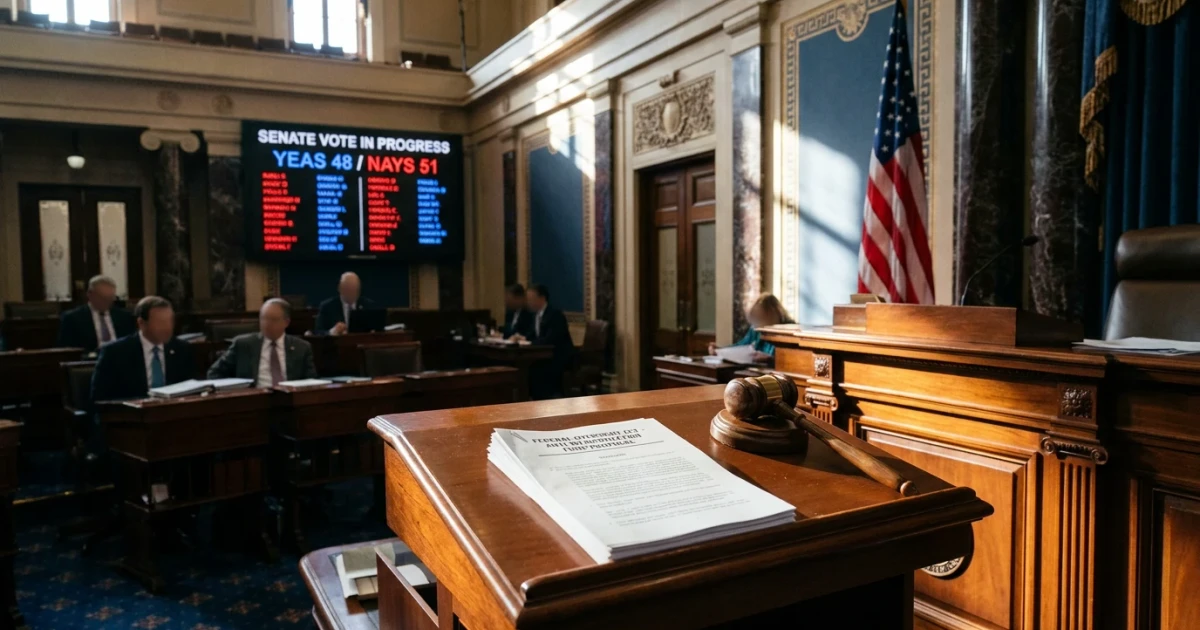
Senate Democrats are preparing a series of votes aimed at testing Republican unity over former President Donald Trump’s proposed ‘anti-weaponization’ fund, a controversial initiative designed to restrict federal law enforcement activities perceived as politically motivated. The fund, which has become a central topic of debate in Washington, faces its first significant legislative hurdle as lawmakers weigh its implications for federal oversight and civil liberties.
What Is the ‘Anti-Weaponization’ Fund?
The ‘anti-weaponization’ fund, first outlined in H.R.8369, seeks to impose new restrictions and oversight mechanisms on federal agencies, particularly the Department of Justice and the FBI. According to analysis from The New York Times, the bill would allocate funds specifically to investigate and counteract what Trump and supporters describe as the ‘weaponization’ of federal power for political purposes.
- The proposal includes provisions for a special oversight panel to review high-profile prosecutions and federal investigations involving political figures.
- It would also earmark resources for legal challenges against perceived overreach by federal law enforcement.
Supporters of the fund, mainly within the GOP, argue that it is necessary to restore balance and prevent partisan abuses by federal agencies. Critics, including most Democrats, warn that the fund could undermine the independence of law enforcement and politicize prosecutorial decisions.
Senate Votes Target GOP Unity
News-Times reported that Democratic senators are strategically scheduling votes on the ‘anti-weaponization’ fund to test the resolve of Republican lawmakers. The timing comes as the fund moves from committee review toward a potential floor vote, with both parties seeking to define the debate ahead of the 2026 midterm elections.
- Democrats see the votes as an opportunity to highlight divisions within the GOP, where some members are wary of the bill’s broad scope.
- Senate leaders have signaled that amendments may be introduced to clarify or restrict key provisions, potentially splitting Republican support.
- According to the official legislative record, the bill has already passed the House along largely party lines, but its fate in the Senate remains uncertain.
The New York Times notes that some moderate Republicans have expressed concern about the precedent set by targeting federal law enforcement budgets for political reasons, even as others rally behind Trump’s call for reform.
Fiscal and Oversight Implications
Beyond the political clash, the proposed fund raises questions about its fiscal impact and the mechanics of congressional appropriations. The Congressional Budget Office is expected to release a cost estimate, while legal analysts point to the complexity of establishing a special fund with broad oversight powers.
- The fund would require annual appropriations, subject to review by both chambers of Congress.
- Experts cited by the New York Times emphasize the risk that future administrations could use similar mechanisms for partisan purposes, further eroding norms of nonpartisan law enforcement.
- For readers interested in the technical process, the Congressional Research Service provides an explainer on how appropriations and special funds are created and overseen by Congress.
Broader Debate on Federal Law Enforcement
The controversy over the ‘anti-weaponization’ fund comes amid ongoing debates about the role and accountability of federal law enforcement. A recent GAO report highlights longstanding concerns about oversight and transparency, but stops short of endorsing structural changes like those proposed in H.R.8369.
As the Senate prepares for a closely watched series of votes, both parties are framing the debate as a referendum on fundamental principles: the independence of law enforcement versus the need for robust oversight. The outcome, according to analysts, could set a lasting precedent for how Congress responds to allegations of politicized investigations, with implications for future administrations and the broader American legal system.
For those tracking the legislation’s progress, official Senate roll call votes will provide real-time updates on where senators stand as the debate unfolds.
With the Senate divided and public scrutiny intense, the coming weeks are likely to shape the future balance between federal law enforcement authority and congressional oversight.