US News
Senate Republicans Advance Bill Emphasizing Voter ID Requirements
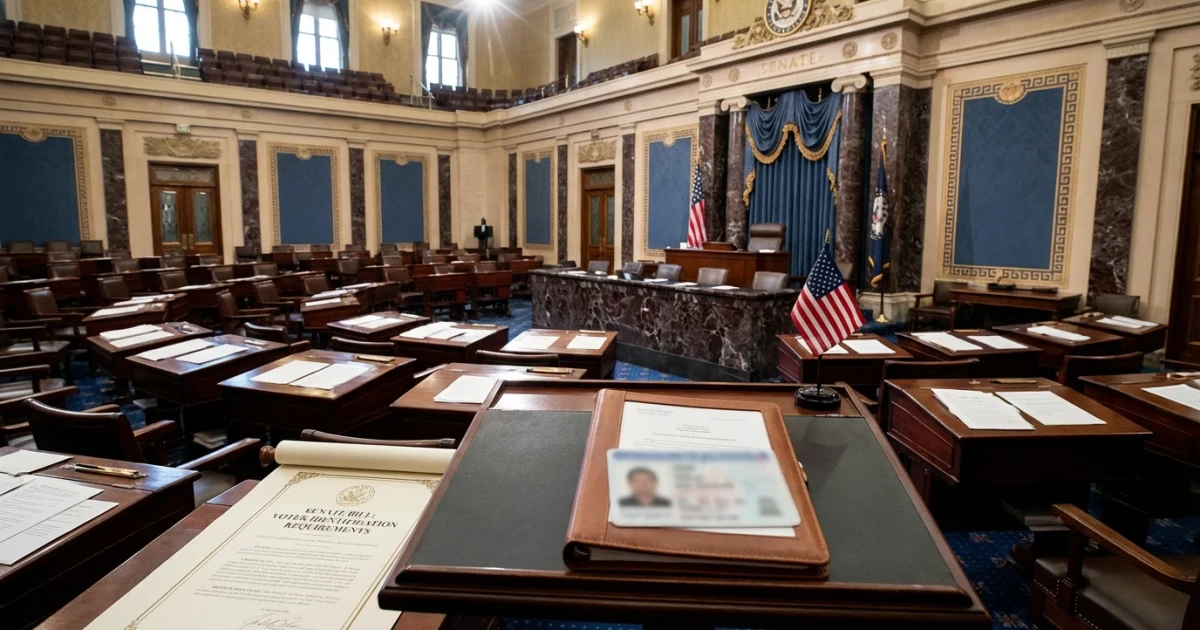
Senate Republicans are advancing a voting bill that would require voters to present valid photo identification at polling places, bringing a long-standing debate over election security and voter access to the national spotlight. The legislation, which is set for discussion on the Senate floor this week, reflects a growing movement among Republican lawmakers to standardize voter identification requirements across the country.
Key Provisions of the Proposed Bill
- Mandatory photo ID for in-person voting: The bill would require all voters to present a government-issued photo ID at polling places. Acceptable forms of identification include a driver's license, passport, or other state-approved IDs.
- Verification for absentee ballots: Voters requesting absentee ballots would need to provide a copy of their photo ID or include their driver’s license number or the last four digits of their Social Security number on their application.
- Support for states to implement ID requirements: The bill allocates federal funds to help states provide free IDs to eligible voters who lack them.
Republicans argue that these measures are essential for ensuring the integrity of federal elections and for restoring public confidence in the voting process. The bill would create a more uniform standard, addressing the current patchwork of state laws that range from strict photo ID mandates to no ID requirement at all.
Public Opinion and Party Divide
According to Pew Research Center data, a majority of Americans support requiring photo ID to vote, with recent surveys showing more than 75% of adults in favor. Support is broad across most demographic groups, but the issue remains deeply partisan in Congress.
Democratic lawmakers have largely opposed the bill, contending that strict ID requirements could disproportionately hinder access for eligible voters—especially those who are elderly, low-income, or live in rural areas without easy access to state ID offices. Democrats have instead advocated for expanding early voting, mail-in voting options, and same-day registration, citing concerns over potential disenfranchisement.
Current State Law Landscape
Currently, voter ID laws vary widely by state. Some states, like Georgia and Indiana, enforce strict photo ID requirements, while others, including Oregon and California, do not require photo ID for in-person voting. The proposed federal standard would override less restrictive state laws, establishing a nationwide baseline.
Impact and Criticism
Supporters cite research showing that most Americans already possess a form of government-issued ID. However, critics point to studies indicating that millions of eligible voters—especially from marginalized communities—lack the necessary documentation, and that obtaining ID can be burdensome due to costs, transportation, or bureaucratic hurdles.
The bill includes a provision for free state-issued IDs and sets aside funding to cover administrative costs. Still, opponents argue that logistical and informational barriers may persist, potentially deterring turnout among some groups.
What’s Next in Congress?
The bill’s path in the Senate is expected to be contentious. While Republican leadership has prioritized the legislation, Democrats have signaled plans to block or amend key provisions. The outcome may hinge on negotiations over the specifics of absentee ballot verification and support for voter education initiatives.
For readers interested in the full legislative text and current status, the official bill text is available on Congress.gov.
Looking Ahead
As the debate continues, the issue of voter identification remains a flashpoint in American politics, reflecting broader tensions over how best to balance election security and access. With the 2026 midterms approaching, both parties are closely watching the bill’s progress and its potential impact on voter turnout and public trust in the electoral process.