Politics
Senate Republicans Seek $1 Billion for White House Ballroom Security
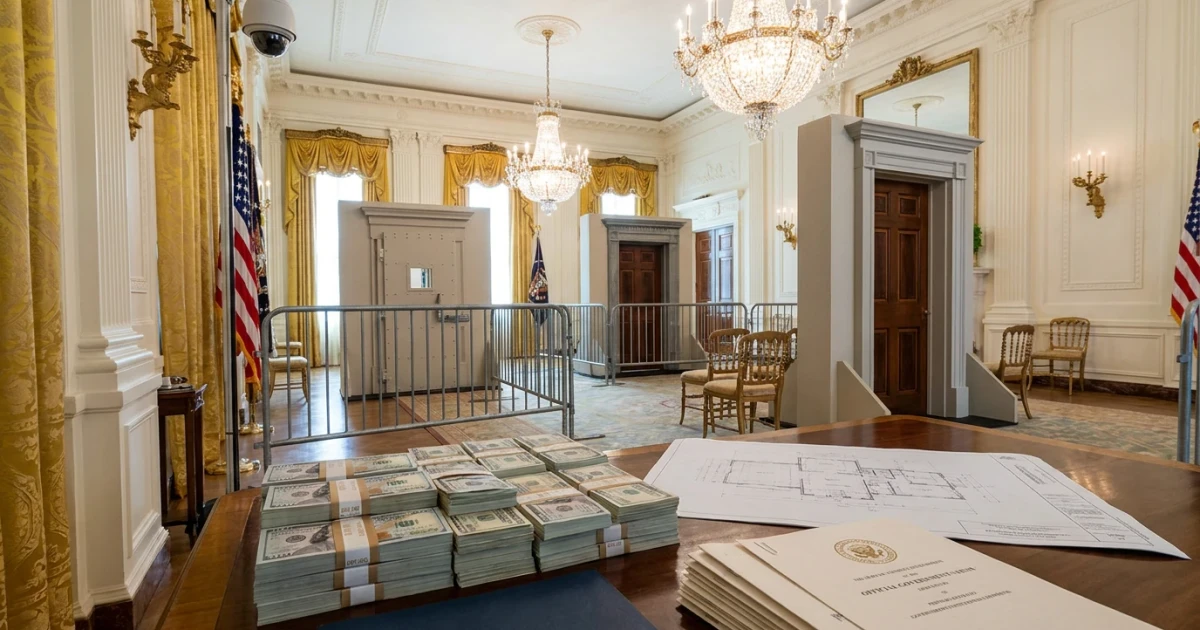
Senate Republicans have introduced a proposal to allocate $1 billion in taxpayer funding toward security enhancements for a new White House ballroom, generating debate in Washington and beyond over the necessity and cost of such a measure. The funding, if approved, would represent one of the largest single expenditures for a White House facility upgrade in recent history.
Proposal Details and Legislative Context
The proposal appears in the latest Senate appropriations bill, which includes a line item specifically earmarked for the design and installation of advanced security features for a ballroom at the White House. According to coverage by NBC News, the measure was introduced as part of broader security and infrastructure upgrades but stands out due to its scale and the unique nature of the project.
Town & Country Magazine reports that the proposed funding would support structural reinforcements, advanced surveillance systems, and other undisclosed technologies designed to meet modern security threats. While the full text of the legislative proposal is available for public review, the $1 billion allocation is significantly higher than previous White House renovation budgets. Readers can examine the official legislative language themselves in the Senate appropriations bill.
Security Justifications and Historical Comparisons
Republican lawmakers argue that the current threat environment justifies the unprecedented expenditure. Rolling Stone notes that, while the White House has undergone numerous security upgrades in the past, including the installation of blast-resistant windows and perimeter fencing, this would be the first ballroom-specific security investment of its kind. The proposal comes amid growing concerns over high-profile events and large gatherings at the executive mansion, which require enhanced physical and electronic security measures.
Historical data from the Federal Real Property Profile shows that typical White House renovation projects have cost tens of millions, not billions, of dollars. For context, the White House complex includes more than 130 rooms, but recent major upgrades—such as the 1990s Truman Balcony restoration—were completed for under $30 million. The current proposal would far surpass these figures.
Budgetary Impact and Public Scrutiny
The requested funding is detailed in the Fiscal Year 2025 federal budget, prompting questions from both lawmakers and watchdog organizations about the necessity and transparency of such a large allocation. NBC News highlights that critics are pressing for more justification and a breakdown of the expected expenditures. Comparisons to overall federal discretionary spending underscore just how significant a $1 billion project would be, even within the context of national security needs.
- Recent annual spending on all White House maintenance and security typically ranges from $100 million to $200 million.
- The proposed ballroom allocation would constitute a major portion of the Executive Office of the President’s facilities budget for the coming fiscal year.
Rolling Stone points out that some Democratic lawmakers and government transparency advocates have called for a detailed public justification for the proposal, warning against what they see as potentially excessive taxpayer spending on a facility that may serve both ceremonial and political purposes.
Debate Over Presidential Security Versus Spending Priorities
Supporters of the measure emphasize the importance of staying ahead of evolving security threats. The Congressional Research Service notes that protection of the president and official venues is a statutory requirement, and that spending on these efforts has generally increased over time in line with new risks. However, there remains debate over the scope and scale of this particular expenditure.
Town & Country Magazine describes the ballroom as a potential centerpiece for state functions, official events, and large gatherings that would otherwise strain the capacity of existing White House spaces. Proponents argue that the new facility will allow for improved logistics and security coordination during high-profile occasions.
Looking Ahead
As the appropriations bill moves through Congress, lawmakers on both sides are expected to push for further details and potential revisions to the proposed funding. The story continues to generate discussion about the balance between necessary security investments and fiscal responsibility, with final decisions likely to reflect broader political and public sentiment on government spending.
For readers interested in the current status of the White House’s infrastructure and security protocols, in-depth historical background and data are accessible through the White House Historical Association and the GSA’s property data sets.