Politics
Senate Takes Stand: Lawmakers Move to Curb Trump’s Military Powers on Venezuela
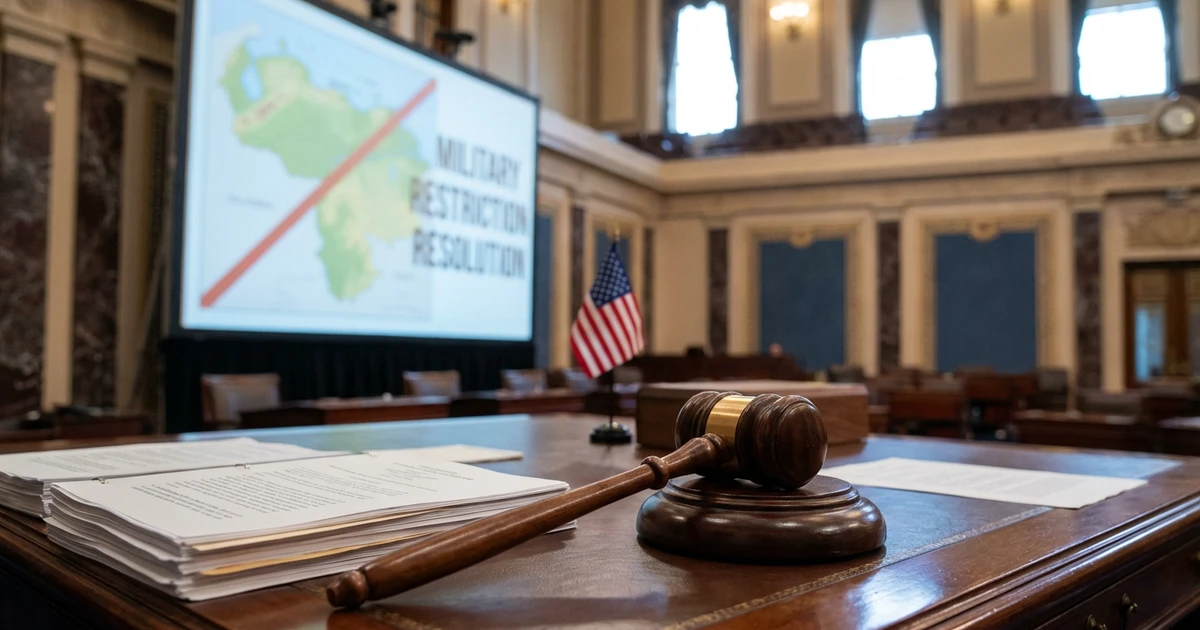
The U.S. Senate has taken a decisive step to limit President Donald Trump’s authority to unilaterally deploy military force in Venezuela, advancing a war powers resolution that underscores growing congressional oversight of foreign intervention.
Senate Moves to Assert War Powers
The Senate’s advancement of the war powers resolution marks a critical response to mounting concerns over the potential for U.S. military engagement in Venezuela without explicit legislative approval. The bipartisan move reflects lawmakers’ determination to reclaim congressional authority over war powers, a responsibility they argue has eroded in recent decades as presidents have acted unilaterally in foreign conflicts.
- The measure specifically addresses the prospect of military action against Venezuela’s government, which has faced ongoing U.S. pressure and sanctions under Trump’s administration.
- It reiterates Congress’s constitutional role in authorizing acts of war, emphasizing that no military action should proceed without its explicit consent.
- Similar war powers debates have emerged in recent years over U.S. actions in the Middle East, but this resolution is among the first to directly address South American affairs under Trump.
Bipartisan Concerns Over Executive Overreach
Senators from both parties have signaled unease about the prospect of military escalation in Venezuela. According to coverage by Council on Foreign Relations and multiple news outlets, the resolution is a direct response to what many lawmakers view as an expansion of executive power at the expense of congressional oversight.
The Senate’s action follows months of speculation over possible U.S. intervention in Venezuela, where the Trump administration has repeatedly denounced President Nicolás Maduro's government and recognized opposition leader Juan Guaidó as interim president. While the administration has kept the possibility of military options on the table, Congress’s move signals a clear brake on unilateral action.
What the Resolution Means
The war powers resolution, as advanced by the Senate, would require the President to seek congressional approval before engaging in military hostilities against Venezuela. This measure does not preclude all forms of U.S. involvement, such as humanitarian aid or diplomatic pressure, but it would significantly constrain the executive branch’s ability to deploy troops or launch strikes without prior consent.
Coverage from Al Jazeera highlights that the resolution is part of a broader legislative push to restore checks and balances in U.S. foreign policy, particularly after years of controversial interventions abroad. The Senate’s move echoes similar resolutions debated during past administrations regarding military actions in Iraq, Syria, and Iran.
Key Implications
- Restores Congress’s constitutional role in authorizing war, reaffirming the separation of powers.
- Signals bipartisan skepticism toward military solutions in Venezuela’s political crisis.
- Reflects growing caution among lawmakers regarding U.S. entanglements in complex foreign disputes.
Context: U.S.–Venezuela Relations and Regional Instability
Venezuela has faced severe economic and political turmoil for years, prompting millions to flee the country and drawing international condemnation of the Maduro regime. The Trump administration’s maximum pressure campaign included sanctions and diplomatic isolation, but military intervention remained a polarizing prospect among U.S. policymakers.
The Senate’s resolution comes amid ongoing debates about the most effective and legitimate means of supporting democratic change in Venezuela. Lawmakers advancing the measure argue that open debate and congressional authorization are essential for any potential military engagement, both to ensure democratic accountability and to avoid unintended escalation in the region.
Next Steps and Broader Implications
While the war powers resolution’s passage through the Senate is a significant milestone, it would still require approval from the House of Representatives and, ultimately, the President’s signature to become law. However, even advancing the measure serves as a strong signal of congressional intent, potentially influencing administration policy and shaping future executive-legislative relations on matters of war and peace.
As these efforts progress, the Senate’s action may serve as a template for future legislative attempts to reassert control over U.S. military policy—not only in Venezuela but in other global hotspots where the risk of American intervention remains high.
For more information, see the official profiles of the U.S. Senate and updates on Council on Foreign Relations.
Conclusion
The Senate’s advancement of the war powers resolution on Venezuela represents a pivotal moment in the ongoing debate over the scope of presidential authority in foreign affairs. As the measure moves forward, it underscores a resurgence of congressional oversight and a renewed emphasis on checks and balances within the U.S. system—developments that could have lasting effects on American foreign policy for years to come.