Technology
Senator Young Proposes Bill to Advance AI Innovation
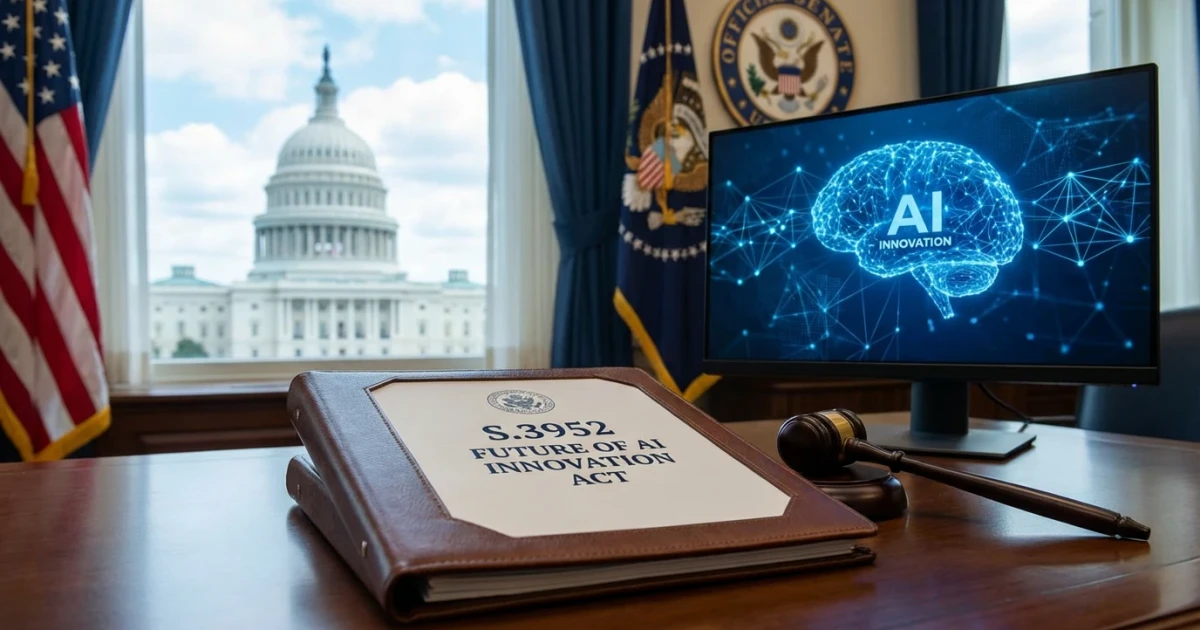
Senator Todd Young has introduced S.3952, the Future of Artificial Intelligence Innovation Act of 2026, a new legislative effort intended to guide the development and governance of artificial intelligence (AI) in the United States. The bill, which entered the Senate on March 21, 2026, signals growing federal interest in shaping the trajectory of AI research, standards, and industry growth.
Bill Overview and Legislative Intent
The Future of Artificial Intelligence Innovation Act of 2026, sponsored by Senator Young, was formally introduced to the Senate and is now under review. While the initial announcement, reported by Quiver Quantitative, highlighted the bill's introduction, the official summary and timeline on GovTrack provide further context. This legislation aims to establish a federal framework for supporting AI research, development, and responsible deployment across both public and private sectors.
- The bill's text outlines provisions for federal investments in AI research and education, including competitive grants and workforce training programs.
- It emphasizes the creation of technical standards and best practices, leveraging input from federal agencies such as the National Institute of Standards and Technology (NIST).
- Oversight mechanisms and reporting requirements are included to ensure transparency and measurable progress as AI capabilities evolve.
Federal Context and Ongoing Initiatives
The introduction of S.3952 aligns with ongoing federal initiatives on artificial intelligence managed by the White House Office of Science and Technology Policy (OSTP). These initiatives prioritize AI safety, ethical guidelines, and economic competitiveness, and the new bill appears to reinforce these national priorities by codifying research funding and standard-setting into law.
Data from the National Science Foundation highlights that federal AI research funding has grown steadily in recent years, reflecting bipartisan consensus on the technology's strategic importance. The bill’s focus on workforce development is also consistent with recommendations from the OECD AI Policy Observatory, which tracks global trends in AI investment and regulatory frameworks.
Key Provisions and Stakeholder Impact
While the full legislative process is ongoing, the Future of Artificial Intelligence Innovation Act of 2026 is expected to:
- Increase funding for AI research at academic institutions and national laboratories.
- Encourage industry collaboration with government agencies to accelerate technology transfer and adoption.
- Introduce new requirements for technical benchmarks and evaluation methods to ensure AI systems are safe and reliable.
- Mandate regular reporting to Congress on progress, risks, and opportunities in the AI sector.
Experts note that S.3952 could help the US maintain a competitive edge in AI innovation, particularly as other countries rapidly scale their investments and regulatory structures. The bill’s emphasis on transparency and standards may also address public concerns about AI safety and ethical use.
Legislative Path and Next Steps
The bill’s introduction marks the first step in a potentially lengthy legislative process. According to the official actions record, S.3952 awaits committee review, where lawmakers will debate its provisions and possible amendments. If advanced, the bill will proceed to the Senate floor for broader consideration, and, if approved, move to the House of Representatives.
The Future of Artificial Intelligence Innovation Act of 2026’s progress will be closely watched by industry leaders, researchers, and policymakers, as it has the potential to shape the US approach to AI for years to come. As new details emerge and the legislative debate unfolds, stakeholders will be looking for clarity on funding levels, regulatory scope, and long-term strategic goals.
For those interested in the evolving landscape of AI policy, the bill’s trajectory and its alignment with both existing federal initiatives and international benchmarks offer much to explore.