Business
Senators Urge Caution on United-American Merger Talk
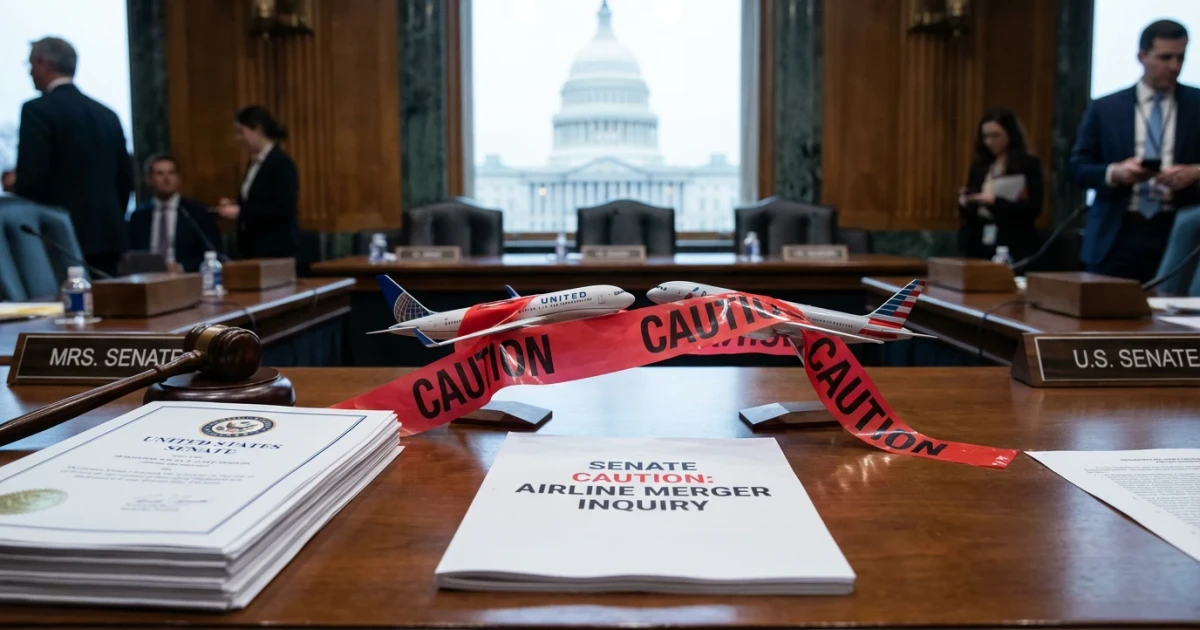
United Airlines and American Airlines have received a direct warning from a bipartisan coalition of U.S. senators, urging the carriers to reconsider any plans for a potential merger. The message, delivered in a formal letter, underscores heightened concerns in Washington about further consolidation in the airline industry and its potential effects on competition, consumer choice, and service quality.
Senators Take a Stand
The Wall Street Journal reported that a group of senators from both political parties sent a letter to executives at United and American Airlines, cautioning the companies against pursuing a merger. KATU News corroborated the existence of the bipartisan effort, noting that Congress is actively monitoring the situation and voicing opposition to further airline consolidation.
This intervention comes amid speculation that the two legacy carriers might be exploring a tie-up, a move that would reshape the U.S. air travel market. Such a merger would combine two of the country's largest airlines, raising the prospect of even greater market concentration.
Concerns Over Competition and Consumers
Lawmakers’ concerns center on the risk that a merger could reduce competition, potentially leading to higher fares, fewer choices for travelers, and decreased service quality. Previous airline mergers have faced similar scrutiny, with regulators and consumer advocates citing evidence that consolidation can result in diminished competition, especially on routes where the merging carriers have significant overlap.
- Past mergers have often prompted government reviews to assess risks to competition, as detailed in official Department of Justice records.
- Government Accountability Office research has found that U.S. airline consolidation since the 2000s has contributed to increased market concentration, with four airlines now controlling a majority of domestic passenger traffic. Explore the GAO's findings on airline mergers and market concentration for more detail.
- Further consolidation may limit consumer options, particularly in small and medium-sized markets, where fewer carriers often means less competition and higher prices.
Regulatory Scrutiny and Merger Process
Any proposed merger between United and American would face a rigorous review process from the U.S. Department of Transportation and Department of Justice. These agencies evaluate mergers based on antitrust laws, public interest considerations, and potential impacts on routes, fares, and service levels.
Recent years have seen regulators take a more aggressive stance against large airline mergers, reflecting a broader shift toward stricter antitrust enforcement. The senators’ letter signals that even preliminary merger discussions are likely to draw immediate and intense scrutiny from both Congress and federal agencies.
Industry and Consumer Implications
United and American are among the largest carriers in the U.S., with extensive domestic and international networks. According to Bureau of Transportation Statistics data, both airlines serve millions of passengers each month and maintain significant market shares in key U.S. hubs.
For consumers, the prospect of a merger raises questions about future ticket prices, route availability, and flight reliability. Industry analysts note that while mergers can sometimes lead to operational efficiencies, the benefits do not always flow to travelers. Instead, consolidation can reduce incentives for airlines to compete on price and service, especially on less profitable routes.
Looking Ahead
With bipartisan attention trained on the possibility of a United-American merger, any concrete plans are likely to face a challenging path. Lawmakers’ early warning could influence corporate calculations and signal to regulators that Congress expects a thorough review in the public interest.
As merger speculation continues, stakeholders—including travelers, employees, and regional airports—will watch closely for further developments. For the latest data on airline market share and merger impacts, readers can explore the Bureau of Transportation Statistics and the Department of Justice's merger records.