Business
Senior home equity hits record, how retirees can borrow now
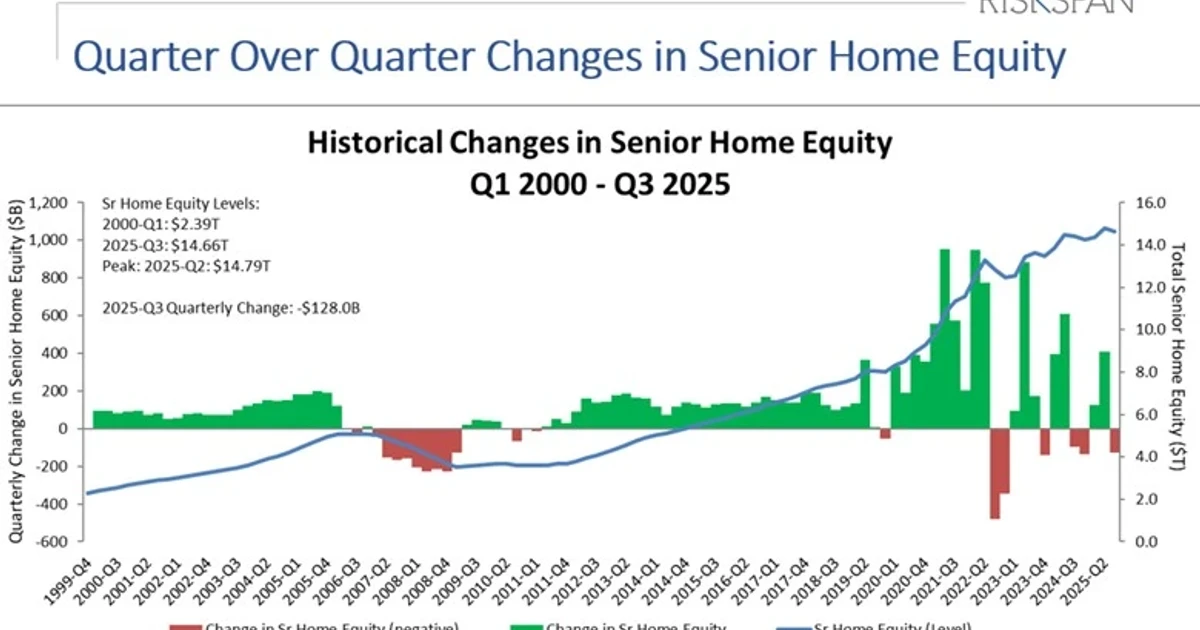
Senior home equity reached $14.39 trillion on October 17, 2025, the National Reverse Mortgage Lenders Association said. HousingWire put senior homeowner wealth at $14.4 trillion in Q2 2025, and National Mortgage Professional put it at $14 trillion in October 2024. Borrowing can cover medical bills, home repairs or income gaps, yet it can also shrink the equity that protects a household balance sheet and eventually an inheritance.
Why the record matters
The Federal Reserve’s broader housing-equity data show that household owners’ equity in real estate has been rising to record levels, which helps explain why these loans are getting more attention as retirement costs stay elevated. The Consumer Financial Protection Bureau defines home equity as the value of a home minus the total amount of existing mortgages, so the headline number only matters if there is enough cushion after debt is subtracted.
Reverse mortgages are increasing in popularity among seniors who have equity in their homes and want to remain in their homes or supplement income. AARP and the National Council on Aging both warn that older homeowners should understand the tradeoffs before borrowing, because the choice affects monthly cash flow now and net worth later.
HELOCs and home equity loans: flexible, but not free
A home equity line of credit, or HELOC, gives you a revolving line you can draw from as needed, while a home equity loan gives you a lump sum with a fixed repayment schedule. The practical difference is timing: a HELOC fits ongoing or uncertain expenses, while a home equity loan fits a one-time cost such as a roof replacement or a large medical bill. Both can be useful when you want to keep your existing mortgage in place instead of replacing it.
The downside is that neither is free money. Using home equity can provide financial flexibility while also carrying risks. Interest, fees and closing costs can all add to the total bill, and if payments are missed, the lender can move toward foreclosure because the house secures the debt.
A HELOC can make sense if you want access to cash in stages, expect to repay quickly, or need a standby source for emergencies. A home equity loan can make sense if you want certainty in the payment amount and prefer to borrow a fixed sum rather than a line that can be tapped repeatedly.
Cash-out refinancing: one new mortgage, but a bigger reset
Cash-out refinancing replaces an existing mortgage with a larger one and sends the borrower the difference in cash. That can be attractive if you still carry a mortgage and want to fold borrowing into one payment, but it also means paying refinance closing costs and starting a new loan term. For many retirees, that is the central timing issue: if the current mortgage is already cheap and largely paid down, refinancing can destroy a good rate structure just to access money.
This option is usually best when the borrower has a clear, one-time need and expects to stay in the home long enough to justify the new closing costs. It is less appealing if the cash need is temporary, because you are turning home equity into a larger mortgage balance that has to be serviced immediately. The bigger the existing equity position, the more cash a refinance can release, but the larger the long-term debt load can become.

Reverse mortgages: useful for staying put, costly if mistimed
The U.S. Department of Housing and Urban Development identifies the Home Equity Conversion Mortgage, or HECM, as the only reverse mortgage insured by the U.S. federal government, and it is available through FHA-approved lenders. That program is built for seniors who want to stay in their homes or supplement income, which is why it often comes up for retirees who have equity but do not want a monthly mortgage payment. The 2025 FHA increase in single-family loan limits changes how much some borrowers can access under federal rules.
The catch is that reverse mortgages create a very different cost structure. Under Consumer Financial Protection Bureau guidance, they can involve upfront fees, ongoing costs and regular homeownership expenses such as property taxes and maintenance, while interest continues to accrue over time. That means the loan balance can grow even if no monthly mortgage bill arrives, and the longer you keep the loan, the more equity it can consume.
Heirs feel that effect directly. A reverse mortgage can leave less home value for children or other beneficiaries because the balance must be satisfied before remaining equity is passed on, and the Government Accountability Office has examined both benefits and risks in the product. AARP urges homeowners to ask questions and understand the risks before taking a reverse mortgage, and the National Council on Aging stresses the need for a plan for taxes, maintenance and long-term occupancy.
How to compare the options before you sign
The right choice comes down to four variables: how much cash you need, how fast you need it, how long you plan to stay in the home, and what you want to leave behind. For a one-time project with a defined price tag, a home equity loan or cash-out refinance may be easier to budget. For irregular spending or emergency access, a HELOC can be more efficient. For someone who plans to age in place and wants to reduce required monthly payments, a HECM reverse mortgage may fit better, but only after counseling and a full cost comparison.
Compare these points side by side:
• total fees, not just the rate • whether payments start now or later • fixed or variable borrowing terms • the effect on remaining equity • whether heirs will need to repay or refinance to keep the home • the lender type, including whether the reverse mortgage is a HECM or a private non-HECM product
Some lenders market reverse mortgages with lending limits above the FHA HECM cap. Higher limits can sound attractive, especially for higher-value homes, but they can also mean a very different fee structure and consumer protection profile. The safest move is to compare the maximum loan amount with the long-term cost, not just the upfront cash.
Sources
- [1]cbsnews.com
- [2]nrmlaonline.org
- [3]housingwire.com
- [4]nationalmortgagenews.com
- [5]hud.gov
- [6]files.consumerfinance.gov
- [7]consumer.ftc.gov
- [8]aarp.org
- [9]ncoa.org
- [10]gao.gov
- [11]nahb.org