World
Seven leftover recipes to cut food waste and save money
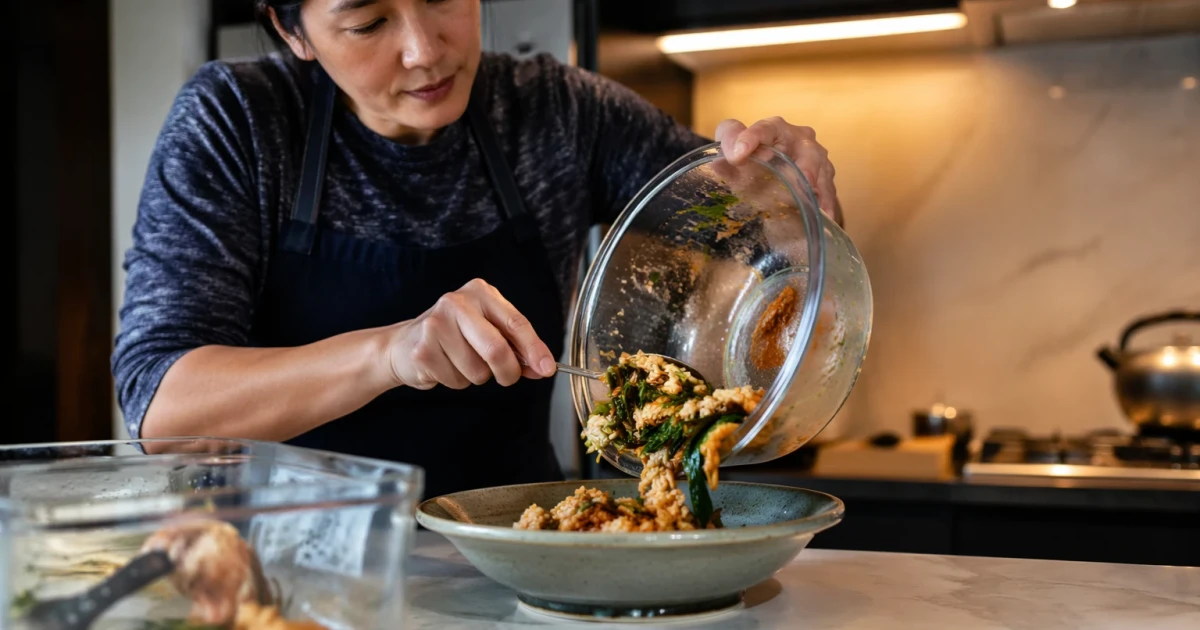
Families across the United Kingdom are losing more than dinner to the bin. WRAP says the average UK family throws away about £700 worth of food a year, and the House of Commons Library puts households at about 60% of UK food waste by weight. That pressure lands hardest when budgets are tight, which is why practical leftover cooking has become a cost-of-living habit as much as a kitchen skill.
The scale of the problem reaches far beyond one home. The Food and Agriculture Organization says roughly one-third of food produced for human consumption is lost or wasted globally, while UNEP says food waste is responsible for 8% to 10% of annual global greenhouse gas emissions. WRAP’s autumn 2023 household tracking survey, based on 5,151 interviews conducted by Icaro between 9 and 20 November 2023, also found self-reported food waste rising from 20.2% in November 2023 to 21% in June 2024.
Stuffed peppers turn small scraps into a full meal
Stuffed peppers are one of the easiest ways to stretch cooked grains, stray vegetables, and a little meat or beans into something that feels complete. The format works because the pepper becomes the container, so odds and ends that might otherwise sit unused can be brought together in one bake.
That matters in a household economy where every portion counts. A tray of peppers can absorb leftovers from last night’s rice, a spoonful of tomato sauce, or the last handful of cheese, cutting waste while making a second meal from ingredients already paid for. Love Food Hate Waste has long pushed that idea: extra ingredients, leftovers, and odds and ends can become something new.
Biryani casserole gives yesterday’s rice a second life
A biryani casserole turns cooked rice into a deeply seasoned bake that can handle vegetables, lentils, chicken, or whatever remains in the fridge. It is especially useful after a takeaway or a large batch cook, when plain rice needs a fresh identity instead of another reheating cycle.
This kind of transformation speaks directly to the government’s push for more formal waste handling in England, where weekly food waste collections are being rolled out for most households by 2026 under Simpler Recycling. Until then, the cheapest waste reduction still starts at home, with a dish that keeps a full pot of rice from becoming bin waste.
Frittata makes eggs the bridge between leftovers and dinner
A frittata is the kind of meal that can rescue a small amount of cooked vegetables, potatoes, herbs, or cheese and turn them into a proper supper. Eggs bind the mix together, so the dish can absorb whatever is left over without asking for a long shopping list.
For households trying to cut spending, that flexibility is the point. A frittata can turn a few spoonfuls of cooked greens and a half onion into something filling, which reduces the chance that short-dated produce gets discarded before use. It is one of the clearest examples of how home cooking can turn waste prevention into everyday savings.
Fried rice uses cold grains and fridge strays without fuss
Fried rice is built for leftovers because day-old rice holds its shape better than freshly cooked rice. Add a chopped carrot, a few peas, a leftover egg, or a little cooked chicken, and the dish becomes a fast way to clear the fridge while avoiding another takeaway order.
That speed has a public-health angle too: a quick meal made from ingredients already on hand can reduce pressure on lower-income households that are more exposed to price swings. When the average family is losing about £700 of food a year, a simple fried rice bowl is not just a convenience dish. It is a low-cost way to keep usable food in circulation.
Soup turns soft vegetables and small portions into one pot
Soup is one of the most forgiving leftovers recipes because it can absorb nearly any cooked vegetable, pulse, bean, or grain. Wilted celery, a lone potato, the last tomato, or a few spoonfuls of cooked pasta can all find a place in a simmering pot.
That kind of kitchen salvage is exactly what food waste campaigners are trying to normalize. WRAP’s Food Waste and Food Surplus Key Facts report focuses on 2023 trends in UK food waste and food surplus redistribution, and the message underneath it is simple: food that is still edible should be eaten, not discarded. Soup does that in the most practical way possible, by converting near-forgotten produce into several more portions.
Pasta bake stretches small amounts into a family-size dish
A pasta bake can pull together a few tablespoons of sauce, leftover vegetables, and the last bits of cheese into something that feeds more than one person. Because the pasta is mixed with sauce and baked, the dish can disguise uneven amounts of ingredients that would not stand alone as a meal.
That matters in households where waste has a real budget cost. The House of Commons Library’s estimate that households account for about 60% of UK food waste by weight shows how much is still happening in ordinary kitchens, not warehouses or farms. A pasta bake gives home cooks a direct way to convert loose scraps into a tray meal with enough bulk to carry a second lunch.
Traybake dinners make the fridge inventory work harder
Traybake meals are built for clearing out whatever vegetables and proteins are left before shopping day. Potatoes, onions, carrots, cauliflower, or chicken pieces can all roast together, which means one pan can use up ingredients that might otherwise fade in the vegetable drawer.
The appeal is not only convenience, but control. When food prices are rising, a traybake lets a household shape dinner around what is already there, rather than buying a new set of ingredients for a single meal. That is the kind of household adjustment that can shave waste, lower bills, and keep edible food from becoming another statistic in the UK’s £700-a-year loss.
The policy backdrop is moving in the same direction. Sheffield City Council has approved a transitional arrangement that could defer separate weekly food waste collections until 2038, subject to ministerial approval, which shows how uneven implementation can be even when the direction of travel is clear. Until collection systems catch up everywhere, the fastest gains still come from the kitchen door: plan around what you have, cook what is close to being lost, and let leftovers become the next meal instead of the next bin bag.
Sources
- [1]npr.org
- [2]wrap.ngo
- [3]commonslibrary.parliament.uk
- [4]fao.org
- [5]unep.org
- [6]gov.uk
- [7]democracy.sheffield.gov.uk
- [8]lovefoodhatewaste.com