World
Shackleton’s Quest shipwreck reveals damage, and a thriving deep-sea habitat
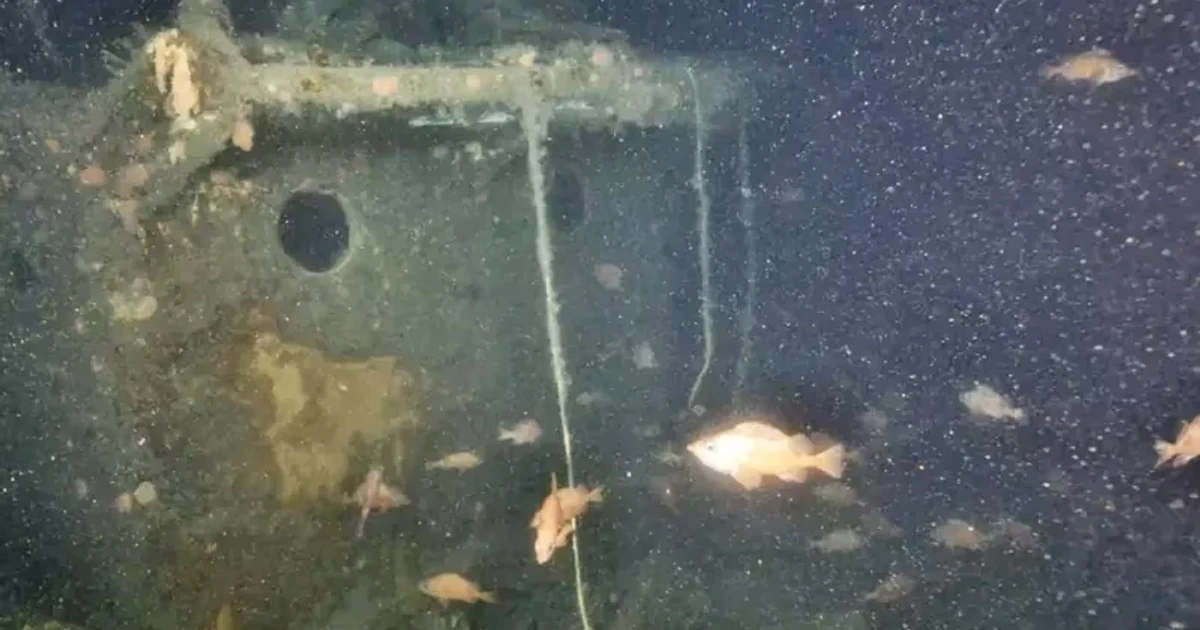
The first close-up look at Sir Ernest Shackleton’s Quest showed the wreck with its bridge superstructure gone and abandoned fishing nets, floats and other bottom-trawling gear draped over the stern and starboard side. Soft corals, anemones and pink corals also cover the hull, and Atlantic cod, redfish and wolf fish move through the site.
The images were captured July 7 and 8 during the Heroic Age Expedition, led by the Royal Canadian Geographical Society in partnership with Woods Hole Oceanographic Institution. The expedition used the crewed submersible Alvin and the Falcon remotely operated vehicle to document Quest at about 390 metres below the surface in the Labrador Sea off Labrador’s south coast. Alvin, the first submersible to visit the Titanic wreck, was used here to document the ship.
Quest was first found in 2024, when a Royal Canadian Geographical Society-led expedition located the wreck but could manage only side-scan sonar imagery. The new footage showed a ship that still holds its shape in places, with the bow, deck and some portholes visible, but also one that has clearly suffered years of damage. A trawl door and chain were found on the seabed nearby.
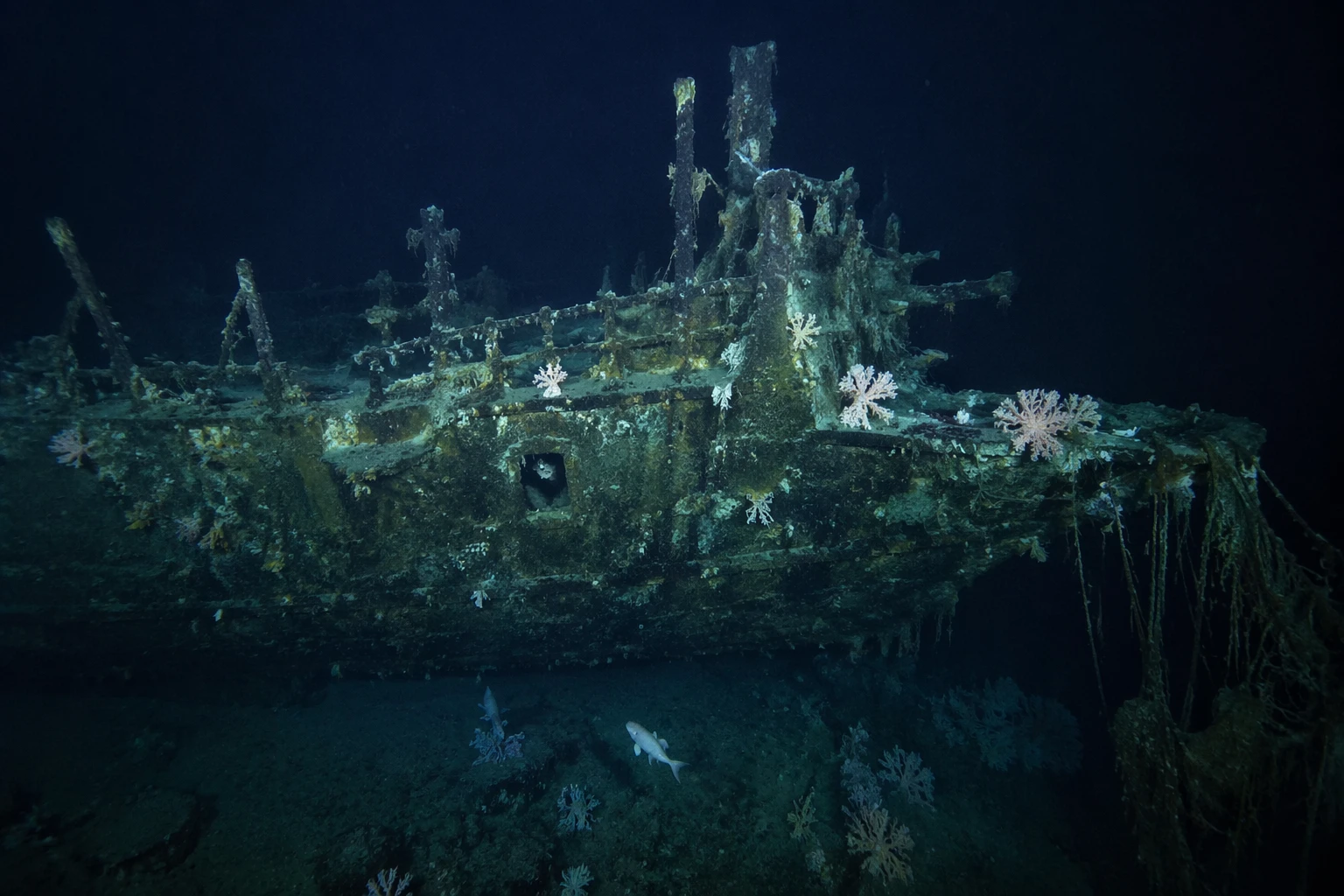
John Geiger called seeing Shackleton’s ship a moving experience and said the team wants to understand both its condition and what happened to it. Antoine Normandin said Quest was in worse condition than expected from the 2024 sonar and described the site as almost like a science experiment.
Shackleton bought the vessel in 1921 for a planned Canadian Arctic expedition, but after Prime Minister Arthur Meighen’s government withdrew support, he turned south instead. Shackleton died aboard Quest in 1922 near South Georgia at age 47 during the Shackleton-Rowett expedition. The ship later served as a minesweeper in World War Two and as a sealing vessel before striking ice and sinking off Labrador in 1962. The 2026 expedition is also surveying Terra Nova, another famous polar wreck, as it documents what remains below the Labrador Sea.
Sources
- [1]arstechnica.com
- [2]canadiangeographic.ca
- [3]whoi.edu
- [4]voyis.com
- [5]cbc.ca
- [6]rcgs.org
- [7]vocm.com