US News
She helped spark an agricultural revolution with nitrogen-fixing bacteria
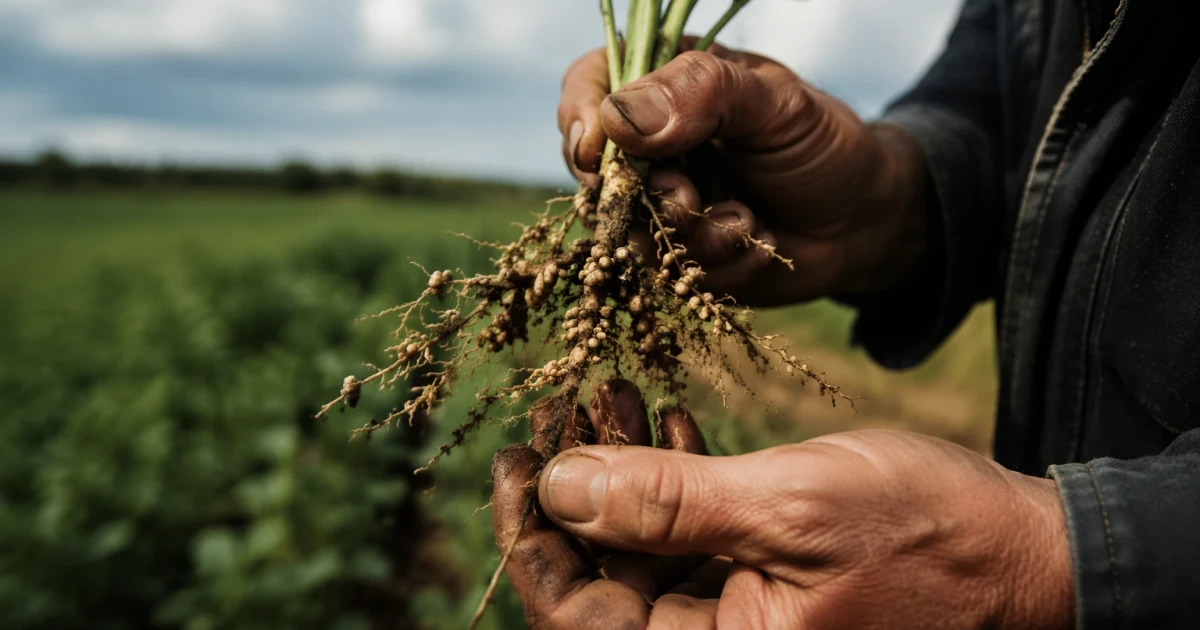
The most consequential agricultural breakthroughs often happen underground, in places farmers never see. Rhizobia living in legume root nodules pull atmospheric nitrogen into forms plants can use, and that quiet exchange still supplies a major share of agriculture’s usable nitrogen while anchoring food production in ways synthetic chemistry alone never could.
How a hidden microbe powers the field
Nitrogen fixation is the process that converts free atmospheric nitrogen into more reactive compounds such as ammonia, nitrates, or nitrites. In agriculture, rhizobia are the key players because they form close symbioses with legumes, and nitrogen-fixing bacteria account for more than 90 percent of all biological nitrogen fixation. Inside the root nodule, the plant supplies carbon and energy, while the bacteria convert nitrogen gas into a form the plant can use.
That biological partnership is not passive. Rhizobia release signaling molecules that trigger root-hair changes and nodule formation, turning a normal root into a specialized exchange site. It is the sort of slow, invisible cooperation that rarely looks dramatic from the outside, yet it is the reason legumes can thrive in nitrogen-poor soils and why this microbe became foundational to agriculture rather than a curiosity of soil science.
Why legumes changed farming before synthetic fertilizer
Before synthetic fertilizers became common, farmers depended on manure and crop rotations that included legumes to replenish soil nitrogen. That older system was crude by modern industrial standards, but it rested on an accurate observation: after legumes grew, the next crop often did better because the soil held more usable nitrogen. Even now, legume-driven biological nitrogen fixation remains central to low-input and rotational farming because it helps restore fertility without requiring constant purchased fertilizer.
The downstream benefit is straightforward. Legumes improve soil fertility through their symbiosis with rhizobia, and that can lift yields for the crops that follow them in rotation. The system also matters because not all rhizobia perform equally well: USDA Agricultural Research Service work notes that some strains are far more effective than others, and that the right strain can be specific to a particular host plant. That is why public collections, inoculant production, and germplasm preservation are not academic side projects but part of the infrastructure of agricultural resilience.
The scale of the nitrogen gift
Biological nitrogen fixation provides an estimated 50 to 70 teragrams of bioavailable nitrogen in agricultural systems each year, a scale large enough to sustain global food security. In other words, this is not a niche ecological trick. It is a planetary supply line that helps keep crop systems productive, especially where synthetic fertilizer is too expensive, too unavailable, or too environmentally costly to use heavily.
That scale also explains why the USDA maintains a Rhizobium resource to support low-input sustainable agriculture and preserve the widest possible genetic diversity of these bacteria. The public-interest logic is clear: if crop performance depends on host-specific microbial partners, then access to effective strains is an issue of farm economics as much as microbiology. For communities that cannot absorb high fertilizer prices, the right bacterium can be the difference between a workable harvest and a season of loss.
What happens when the nitrogen cycle is pushed too far
The same nitrogen system that feeds crops can damage water and air when it is overloaded. Human agriculture has strongly altered the modern nitrogen cycle, contributing to eutrophication and nitrous oxide emissions. Science has described the result as a cascade of environmental and human health problems, while EPA guidance notes that nitrous oxide is a potent greenhouse gas and a product of the nitrogen cycle itself.
That matters beyond abstract ecology. Excess nitrogen runoff can degrade drinking-water sources and drive algal blooms that harm fisheries, recreation, and coastal economies. Recent Science and Science Advances papers also underscore the tension at the center of modern agriculture: nitrogen is indispensable for yields, but inefficient nitrogen management loads communities with pollution, climate risk, and cleanup costs that often fall hardest on people living nearest to farms, waterways, and downstream estuaries.
The legacy hidden in soil
That is why the work of the scientists who unraveled rhizobial symbiosis matters so much. Recent Nature research suggests biological nitrogen fixation may be an even larger source of agricultural nitrogen than many current models assume, which means this underground partnership is still being underestimated in policy and planning. The legacy here is not a flash of invention but a patient recognition that a living microbe, working inside a legume root, can shape fertilizer use, crop yields, and food security at national and global scale.
Sources
- [1]news.google.com
- [2]ars.usda.gov
- [3]britannica.com
- [4]science.org