World
Sheffield newspapers trace city history and the shifting side of the angels
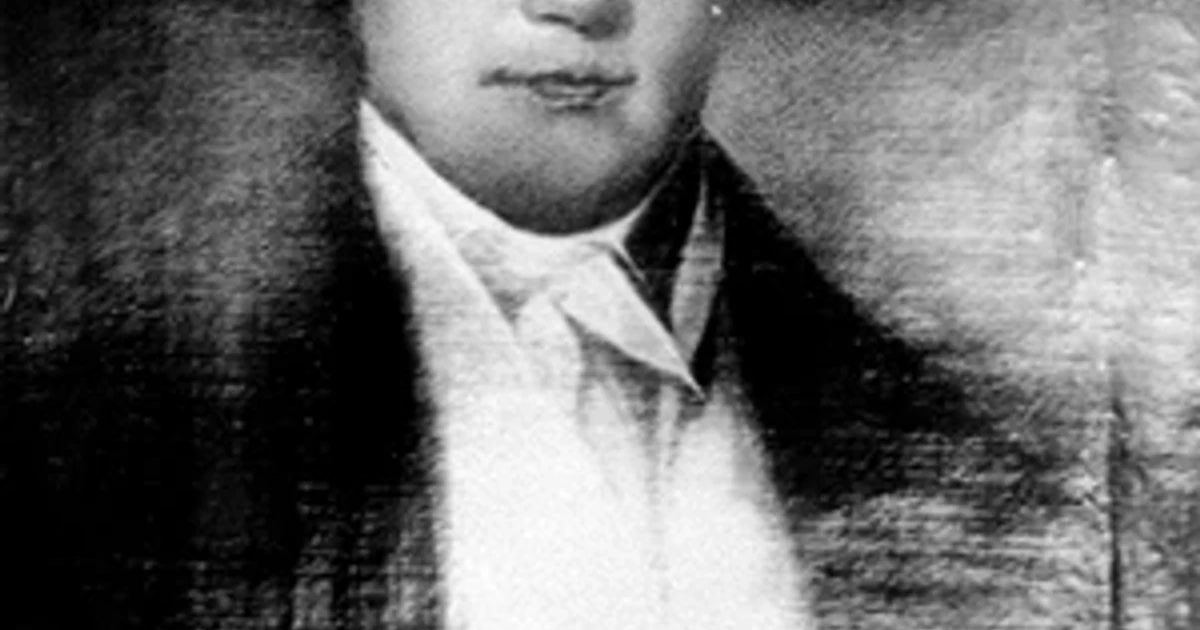
Sheffield’s newspapers have always done more than record events. They preserved the arguments a city had with itself, the people it trusted, and the causes it was willing to defend when the line between friend and foe shifted. In Sheffield, that story begins with Joseph Gales and the first edition of the Sheffield Register, published in the city on 9 June 1787, and it runs forward through titles that documented local life as well as national conflict.
A city’s paper trail begins in 1787
The Sheffield Register matters because it set a pattern that still defines the city’s press history. Gales did not simply reprint London news for a provincial audience; he pioneered extensive coverage of local issues while also reporting major national stories. That combination gave Sheffield readers a way to see themselves in the wider political world, rather than passively consuming events framed elsewhere.
That early editorial model also helps explain why the language of “the side of the angels” feels so charged in a newspaper archive. Newspapers were never neutral ledgers. They were part of the machinery that told a town where its moral boundaries lay, which public voices were respectable, and which were to be treated as dangerous or misguided.
Why the archive is more than nostalgia
Sheffield City Council describes newspapers as the “personal diary” of a town, a phrase that captures both their intimacy and their argument. A diary records what a place notices, what it fears, and what it chooses to remember. The same council guide says newspapers reflect popular opinion, which makes them especially valuable in a city where civic identity has long been formed through industrial change, political debate, and shifting local loyalties.
The council also divides Sheffield newspapers into three broad periods: before 1840, 1840 to 1900, and 1900 onwards. That division is useful because it shows how the press changed with the city itself. Early newspapers were often short and weekly, shaped by stamp duty and taxes that made publication harder and more expensive. What survives from those years is not just a record of headlines but evidence of the limits under which public discussion had to operate.
What Sheffield libraries preserve
Sheffield City Council says its newspaper collections cover dates from 1787 to the present day, although there are gaps. Even with those gaps, the range is unusually broad and gives the city a long paper memory. The collections are available through the British Newspaper Archive at Sheffield libraries, tying the past to a practical civic service rather than to a closed historical shelf.
The main titles listed by the council give the archive its backbone:
• The Star, 1869 to 1900 • Sheffield Independent, 1819 to 1938 • Sheffield Daily Telegraph, 1855 to 1950 • Sheffield Evening Telegraph, 1897 to 1939
Each title marks a different phase in the city’s public life. Together they span nearly a century and a half of changing language, shifting political priorities, and evolving local self-understanding. A reader moving through those titles can see how public loyalties were formed, challenged, and revised in print.
How newspapers mapped loyalty and opposition
The phrase “side of the angels” suggests a world in which moral allegiance was clearer than it often is now. Sheffield’s newspaper history shows that even when editors tried to draw those lines, they were doing so in a contested public arena. Gales’s Register already pointed to that tension by combining local reporting with national stories, making the city’s concerns part of larger arguments about politics and society.
That is why the archive still matters in a polarized era. Newspapers do not just tell readers what happened; they show how a community decided who counted as a legitimate voice. In a city like Sheffield, where newspapers were tied to labor, commerce, politics, and civic identity, the press helped organize public life by naming the terms of belonging.
The value of the archive lies in that record of uncertainty. It reveals that the boundaries between ally and adversary were never entirely fixed, even in periods that now look more orderly from a distance. The paper trail shows a town wrestling with itself in print, and that struggle is part of the city’s democratic inheritance.
Reading Sheffield’s press as civic memory
For today’s readers, Sheffield’s newspaper collections offer a way to see how institutions once gave public life a sharper outline. A local paper could tell people not only what was happening, but whose version of events carried weight and whose did not. When those institutions weakened or multiplied, the old clarity gave way to a more fragmented civic field.
That makes the archive useful in a practical sense as well as a historical one. Sheffield Central Library and the wider library network preserve the titles that let readers trace public argument across generations. The result is a city record that shows both continuity and loss: continuity in the long habit of reading the local press, and loss in the way no single newspaper now organizes public life as decisively as those older titles once did.
Sheffield’s newspaper history does not offer a simple answer to where the side of the angels lies. It shows that the answer has always depended on who was writing, who was reading, and which public institutions were trusted to sort the world into sides at all.