World
Sheffield newspapers trace city history back to 1787
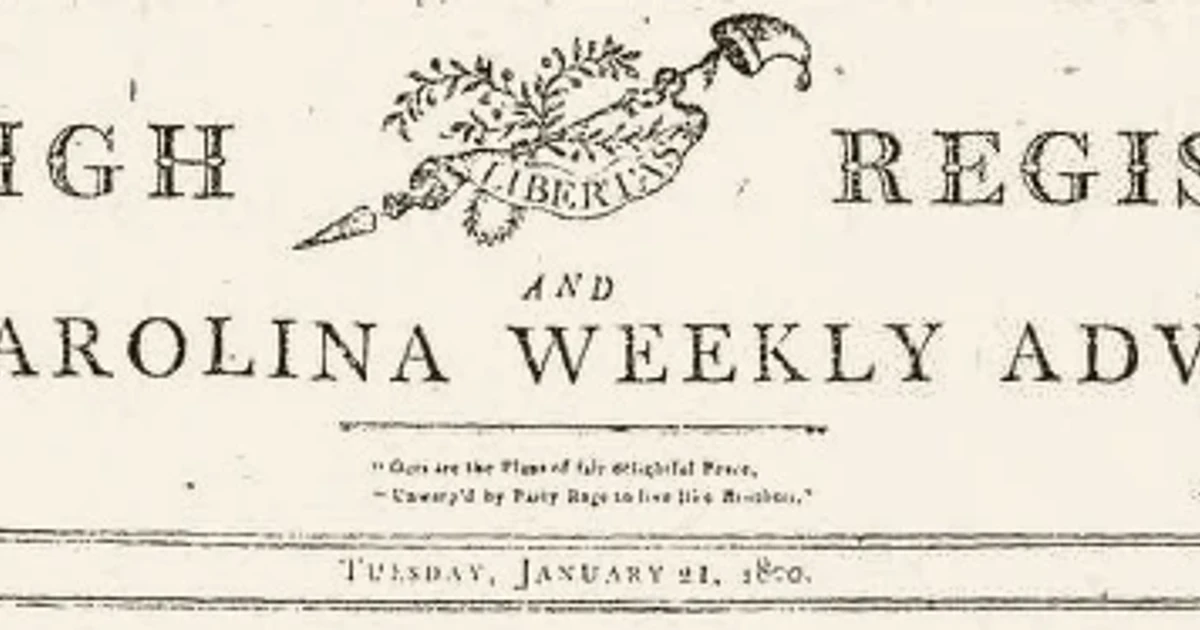
Sheffield’s newspaper record begins with a city trying to explain itself in public. When Joseph Gales published the first edition of the Sheffield Register on 9 June 1787, he set down a model for local reporting that mixed city affairs with major national events, a format that helped turn newspapers into part of Sheffield’s civic infrastructure.
A newspaper tradition that starts in 1787
The Sheffield Register was more than a surviving title in a long line of local papers. Gales, born in Eckington, Derbyshire in 1761, had been apprenticed as a printer in Newark before moving to Sheffield in 1784 and starting a publishing business that later became linked with radical politics and Unitarianism. His paper stood out because it did not depend mainly on reprinted London copy, instead giving extensive coverage to local issues while still carrying national stories.
That distinction matters because it shows what local journalism once did at its strongest: it connected neighborhood life to wider political change without surrendering the city’s own voice. In a newspaper culture that often treated the provinces as an afterthought, Sheffield’s early press treated the city as a subject worth chronicling in detail.
What the archive preserves
Sheffield City Council’s newspaper collection covers dates from 1787 to the present, with gaps, and the material is available on microfilm in Sheffield Central Library. The council’s guidance describes newspapers as “the personal diary of a town” and says they reflect popular opinion, a line that captures why old editions still matter to civic life, not just to nostalgia.
The council divides Sheffield’s local press into three broad periods: before 1840, 1840 to 1900, and 1900 onwards. That framework reflects the practical limits of earlier publishing, when stamp duty and taxes helped keep papers short and weekly, and also marks the point when the city’s newspaper market began to widen into more regular and varied reporting.
The titles that carried Sheffield’s public record
Several titles define that history. Sheffield City Council lists The Star as available in the British Newspaper Archive from 1869 to 1900, Sheffield Independent from 1819 to 1938, Sheffield Daily Telegraph from 1855 to 1950, and Sheffield Evening Telegraph from 1897 to 1939. It also identifies The Star and the Sheffield Morning Telegraph, later Sheffield Telegraph, as the two main Sheffield newspapers, both available on microfilm at the local studies library.
That mix of titles shows how local journalism once operated as a durable institution rather than a single brand. The city had multiple daily and evening papers serving different audiences and political habits, and the archive preserves the continuity of those voices across more than a century of change.

The Star’s own branding points to that inheritance with the line “News you can trust since 1887.” That date is different from the council’s archival range for The Star, which reaches back to 1869 in the British Newspaper Archive, a reminder that newspaper identities often shift over time even when the local public record remains traceable.
Sheffield still has a current local outlet in Sheffield Tribune, which remains active online. Its presence matters because the city’s paper history is not frozen in the archive; it continues in a smaller, more fragile contemporary media market.
Why ownership now shapes the public record
The condition of regional journalism makes the Sheffield archive more than a museum piece. Press Gazette’s coverage of regional media ownership notes that the UK’s top four regional publishers control close to 90% of the print market, a level of concentration that leaves fewer independent paths for local reporting and less diversity in who owns the civic record.
Company records add another layer to that picture. Companies House shows a filing history for Sheffield Newspapers Limited, and related records surfaced for GAZETTE NEWSPAPERS LIMITED and YORKSHIRE POST NEWSPAPERS LIMITED, pointing to the corporate structures that sit behind local and regional publishing in Yorkshire. Those filings do not tell the whole ownership story, but they show how much of the modern newspaper landscape is routed through a handful of companies rather than the broad mix of proprietors that once filled city newsrooms.
That shift changes what communities can expect from local journalism. When newspapers were plentiful, Sheffield had multiple titles tracing council business, public disputes, and daily life in forms that the archive still preserves. When ownership narrows and print market control concentrates, the city’s historic record becomes a benchmark for what local papers once delivered, and a measure of what residents lose when that infrastructure weakens.
What Sheffield’s newspaper history says now
The practical value of Sheffield’s press history is not that it sits safely behind glass. It is that the city can still read itself through surviving editions, microfilm, and archival listings that stretch from the Sheffield Register’s first issue in 1787 to present-day coverage. That continuity shows why local journalism has always been more than a business line: it has been a working civic record, built issue by issue, paper by paper, and now left to be defended as carefully as any other public institution.